
Veja também


 20.02.2026 11:59 AM
In this review, we examine four important topics currently worrying markets:
– Geopolitics and energy: Joint Russian and Iranian exercises in the Strait of Hormuz and missile launches are creating a threat to oil and gas supplies.
– The Fed and finance: "Hawkish" Fed comments have strengthened the dollar and crashed cryptocurrencies, including Solana, which fell below $82.
– Microsoft and AI: Microsoft shares have strongly corrected amid concerns about large AI-related spending and slowing cloud growth.
– The AI shake-up: Nvidia is investing $30 billion in OpenAI and strengthening ties with Meta, changing the rules in the semiconductor and cloud industries.
Don't miss these signals — geopolitics, macroeconomic data, and big AI deals can trigger sharp price moves and special trading opportunities, so watch the news and key levels for timely decisions.
Russia and Iran began naval exercises in the Strait of Hormuz on February 19
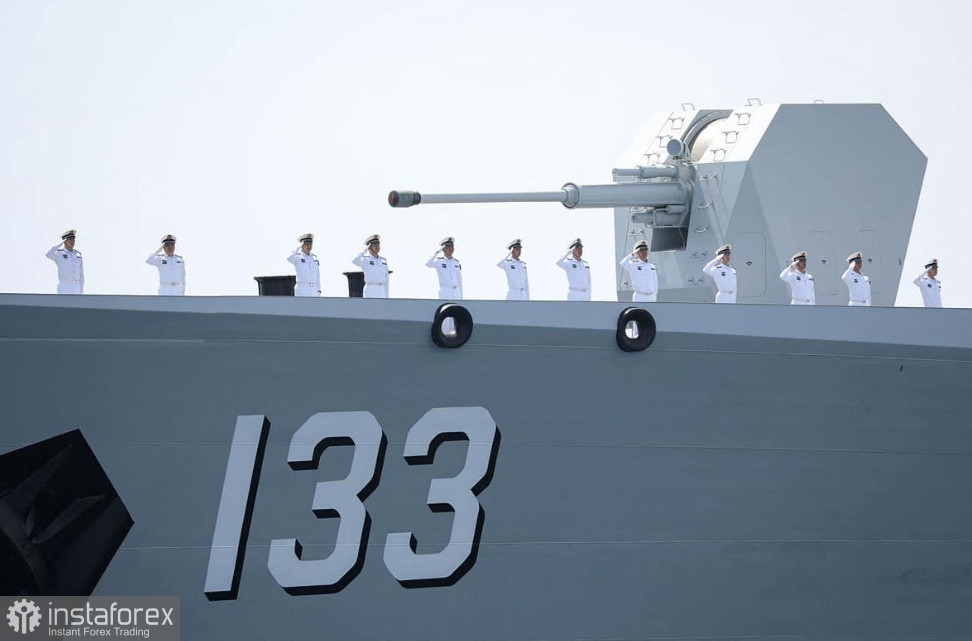
On Monday, February 19, Iran and Russia began joint naval exercises in the Gulf of Oman and the northern Indian Ocean. This is another demonstration of close cooperation between two sanction-hit countries.
The drills come amid rising regional tensions: temporary closures of parts of the Strait of Hormuz, missile test launches and an increased US naval presence against the backdrop of stalled nuclear talks with Tehran.
The corvette Stoykiy of the Steregushchiy class from Russia's Baltic Fleet arrived at the Iranian naval base Bandar Abbas earlier this week to take part in the maneuvers, the Russian Defense Ministry said.
Stoykiy, commissioned in 2014, previously visited ports in Africa and Asia before heading to Iran. On February 18, the Russian corvette conducted a passing maneuver with Iranian navy ships, including the frigate Alvand, the missile boat Neyze and the corvette Shahid Sayyad Shirazi, TASS reported, citing the Baltic Fleet press service.
The exercises are part of the annual "Maritime Security Belt" series, first launched by Iran in 2019. Rear Admiral Hasan Magsudlu, a spokesman for the drills, said the maneuvers are aimed at "strengthening maritime security and deepening relations between the two countries' naval forces," ISNA reported.
According to Russian presidential aide Nikolai Patrushev, China also sent forces to the exercises, but Radio Free Europe/Radio Liberty says Beijing apparently is not participating in the current maneuvers.
Separately, earlier this week, the Islamic Revolutionary Guard Corps (IRGC) conducted live-fire exercises as part of the "Smart Management of the Strait of Hormuz" drills (February 16–17), during which sections of the strategically important waterway were temporarily closed for live fire.
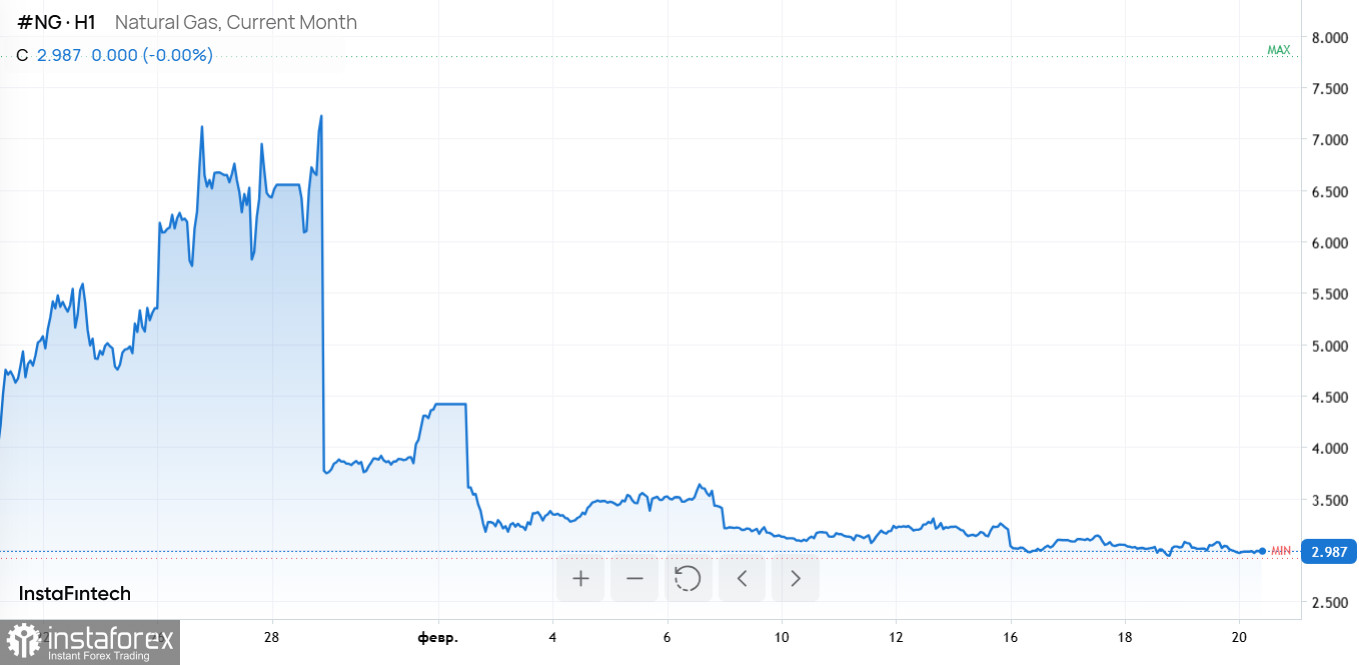
The Strait of Hormuz is a global trade hub through which roughly 20% of the world's oil consumption and one-fifth of global liquefied natural gas trade pass. During these drills, the IRGC Navy publicly demonstrated the first ship-based launch of the Sayyad-3G surface-to-air missile — claimed to have a range of about 150 kilometers — from the corvette Shahid Sayyad Shirazi.
Against this backdrop, the USS Abraham Lincoln carrier strike group remains deployed in the Arabian Sea — part of what President Donald Trump characterized as an "armada" intended to put pressure on Tehran over its nuclear program. Reports say the Pentagon is preparing contingency plans for possible military operations if negotiations fail.
Nuclear talks between the US and Iran in Geneva continue: on February 17, both sides reported progress, although significant issues remain. Iranian Foreign Minister Abbas Araghchi said the parties had reached "broad consensus on several guiding principles," while Vice President JD Vance said the president had set several non?negotiable conditions that the Iranians are not yet ready to accept.
Meanwhile, on February 19, the European Union formally designated the IRGC as a terrorist organization — a decision adopted earlier on January 29 after the suppression of protesters in Iran. EU foreign policy chief Kaja Kallas said that "repression cannot go unanswered."
Former US Central Command commander Joseph Votel, now at the Middle East Institute, described the Russian–Iranian naval exercises this way: "A simple way for the two countries to demonstrate support and to compensate for what they perceived as abandonment of Iran during US airstrikes on Iranian nuclear sites last June. It's just one form of great?power competition."
Conclusions and opportunities for traders
Russia and Iran's military cooperation and related maneuvers in the Strait of Hormuz raise geopolitical risks in the region and create potential for increased volatility in energy markets, currencies and safe?haven assets.
Temporary shipping restrictions and demonstrative missile launches increase the likelihood of short-term swings in oil and LNG prices — instruments directly dependent on the stability of supplies through the Strait of Hormuz.
An enhanced US naval presence and ongoing difficulties in nuclear negotiations imply prolonged uncertainty, which typically supports demand for gold and safe?haven currencies.
How traders can take advantage
The trading instruments mentioned in this material are available on InstaTrade. To take advantage of market opportunities, consider opening a trading account on the InstaTrade platform and, for added convenience, downloading the company's mobile app. This will allow you to respond quickly to news and manage positions in real time. When trading, take risks into account and use capital?management tools.
Solana falls below $82 after hawkish Fed minutes
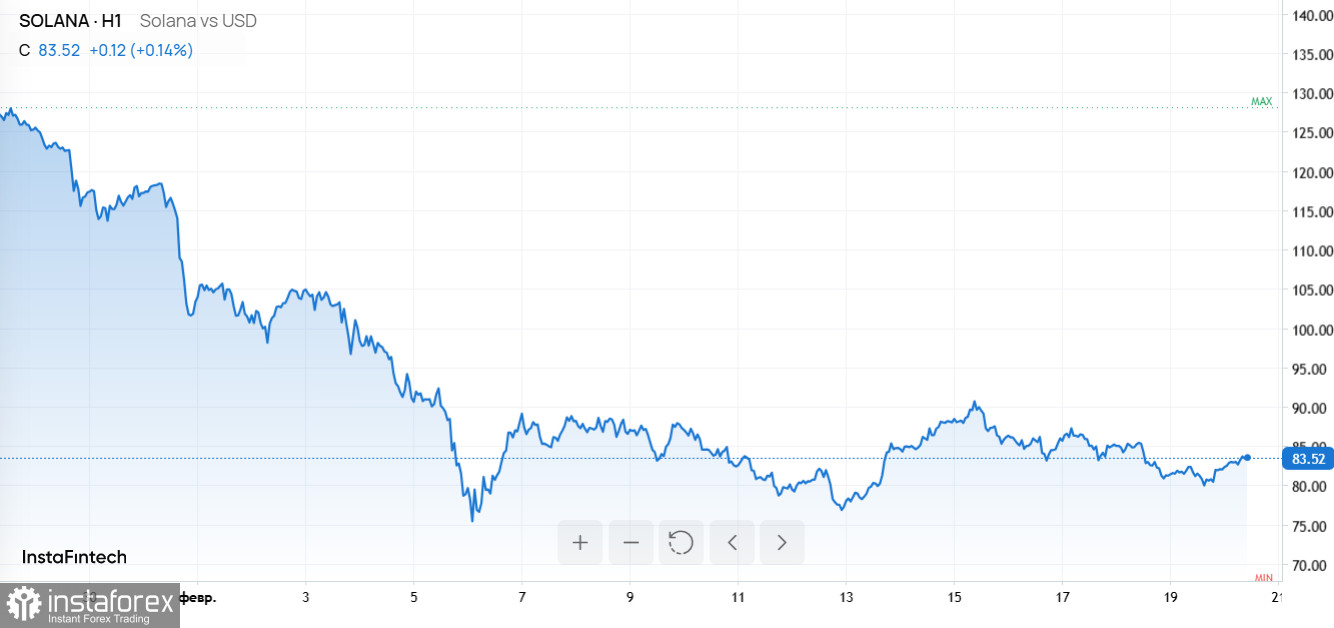
Solana plunged after the Fed minutes were released — the market is volatile, and investors are waiting for PCE inflation data.
On February 19, SOL fell below $82 amid dollar strength and pressure on risk assets following the publication of the Federal Reserve's meeting minutes. Traders and analysts are assessing technical support levels and institutional flows as they prepare for possible further moves in the crypto market.
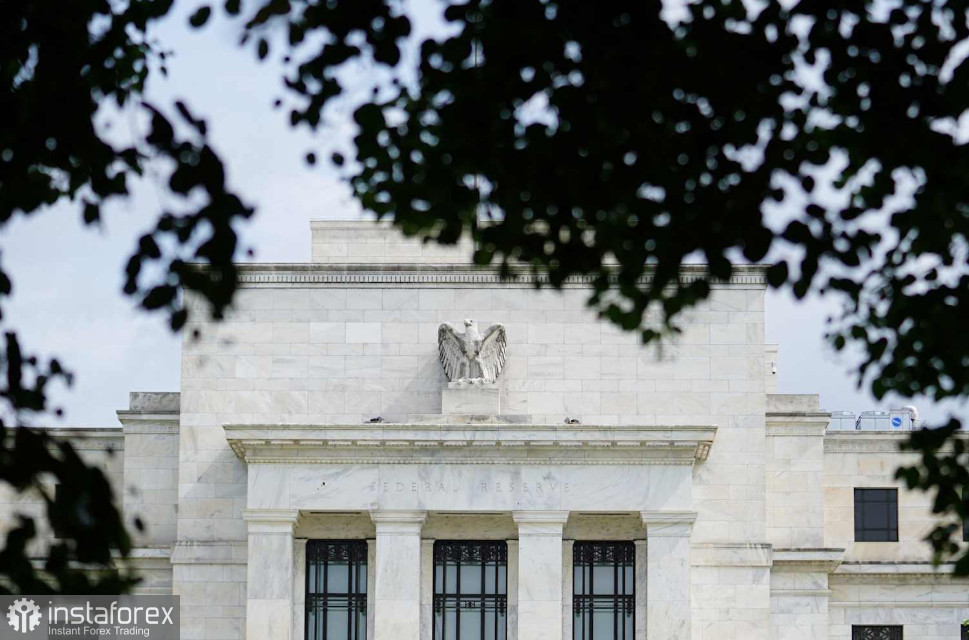
On Wednesday, the Federal Reserve published the minutes of its January 27–28 meeting, which showed FOMC members voted 10–2 to keep the policy rate at 3.50%–3.75%. Governors Christopher J. Waller and Stephen I. Miran voted against and supported a 25 bp rate cut. The minutes noted that some participants even discussed the possibility of raising rates "if inflation remains above target levels," language included in the FOMC's official release.
The hawkish tone of the minutes strengthened the US dollar and triggered sell-offs in digital assets, including Bitcoin and Ethereum, adding pressure on Solana.
On February 19, SOL was highly volatile: the price dropped to a daily low near $79.81 and then partially recovered. The decline began after a failed attempt to hold above $86 and the break of several support levels. Technical analysts highlight $80 as a critical support; Cryptorank estimates that a break below $79 "could push the price toward the $76.50 support zone."
The Relative Strength Index (RSI) plunged toward oversold territory. According to Bitcoinist's analysis, current RSI levels are close to those that "historically preceded short?term bounces," but momentum indicators still favor sellers. Several analysts also noted a possible head?and?shoulders pattern, which, if confirmed by a support break, points to potential downside targets in the $50–$60 range.
Despite price pressure, institutional interest in Solana-linked products remains notable. On February 17, spot Solana ETFs recorded net inflows of $2.19 million, with the Bitwise Solana Staking ETF (BSOL) attracting $1.70 million, Odaily reports.
Cumulative historical net inflows have reached $877 million, and total assets under management stand at $726 million. These figures indicate continuing institutional attention despite temporary sell?offs.
Commenting on the minutes, Reuters says Fed officials are "torn between conflicting approaches" to curb inflation while supporting the labor market. CNBC adds that participants "seemed more comfortable with current policy settings," but warned that reaching the 2% inflation target "may be slower and less consistent than expected."
Market participants are now closely awaiting the PCE inflation data to be released on February 20. Softer readings could revive hopes for rate cuts and relieve pressure on risk assets, while stronger inflation could prolong the sell?off.
Key takeaways
How traders can play it
Remember risk management: use stop?losses and position sizing consistent with your strategy and risk tolerance.
Microsoft slide: shares down 17%, investors fear $150 billion in annual AI spending
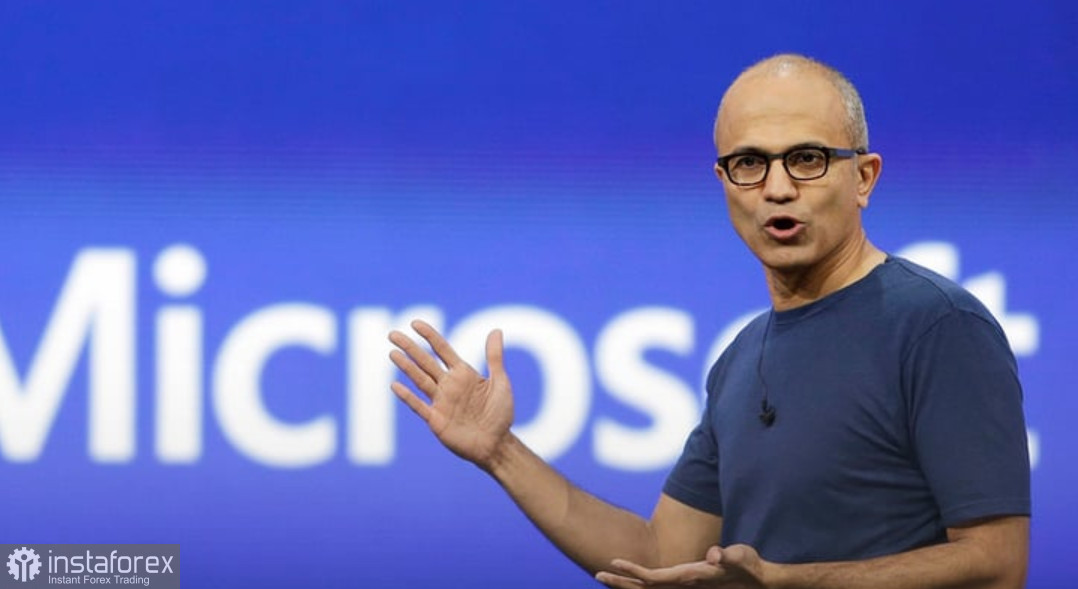
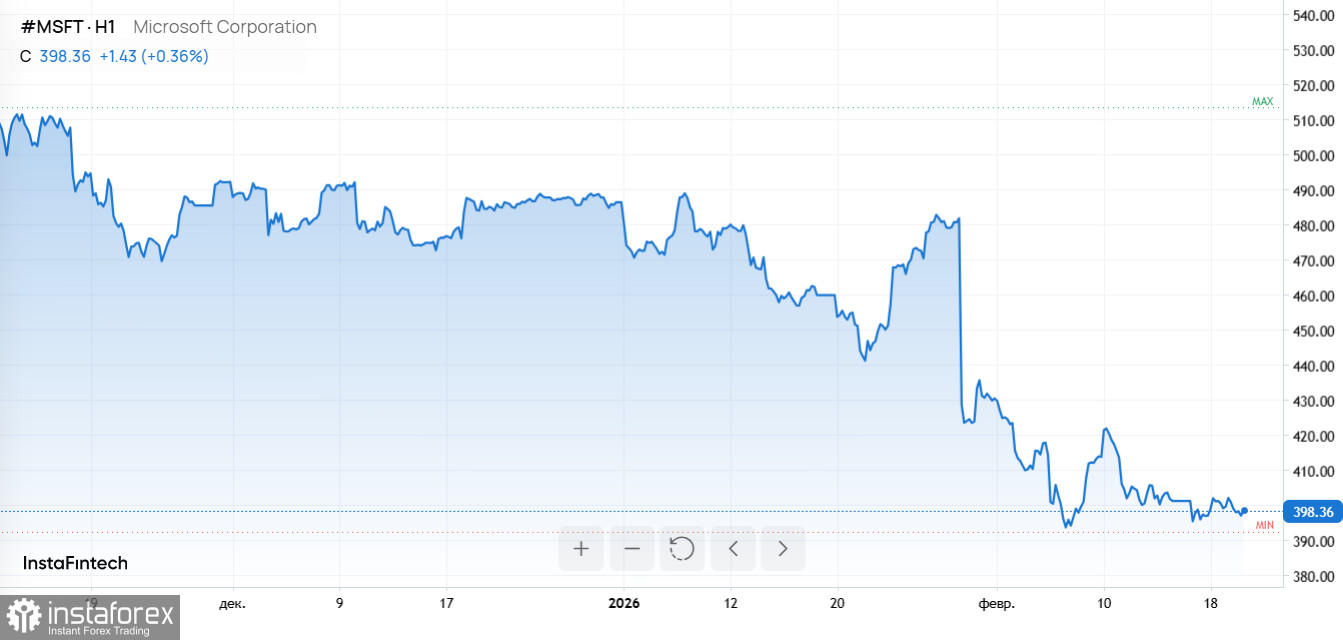
Microsoft has become the laggard among the "Magnificent Seven" in 2026: the company's shares have fallen 17% year?to?date amid concerns over massive AI spending and slowing cloud growth.
Defenders of the strategy call the investments a bet on the future, but the market has responded with a sell?off: since early August 2025, Microsoft shares have underperformed the S&P 500 by more than 30%. This is the weakest relative performance since the dot?com peak.
The decline — unlike previous cycles — has now lasted seven months, a slump unprecedented in Microsoft's 40?year trading history. The stock has wiped out all the gains accumulated since the launch of ChatGPT in November 2022 and is trading as if the AI revolution, in which Microsoft was one of the key players, never happened.
The boiling point came after the second fiscal quarter report released on January 28. The company reported record quarterly capital expenditures of $37.5 billion — up 66% year?on?year.
After the release, the shares plunged roughly 10% in one session — the worst single?day drop since March 2020. CEO Satya Nadella and CFO Amy Hood defended the spending strategy, emphasizing that two?thirds of the capital was directed to short?term assets such as GPUs and CPUs to meet explosive AI demand.
That did little to reassure investors, who doubt when the investments will pay off. On the current trajectory, Microsoft could reach roughly $150 billion in annual expenditures, comparable to the infrastructure budgets of some mid?sized countries.
Business metrics are giving mixed signals. Azure and other cloud revenue grew 39% year?on?year, but management guided for 37–38% constant?currency growth next quarter. Investors had expected acceleration, not stabilization, and that predictability did not help the stock. The company said OpenAI represents 45% of its $625 billion in unfulfilled contractual obligations.
Microsoft also maintains long?term tech ambitions. The company projects commercial quantum computers capable of outperforming classical machines will run in data centers by 2029.
Zulfi Alam, Microsoft's corporate vice president for quantum technologies, told CNBC he is now confident about a 2029 commercialization timeline: "In the past year I couldn't have said this with such clarity, but this year I can confidently say that by 2029 there will be machines that have commercial value — that is, they will perform computations not achievable by classical machines."
Those statements are backed by technological steps: in February 2025, Microsoft unveiled the Majorana 1 chip with a topological qubit architecture based on a topological?superconductor material, offering hope for more stable and scalable qubits.
The company reached the final phase of DARPA's Underexplored Systems for Utility?Scale Quantum Computing program, which aims to build a fault?tolerant, utility?scale quantum computer.
Competitors aren't standing still:
Conclusions and how to profit
Remember to use stop?losses, position sizing consistent with your capital management plan, and be prepared for quick reversals on news.
Practical steps for traders:
Nvidia to invest $30 billion in OpenAI instead of the promised $100 billion
Nvidia is close to investing $30 billion in a new funding round for OpenAI. According to the Financial Times, this move would replace unfinished $100 billion commitments by the chipmaker announced a year earlier.
At the same time, Nvidia is consolidating its market position after a large processor supply deal with Meta Platforms, and investors and analysts are watching how these developments will reshape the AI and semiconductor landscape.
According to the FT, the proposed $30 billion investment marks a departure from the memorandum of understanding signed by Nvidia and OpenAI in September 2025. Back then, Nvidia agreed to invest up to $100 billion as OpenAI rolled out infrastructure for 10?gigawatt AI data centers.
That agreement was never finalized: in late January, The Wall Street Journal reported the deal stalled after some Nvidia employees expressed doubts about its rationale.
CEO Jensen Huang dismissed suggestions of major internal disagreement as "nonsense," and promised the company would make "huge investments" in OpenAI: "Probably the largest investments we've ever made."
At the same time, he acknowledged the final amount would be "not remotely" the original $100 billion and would depend on OpenAI's current funding needs rather than prior infrastructure commitments.
A $30 billion contribution from Nvidia would be one of the largest single commitments to OpenAI's current fundraising. Bloomberg reports the overall fundraising campaign could exceed $100 billion with a valuation that may top $850 billion.
Amazon is expected to invest up to $50 billion, SoftBank about $30 billion, and Microsoft a few more billion. The allocation of funds is expected to be completed by the end of February.
The OpenAI funding news followed the announcement of a multi?year deal between Nvidia and Meta on February 18: Nvidia will supply millions of current Blackwell GPUs and future Rubin GPUs, as well as Grace and Vera CPUs. This is the first large?scale autonomous deployment of Nvidia central processors. Neither company disclosed the deal value, but analysts estimate it at tens of billions of dollars.
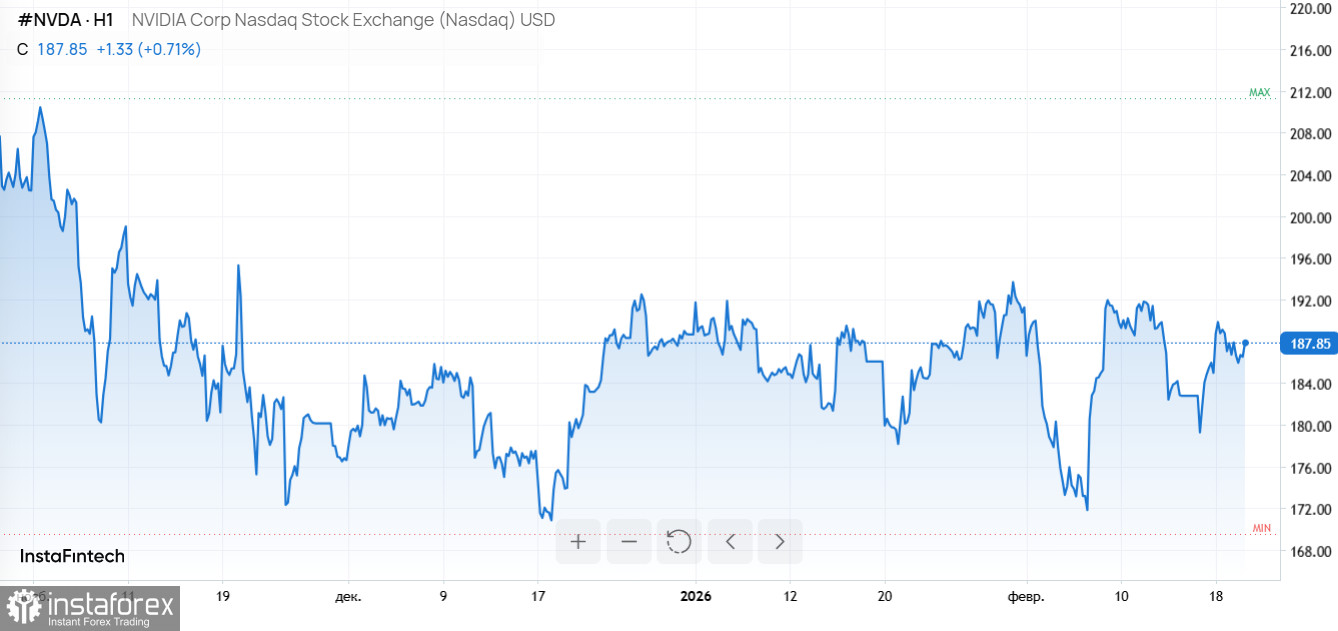
The market reaction was swift: Nvidia shares rose on Wednesday after the Meta announcement, while competitors Advanced Micro Devices and Intel fell as investors repriced the competitive implications of Nvidia's expanded presence in both GPUs and CPUs.
A key milestone will be Nvidia's fiscal Q4 results due February 25. Analysts view that report as a crucial indicator of the scale of corporate AI spending.
Key takeaways
The AI market is undergoing a reshuffle: Nvidia is trimming initial infrastructure commitments in favor of concentrated investments in OpenAI, while cementing leadership with a large Meta deal. Expected capital from Amazon, SoftBank and Microsoft could significantly boost OpenAI's valuation and increase demand for high?performance chips. This raises pressure on competitors and creates uncertainty around Nvidia's near?term quarterly results.
In the current market environment, traders may consider:
As always, practice strict risk management: set stop?losses, control position sizes and be mindful of likely high volatility ahead of corporate and market news.
The trading instruments mentioned in the article are available on the InstaTrade platform. To take advantage of current market conditions, traders may consider opening an account with InstaTrade and, for convenience and fast reaction to news, downloading the company's mobile app. This will allow quick responses to news and real?time position management.


