
Vea también


 28.01.2026 03:17 PM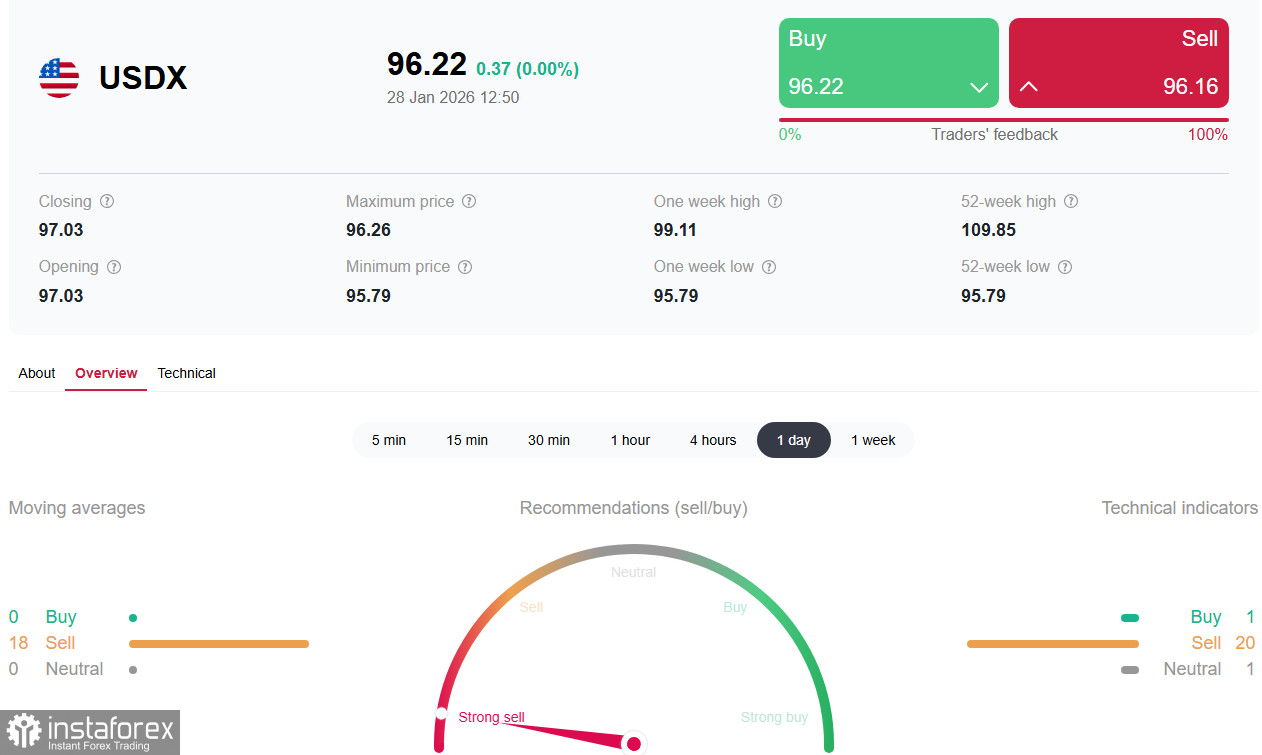
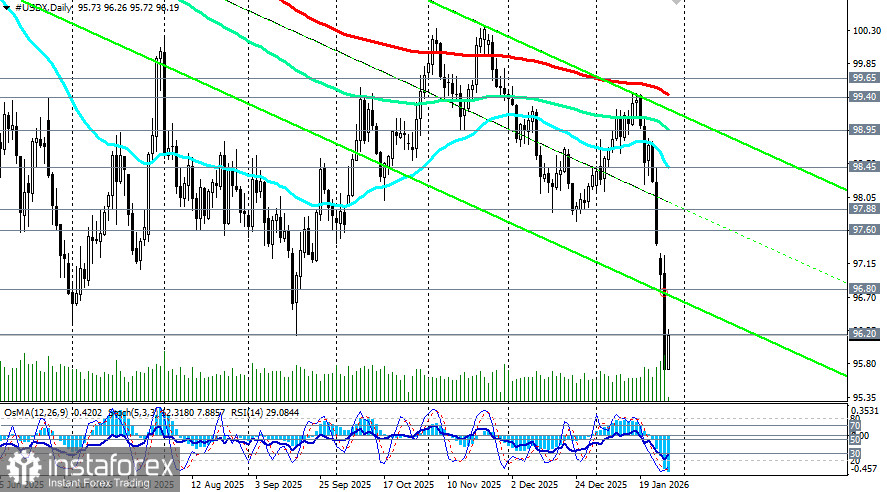
The US dollar managed to recover during the first half of today's trading session, with the USDX rising from Tuesday's low (the weakest since March 2022) at 95.52 to the current level near 96.20.
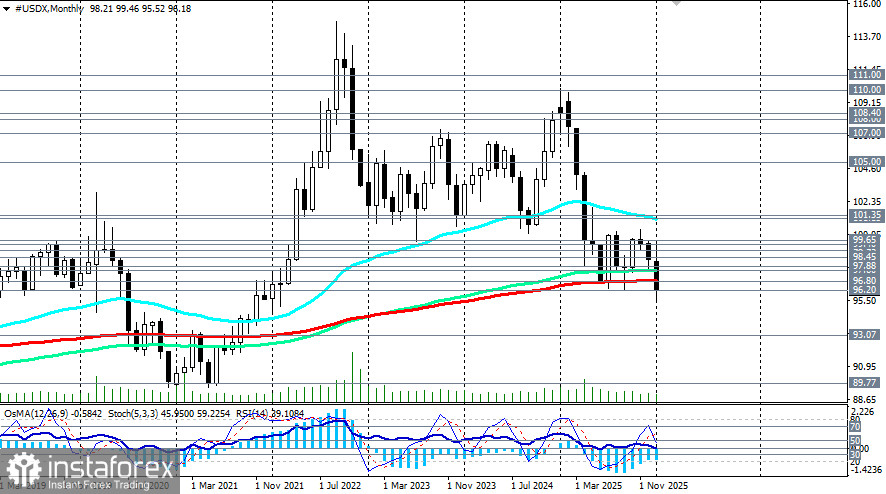
Nonetheless, the dollar remains under pressure, and the USD index is still in a global bear market, trading below the strategic support area at 96.80 (monthly EMA200). Current action suggests the dollar's recovery is corrective in nature, while the overall trend remains bearish.
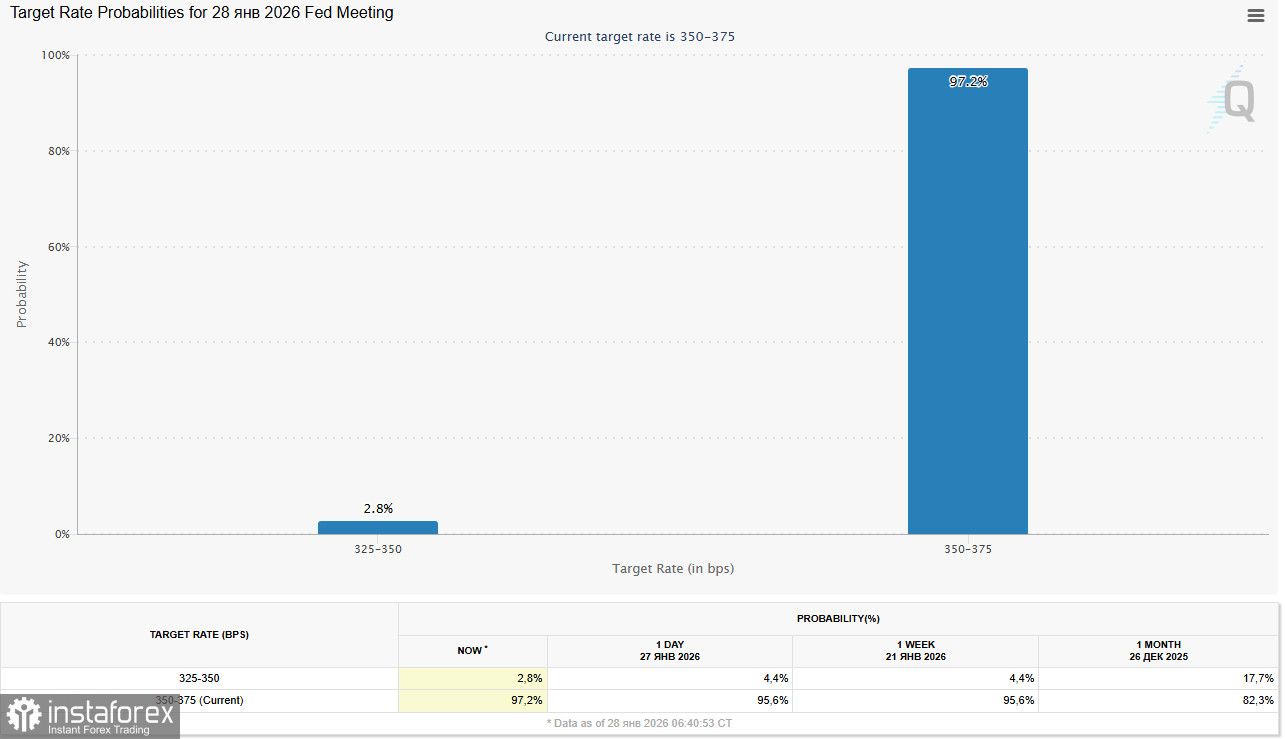
Today, the market's focus is the Fed's first meeting of the year; the policy decision will be released at 19:00 GMT. Below we review the dollar's prospects — its weaknesses and potential supports.
Negative factors
Supportive factors
Although the dollar appears fundamentally undervalued relative to rate differentials, a number of longer?term factors — notably deteriorating US fiscal credibility, rising public debt, waning confidence in trade and foreign policy and fears over the Fed's independence — continue to exert downward pressure that offsets short?term macro positives and keeps the dollar in a downward trend.
Technical picture of USDX
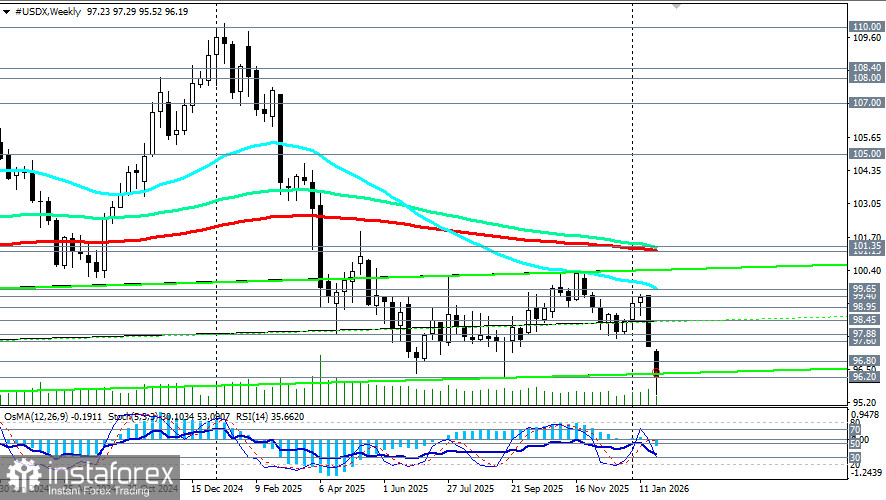
Despite today's bounce, the dollar remains vulnerable.
Key resistance: 96.80. A return and hold above that level is necessary to negate the immediate risk of a deeper decline.
Immediate support: 95.52 (yesterday's low). A break below this level would open the way to deeper lows, potentially testing 95.00 – 94.50 – 94.00.
Medium?term outlook
The balance of risks favors further dollar weakness. Structural drivers and easing expectations create a strong downward bias. Any strengthening is likely to be temporary and corrective unless the Fed makes a decisive hawkish pivot — which appears unlikely at this stage.
Conclusion
The US dollar is in a difficult transition phase. Despite intermittent bounces, the overall trend is downward, and the market is increasingly focused on Fed easing prospects and political risks. Today's short?term dynamics hinge on Jerome Powell's tone. Beyond the meeting, however, a complex environment remains: political pressure on the Fed, a growing fiscal deficit and rate?cut expectations will continue to shape a bearish outlook.
Investors should prepare for elevated volatility around the Fed decision, the press conference and the day after. Dollar prospects will only clear up after the meeting's outcome and the identity of the next Fed chair are known. These facts will ultimately define monetary policy for years to come. For now, the trend confirms dollar weakness, and any recovery should be viewed as a selling opportunity.


