
یہ بھی دیکھیں


 20.08.2026 04:10 AM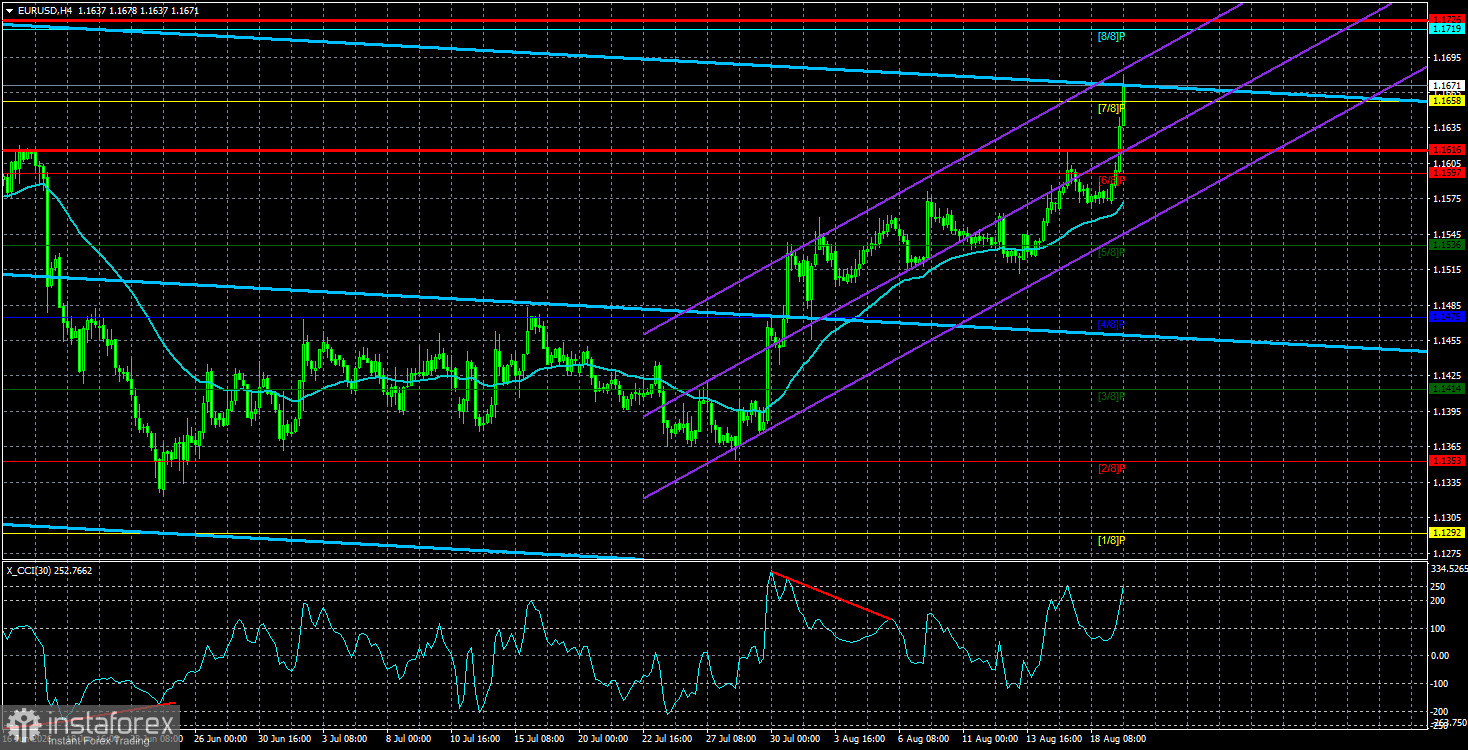
The EUR/USD currency pair resumed its upward movement on Wednesday, as expected. The European currency began rising early in the morning, so it cannot be said that the euro's growth was triggered by Christine Lagarde's speech or the minutes of the last FOMC meeting. These events are not related to each other at all. So why has the European currency appreciated again? The answer to this question was provided in the first half of 2026, when the dollar was rising actively. We have repeatedly stated that if it were not for geopolitical factors, no one would have seen any growth in the American currency. The year began with the EUR/USD pair setting four-year highs, and if not for Donald Trump's war with Iran, the European currency would be firmly above the 20 level.
Instead, we saw a decline to the 14 level, occurring in several stages. However, the more the euro fell and the dollar rose, the stronger our bullish expectations became. Let's recall the old adage: buy low, sell high. This rule worked perfectly in 2026. All traders who understood that the only support for the dollar came from geopolitics patiently awaited the European currency to drop toward the lower boundary of the sideways channel on the daily or weekly timeframe. Now, the European currency has been rising for three consecutive weeks, and one must answer the question: why has the euro been rising for three weeks in a row when it had predominantly been falling before?
Because the dollar has exhausted all of its growth factors, most of which were few to begin with. The last dollar impulse occurred after Kevin Warsh chaired the first FOMC meeting, when the market somehow assumed that monetary policy tightening by the end of the year was a done deal. We had warned back then that Warsh was appointed by Trump not to tighten policy but to soften it. Consequently, the third meeting under Warsh's leadership is approaching, and practically no one in the market expects a rate hike.
Trump's war has "hit" not only inflation but also economic growth and the labor market. Now Warsh and his colleagues have a "solid alibi." The rate cannot be raised because the labor market will shrink further, and the American economy will slow even more. Inflation is high, but it has been slowing down over the past two months, and Iran will soon face economic collapse. The war will end, and the Strait of Hormuz is already "open and safe," as the president states. We still believe that the Federal Reserve will not tighten monetary policy by the end of the year. In light of this conclusion, the European currency gains an additional growth factor, as the European Central Bank may raise key rates for the second time this fall. While a downward trend remains on the daily timeframe, it is clear on the weekly timeframe that the entire movement over the past year is a rather weak correction, much of which would not have occurred if Trump had not started the war in the Middle East and if investors had not felt the need to urgently safeguard their assets via the "safe" dollar.
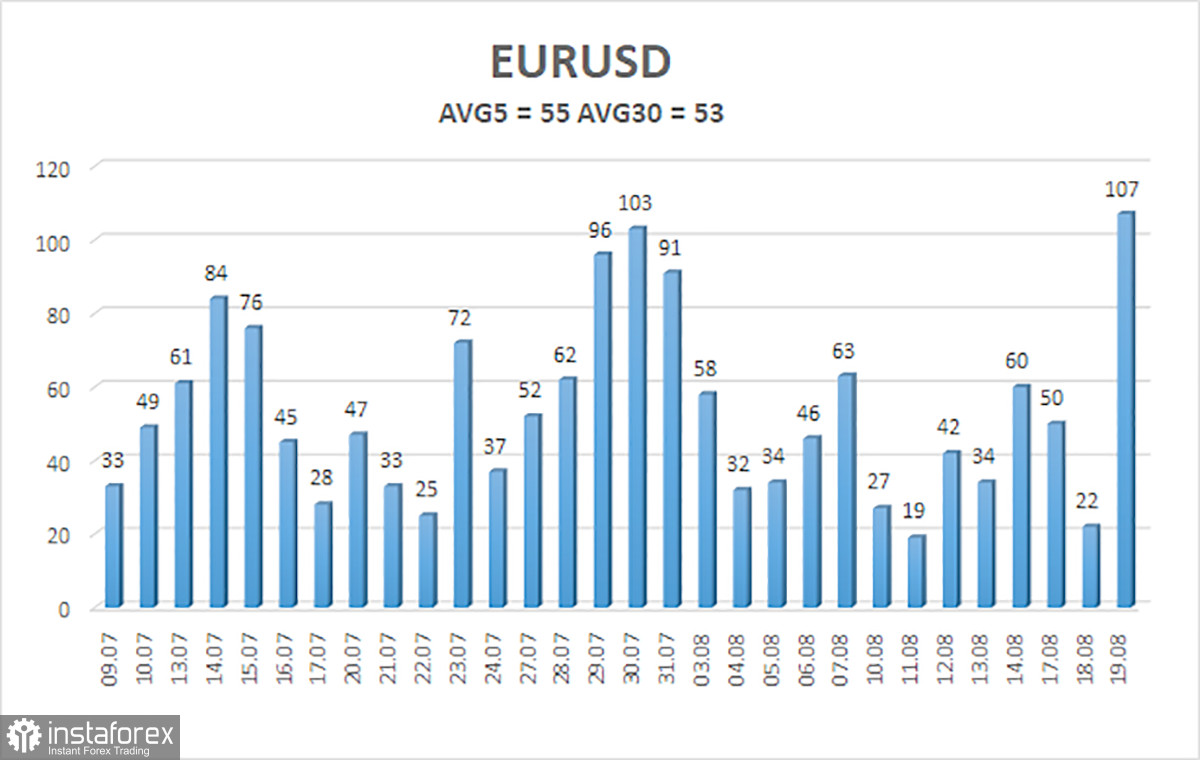
The average volatility of the EUR/USD currency pair over the past five trading days, as of August 20, is 55 pips, which is considered "average." We expect the pair to move between 1.1616 and 1.1726 on Thursday. The upper linear regression channel is downward-sloping, indicating a continuation of the downward trend; however, the trend has already changed. The CCI indicator has again entered the overbought territory, warning of a possible downward pullback.
The EUR/USD pair continues its upward trend on the 4-hour timeframe, suggesting the beginning of a new phase of the global uptrend on higher timeframes. The global fundamental backdrop for the dollar remains negative, but in 2026, both geopolitics and the Fed's hawkish stance had provided strong support for the U.S. currency. However, at this time, these factors no longer support the dollar. If the price is positioned below the moving average, short positions may be considered with targets at 1.1536 and 1.1475. Long positions are relevant above the moving average line with targets of 1.1719 and 1.1736.


