
یہ بھی دیکھیں


 09.04.2026 12:35 AM
The truce between the U.S. and Iran has awakened investors' demand for gold. The precious metal was under pressure during the armed conflict in the Middle East, as concerns about accelerating inflation due to rising oil prices heightened the risks of tightening monetary policy worldwide. The increasing likelihood of an end to the war reversed this process. However, questions remain, making it difficult for the "bulls" to counterattack in the XAU/USD market.
Investors were seriously concerned about a repeat of the events in the 1970s. Back then, the oil shock pushed U.S. consumer prices higher. Instead of raising rates, Federal Reserve Chair Arthur Burns, under pressure from the White House, lowered them. Inflation skyrocketed. The new chairman, Paul Volcker, quickly raised borrowing costs to 20%. Gold plummeted from $855 per ounce in 1980 to $255 in 1999, representing an 85% loss of value over two decades.
As a result, central banks began actively selling off their gold reserves. The Bank of England sold 395 tons from 1999 to 2002, stopping at what is known as Brown's Bottom. The minimum reserves were named after Chancellor Gordon Brown, who ordered the operation.
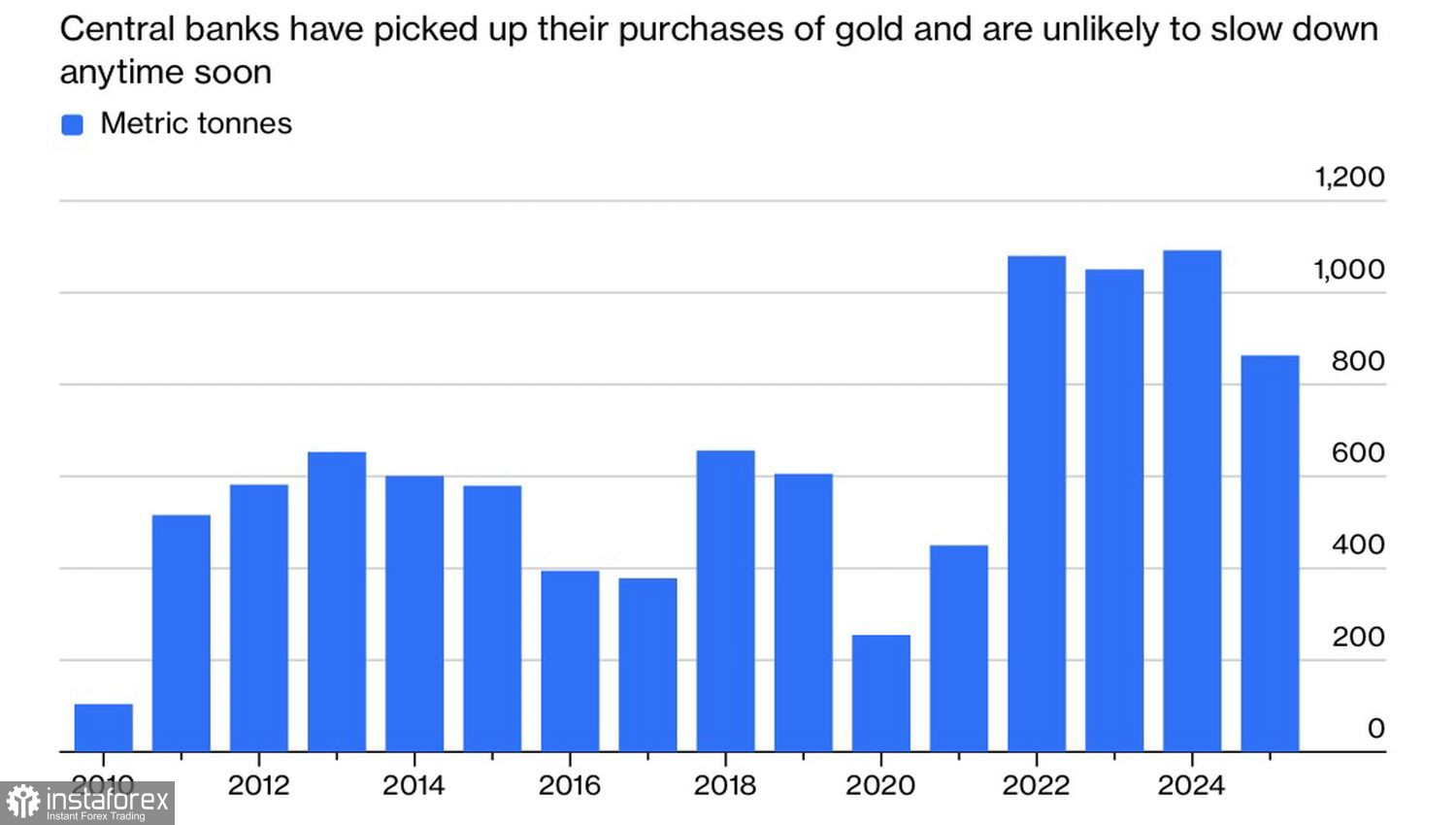
That history has much in common with current events. The same oil crisis, the same dancing to the tune of the White House by the Fed Chair, Kevin Warren, who is on the verge of taking office. It's no surprise that central banks began to offload their gold reserves. Turkey made the greatest effort, exchanging 60 tons of gold for cash to support its severely weakened lira. Without the 17th month of purchases from the People's Bank of China, central banks would have become net sellers of gold bars. This would contrast sharply with their high activity in 2022-2025, which became a key driver of the XAU/USD rally.
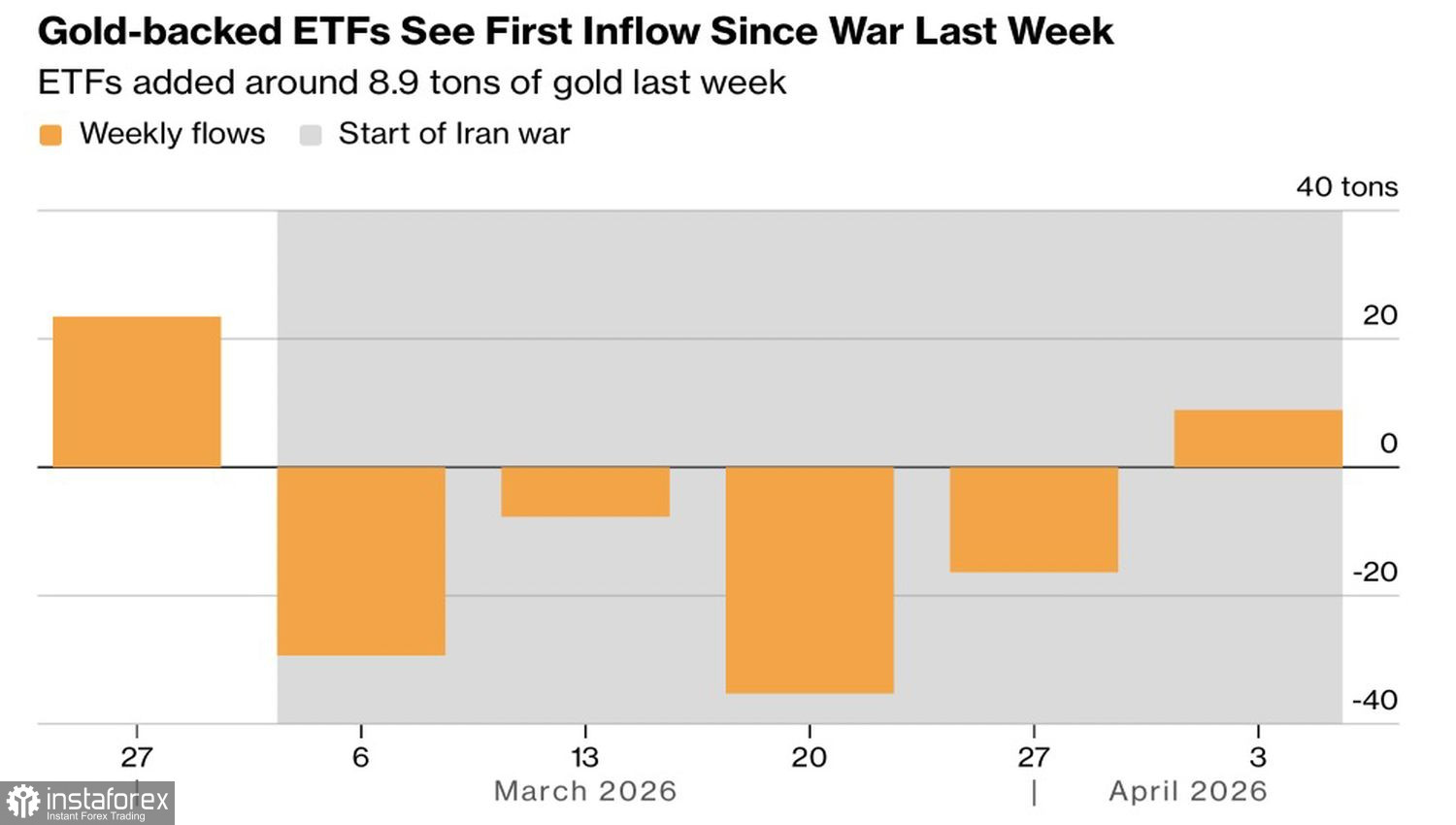
Before the January sell-offs, gold drew strength from high demand for products in specialized exchange-traded funds (ETFs). ETF reserves grew rapidly, but the armed conflict in the Middle East turned everything upside down. Only rumors of negotiations and a ceasefire allowed investors to return to modest purchases after four weeks of outflows.
The future dynamics of gold will depend on the progress of negotiations between the U.S. and Iran. The speed of the recovery of the oil market will also play a significant role. The longer oil prices remain high, the greater the risks of inflation accelerating. The 1970s scenario could still play out, hindering the "bulls" in the XAU/USD market.
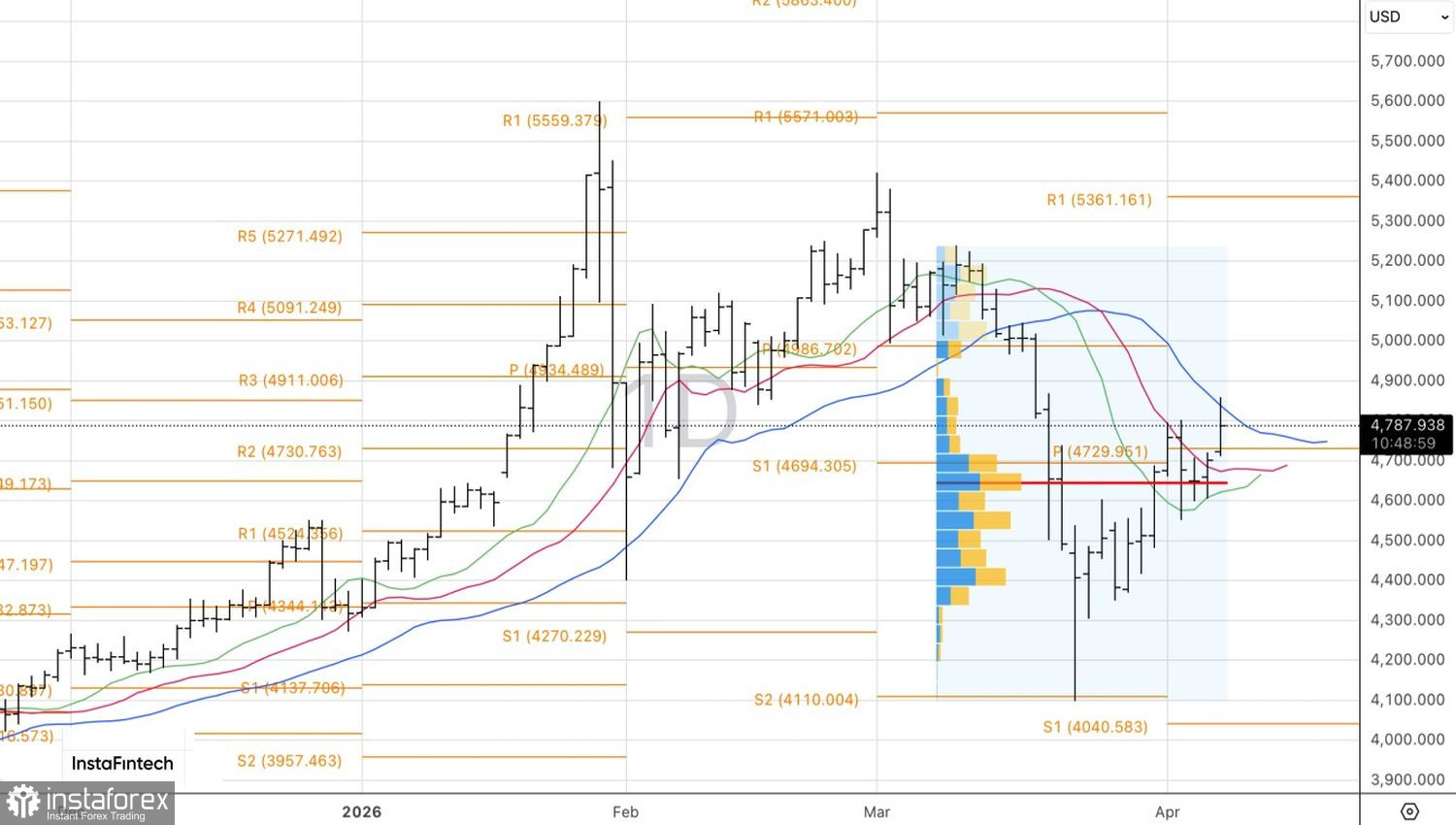
Technically, on the daily chart, gold rebounded from dynamic resistance represented by the blue moving average. A drop in quotes below the minimum of the bar, with a long upper shadow near the $4,715-per-ounce mark, will be grounds for selling. However, if the "bulls" manage to keep the precious metal above the $4,730 pivot level, traders should focus on building and increasing long positions in gold.


