
यह भी देखें


 11.06.2026 02:48 PM
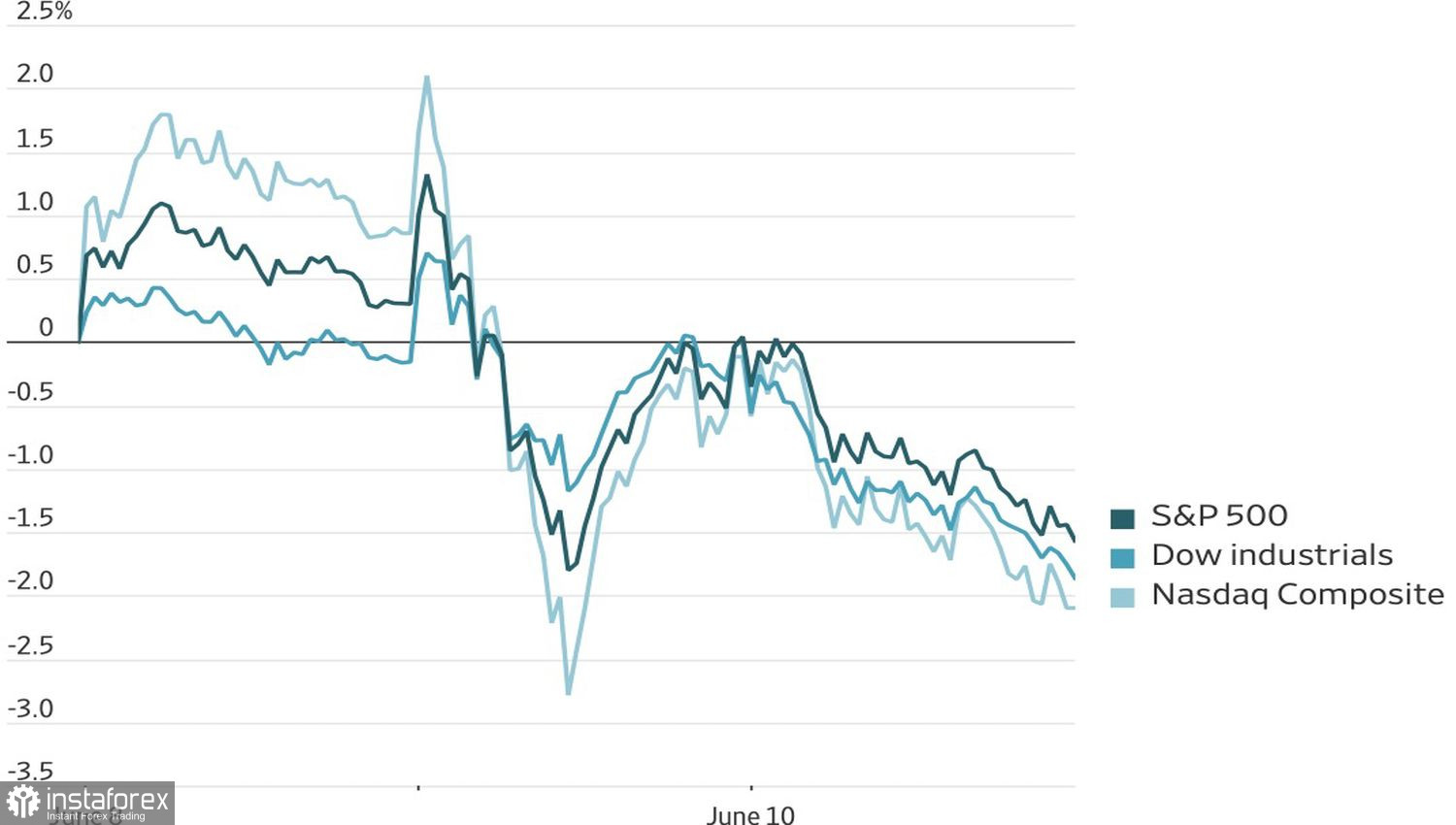
Stagflation fears, capital being freed up for the SpaceX IPO, and geopolitics were the three pillars that drove the recent S&P 500 correction. US inflation accelerated to 4.2% — the highest in three years — and provocative remarks by President Trump accusing Iran of treating the US like "suckers," followed by strikes, pushed equities to a fourth consecutive day of losses. For the Dow Jones, it was the worst trading day so far this year.
US equity indices dynamics
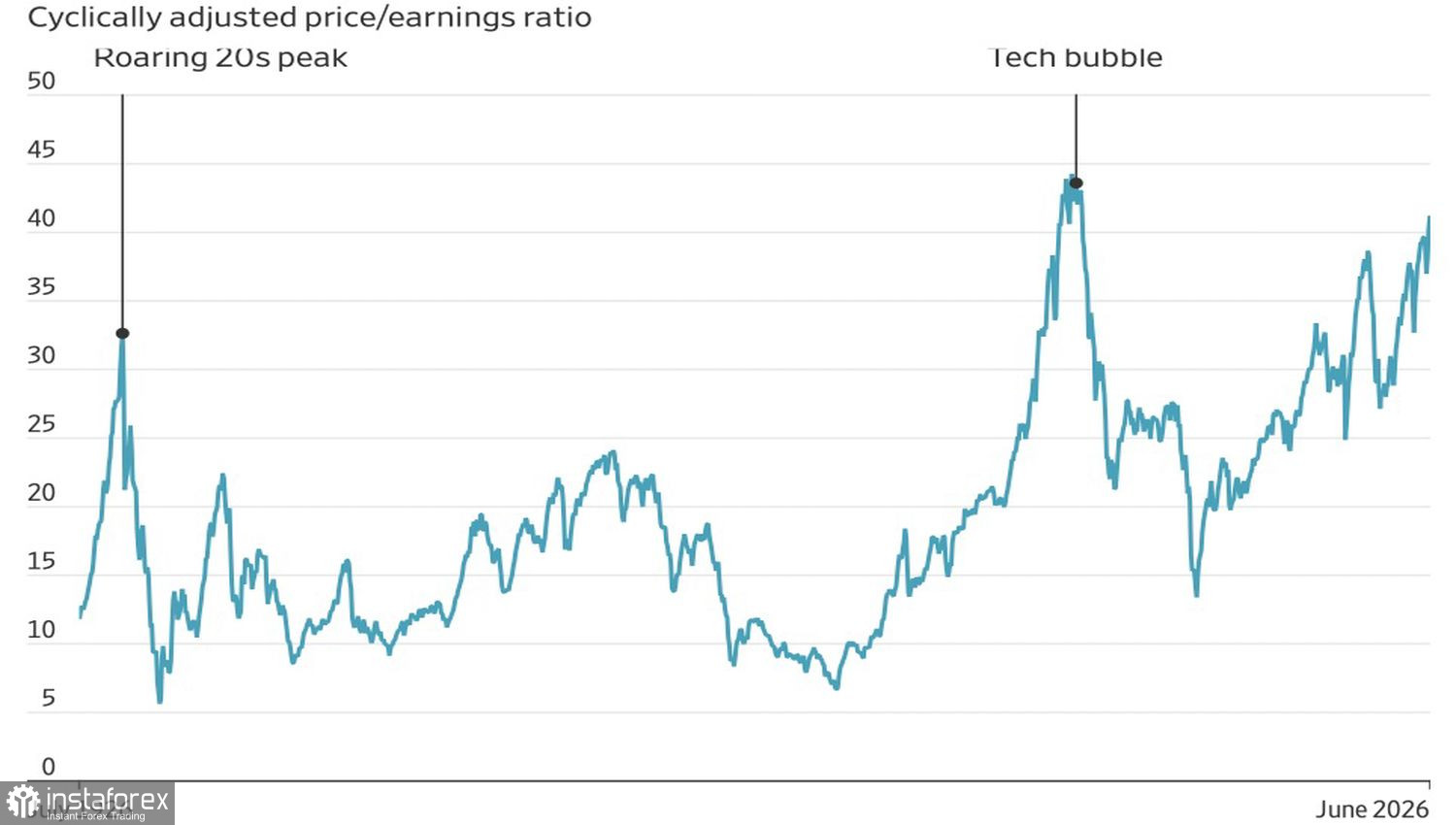
According to Absolute Strategy Research, it took the S&P 500 15 years (2000–2015) to break even in real terms after the dot-com crash. Other long recovery periods include 1929–1956 and 1965–1991.
It would take many years to justify today's stretched earnings multiples if fundamentals revert to long-run averages. Taken together, these factors support concerns about a bubble and legitimate worry about a stagflationary outcome.
Price-to-earnings ratio dynamics
Fuel was added to the decline by expectations for a $75bn SpaceX IPO. Investors are raising cash, creating short-term liquidity pressure and triggering sell-offs in big tech.
The third bearish driver is geopolitics. The downing of a US helicopter triggered heavy US strikes on Iran. Trump publicly criticised Tehran for stalling negotiations. The escalation dented global risk appetite and contributed to the S&P 500 pullback. Market psychology flipped from FOMO — fear of missing out — to FOL (fear of losing), so a correction is sensible in this context.
However, the bear catalysts are not necessarily long-lasting. The SpaceX IPO is imminent. The US has halted strikes, and if Iran does not retaliate, negotiations could resume. Finally, the latest US inflation report was not as bad as headlines implied.
Annual figures broadly matched Bloomberg consensus, and month-on-month data showed a slowdown in May versus April. Those readings could mark a peak in consumer inflation, which is already easing in oil and gasoline prices. The likely result would be the Fed stepping back from further tightening in 2026 — a positive for US equity indices. Is it time to buy the dip?
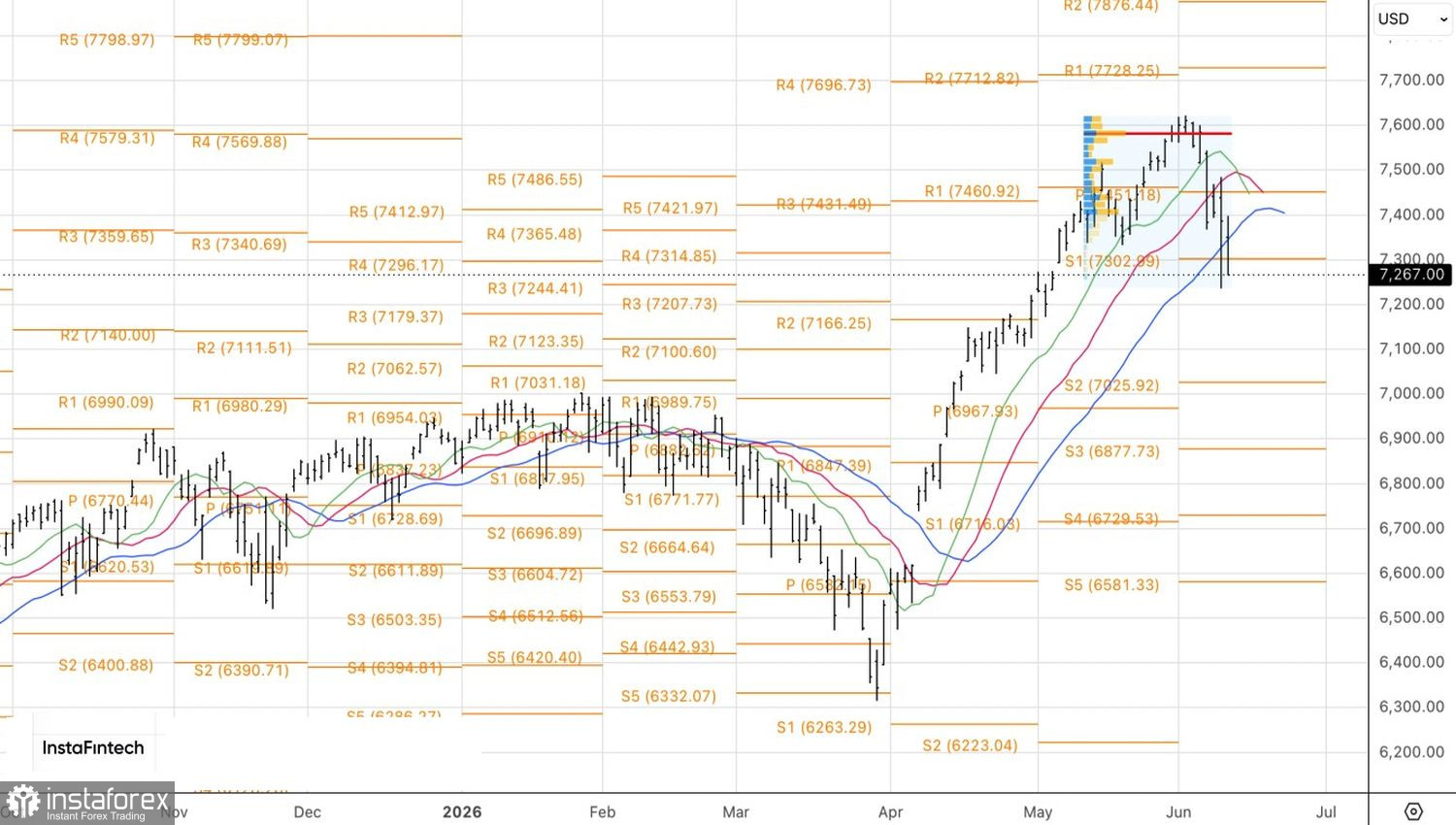
Technically, the S&P 500 has formed an inside bar on the daily chart, signaling uncertainty. A return to the inside bar's upper boundary near 7,400 would be a reason to resume purchases. Aggressive traders can add long positions on a confirmed hold above the pivot at 7,300.
You have already liked this post today
*यहां पर लिखा गया बाजार विश्लेषण आपकी जागरूकता बढ़ाने के लिए किया है, लेकिन व्यापार करने के लिए निर्देश देने के लिए नहीं |

