
Lihat juga


 12.06.2026 12:32 PM
Less than 24 hours after the first ECB rate increase since 2023, Bundesbank president Joachim Nagel signaled that the June move would not be the last. "The Governing Council will be gathering for its next monetary-policy meeting in July," Nagel said in emailed comments Friday. "We are keeping all our options open and are ready to respond once again, should we have to. Our data-dependent and meeting-by-meeting approach to making decisions remains appropriate," he said.
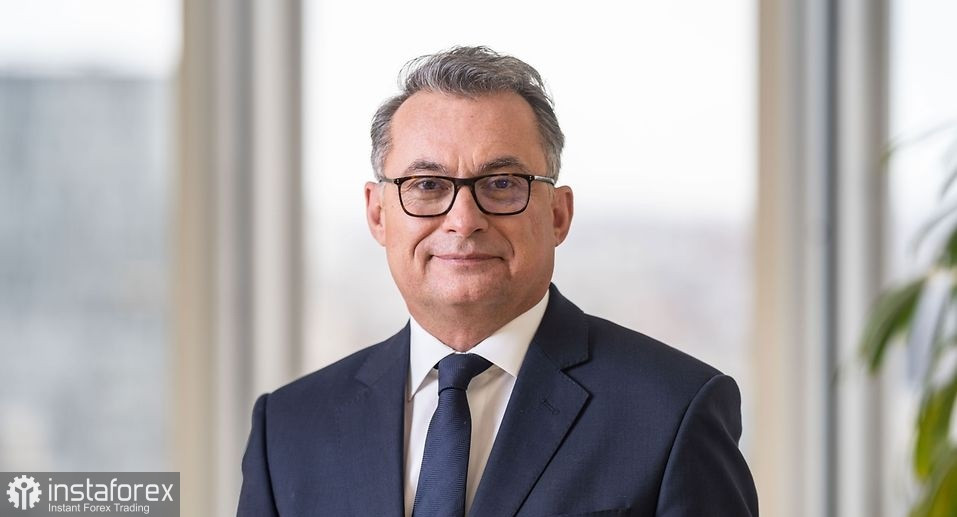
Nagel left little room for interpretation. He said the effects of the war with Iran were large and persistent and that a rate rise would be necessary even if conditions improved quickly. In other words, the ECB is acting not only reactively but preventively: high energy prices are already feeding into core inflation, and it is far harder to extinguish the fire ex post. That, Nagel said, makes it impossible to simply ignore developments. ECB president Christine Lagarde made a similar point yesterday, identifying the same issue as a primary threat to the economy.
The IMF backed the approach on the same day. The fund called for further tightening to contain the inflation shock and projected a cumulative 50 basis points of rate increases this year—that is, one more 25 basis point step after June. That projection aligns with market pricing: the second increase is currently expected in September.
Not everyone on the Governing Council is equally hawkish. Slovenia's representative, Klemen Dolenc, said the June hike was sufficient for now and would allow the ECB to consider the broader situation at subsequent meetings. That is a more cautious stance and reflects the real trade-off the regulator faces: inflation above 3%, falling business activity, and GDP contraction in the first quarter.
For the euro, Nagel's hawkish signal combined with IMF support creates a moderately positive backdrop. If July's meeting does result in a second hike, the rate gap between the euro area and the United States will narrow — an argument in favor of the euro against the dollar over the medium term. However, all of this depends on whether the Strait of Hormuz reopens in the coming days—in the event of a peace agreement that restores shipping, the hawkish narrative could become obsolete much faster than the IMF expects.
A technical outlook for EUR/USD suggests that buyers should focus on taking 1.1580. That level would allow a test of 1.1615. From there, the pair could reach 1.1645, although advancing beyond that point without support from large participants will be difficult. The farther target is the high near 1.1665. On the downside, only substantive buying interest around 1.1555 is likely to prompt significant action from major buyers. If that support is absent, it would be prudent to wait for a new low at 1.1530 or to consider long entries from 1.1505.


