
See also


 13.08.2026 12:14 AM
"Promises are not the same as marriage." Donald Trump said the US "has full control" over the Strait of Hormuz and vowed that Iran will pay for attacks on ships. There are plenty of loud words, but no real progress in talks between Washington and Tehran. Nevertheless, investors stopped valuing the US dollar based on White House rhetoric long ago. Much more important is what happens in the bond market.
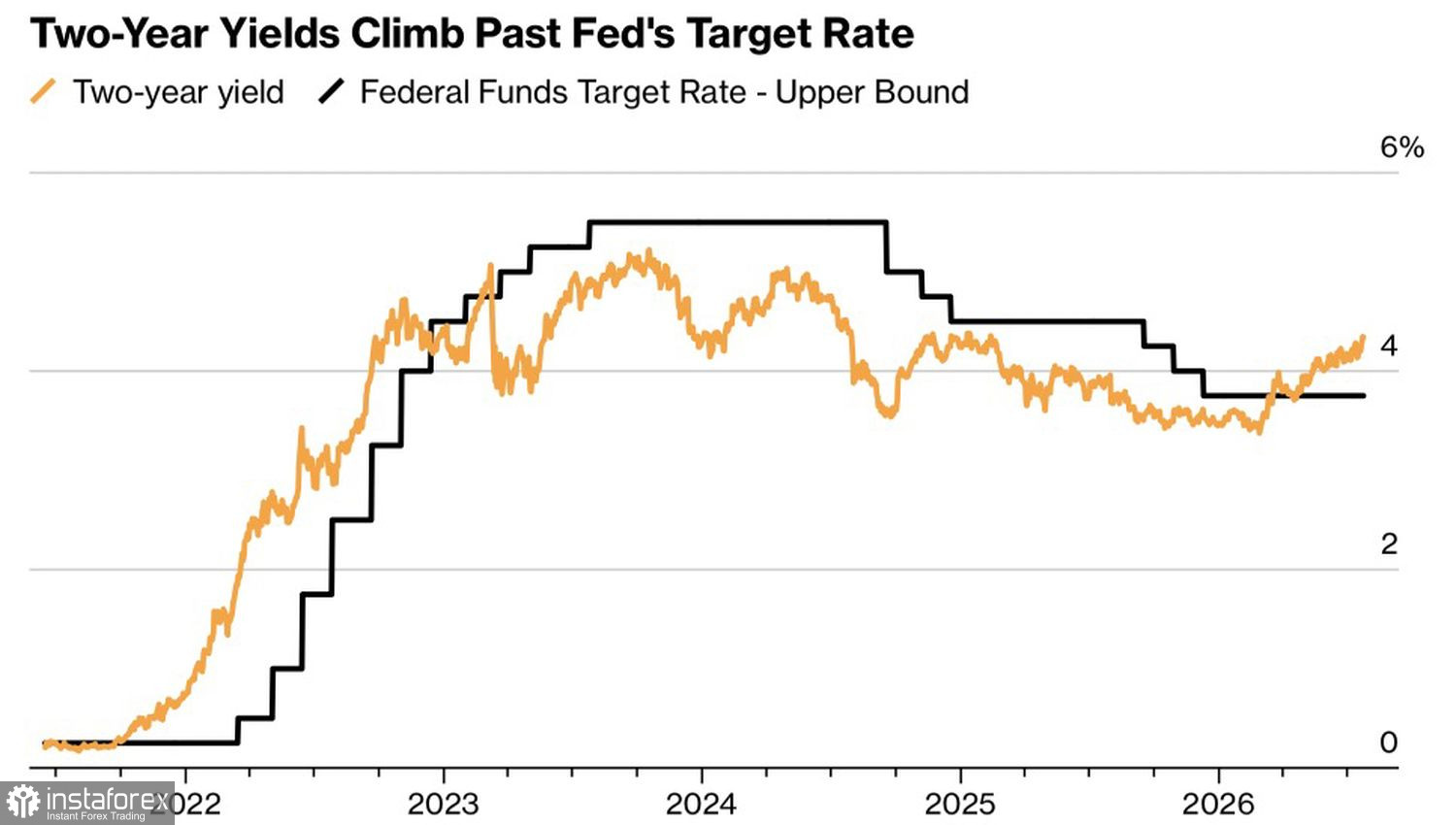
The Brent oil rally and rising US Treasury yields have restored momentum to EUR/USD "bears." Treasury yields fell last week on weak nonfarm payrolls data, reducing the odds of a federal funds rate hike. However, the escalation around the Strait of Hormuz reminded the market of inflation risks — and with them the Federal Reserve's "hawks." Treasury yields will move, and the US dollar will follow.
In fact, weak US labor data no longer looks like a sufficient argument to pin yields down. Mediators from Pakistan said the parties are "close to some agreement" on Hormuz. But until white smoke appears over the strait, participants in the derivatives market are pricing a geopolitical-risk premium and, with it, a rising probability of Fed tightening.
All eyes are on the US consumer price index data due Wednesday. A soft report could restore bond gains after the labor-market-driven selloff. A strong print, especially with rising gasoline, would justify expectations of tighter Fed policy and vindicate the hawks. As Mizuho notes, a soft CPI could help tactically, but the question is whether it will be enough to offset pressure from energy and supply chains ahead of September.
Nevertheless, the ongoing conflict and fading prospects for a quick resolution could weigh on the bond market regardless of the inflation report. In such a scenario, the dollar gains two advantages at once — safe-haven status and higher yields. The euro remains hostage to a foreign war, watching the Strait of Hormuz from the sidelines without its own arguments for a counterattack. ING strategists believe the rate differential between the US and the eurozone stays in the dollar's favor until the European Central Bank clearly signals the end of its easing cycle.
Is the greenback ready to hold its position if the strait is opened after all? I doubt the market longs for that outcome as much as the dollar itself seems to.
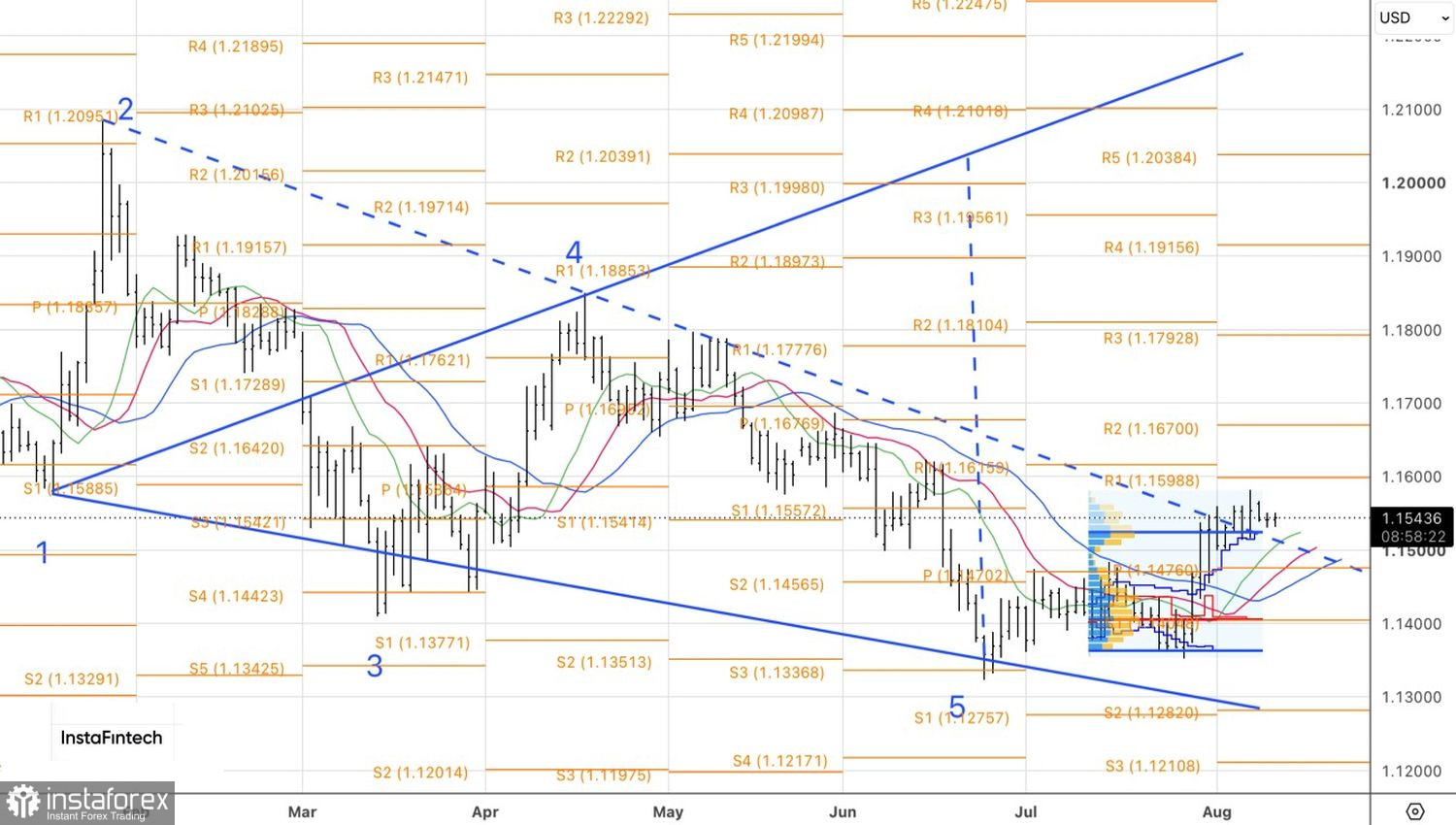
Technically, on the daily chart, EUR/USD is contesting an important level — 1.1525. This is where the upper boundary of the fair-value range and the 2-4 line of the Wolfe Wave pattern sit. A top-down breakout will be the basis for selling. A rebound — for buying the euro against the US dollar.


