
Veja também


 09.04.2026 12:35 AM
What rises high falls hard. The most rapid drop in oil prices in the last six years, following news of the ceasefire between the U.S. and Iran, has deprived the American dollar of three key advantages: demand for safe-haven assets, preference for a currency from an energy-exporting country, and high volatility. The monthly volatility of G10 currency quotes has fallen to its lowest levels since the start of the armed conflict in the Middle East.
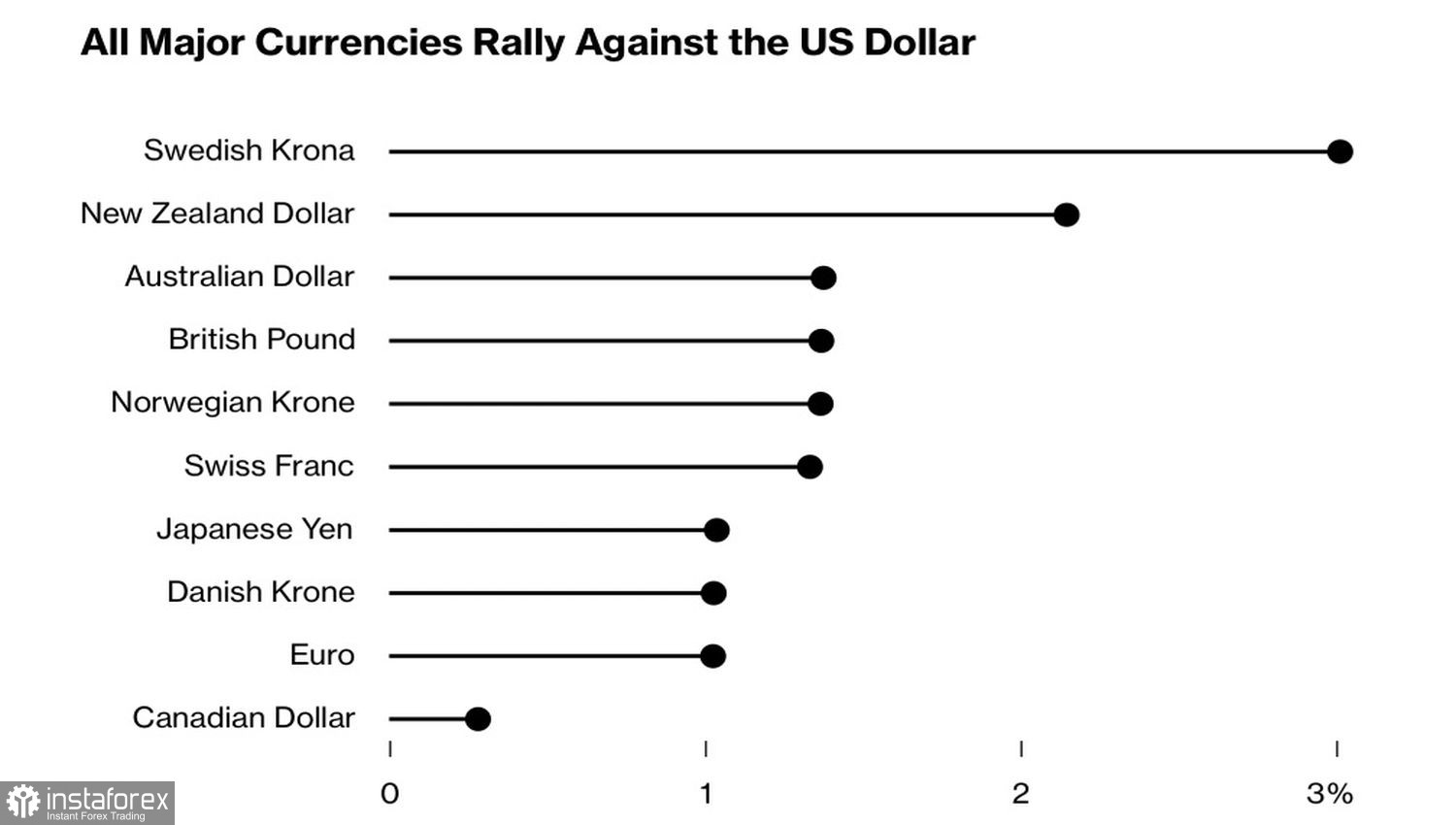
The escalation of geopolitical tensions and the associated rise in oil prices led investors to believe that the Federal Reserve would not lower, but possibly even raise, the federal funds rate. Yes, Jerome Powell and his colleagues were not rushing anywhere. But who knows how their worldview might change if consumer prices surged into double digits?
After news of negotiations between Washington and Tehran, the futures market raised the chances of a loosening of Fed monetary policy in 2026 from 12% to nearly 50%. The same narrative that dominated before the conflict in the Middle East returned to the market: the Fed is lowering rates, and after Kevin Warsh takes office, it will do so aggressively. The U.S. dollar falls against major global currencies.
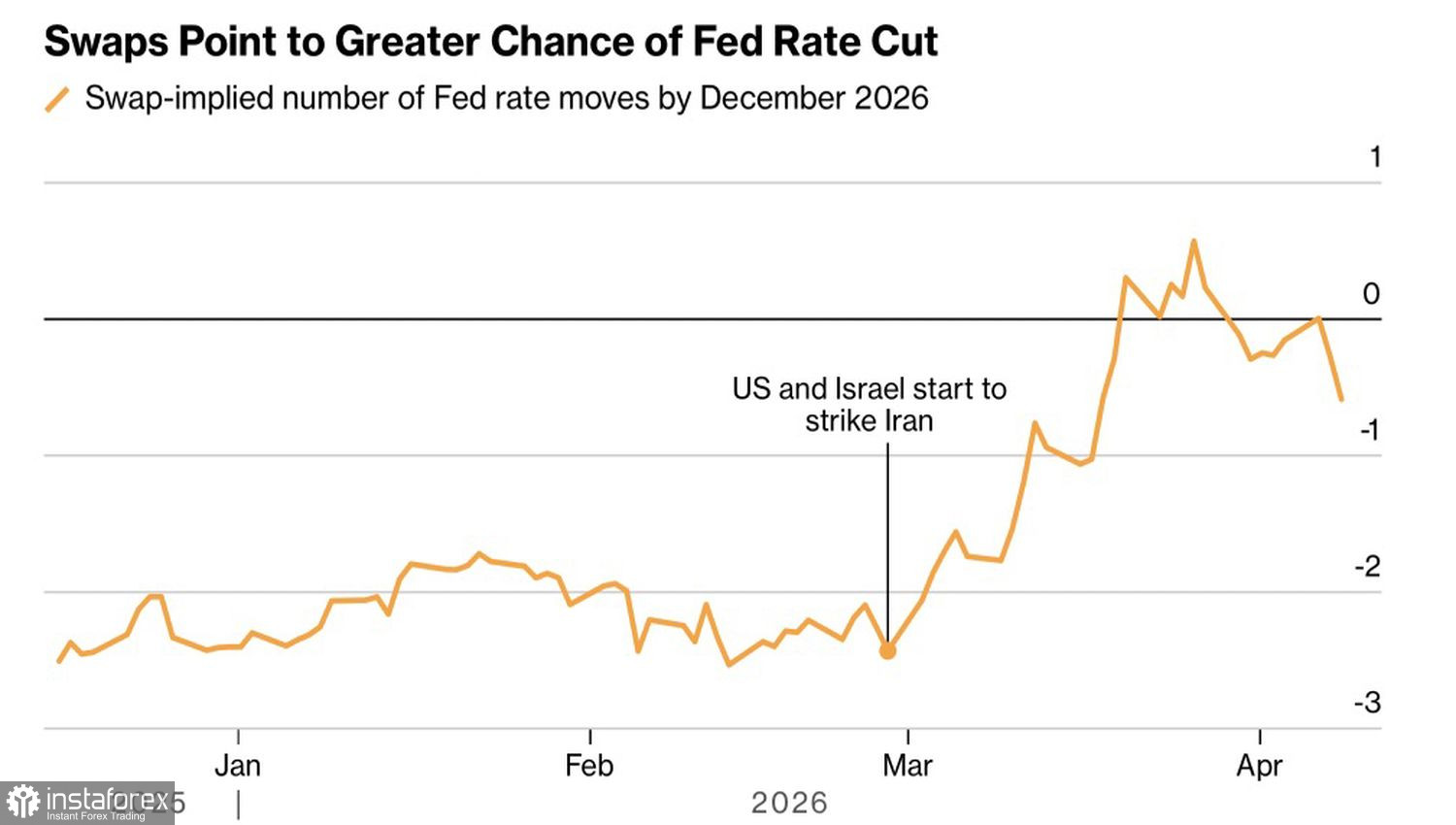
Still, the reaction of EUR/USD to the news of a two-week ceasefire seems excessive. Oil is unlikely to continue falling as rapidly. The energy infrastructure is damaged, and its recovery will take weeks, if not months. The U.S. Energy Information Administration and Bloomberg experts forecast that in March, OPEC countries' oil production plummeted by an unprecedented 7.5 million barrels per day. Even if the conflict in the Middle East ends, production will be 9.1 million barrels per day in April and 5.6 million in May.
The oil market will remain in a deep deficit. This situation creates conditions, if not for Brent to return above $100 per barrel, then at least for prices to stabilize at elevated levels. This is very unpleasant news for both the global and the Eurozone economies. Its weakness will quickly bring the ECB back to reality. However, the futures market may expect a shift from two or three acts of monetary tightening to a loosening of monetary policy. This would be a real blow to the euro.
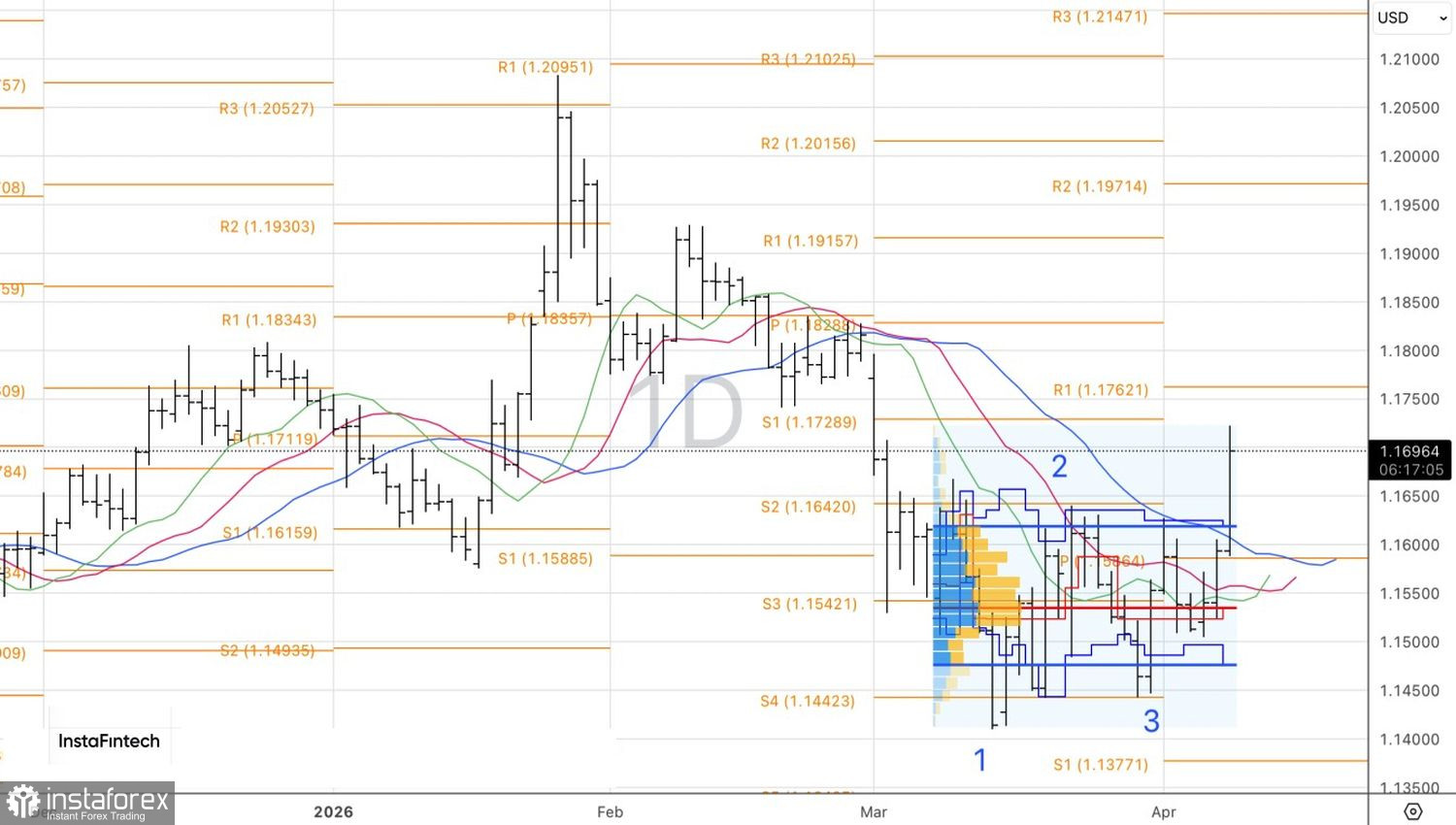
For now, however, the regional currency, also known as the currency of optimists, is doing well. Confidence in the imminent resolution of the conflict in the Middle East leaves the door open for a rally above 1.17 against the U.S. dollar.
Technically, on the daily chart, the EUR/USD pair shows the implementation of a 1-2-3 reversal pattern with a breakout of the corrective high at point 2. A consolidation above this level, past 1.164, will increase the risk of a continuation of the rally toward 1.1765 and 1.183, providing a basis for forming long positions in euros against the U.S. dollar.


