
Veja também


 11.12.2025 12:37 AM
History repeats itself. Literally, the last four days have been reminiscent of twin brothers. EUR/USD rose during the European session on positive signals from Europe, then fell during the U.S. session amid expectations of a "hawkish" Federal Reserve rate cut. The main currency pair increasingly resembles a compressed spring, ready to shoot off at any moment. Will Jerome Powell give the signal?
According to Christine Lagarde, the European economy has proven to be much more resilient to Donald Trump's tariffs than previously assumed. The euro rose, even though skeptics argued that the import duties would weaken it. As a result, the European Central Bank will likely raise GDP forecasts at the next meeting. This good news inspired the EUR/USD bulls to attack; however, after moving forward, buyers had to take another step back.
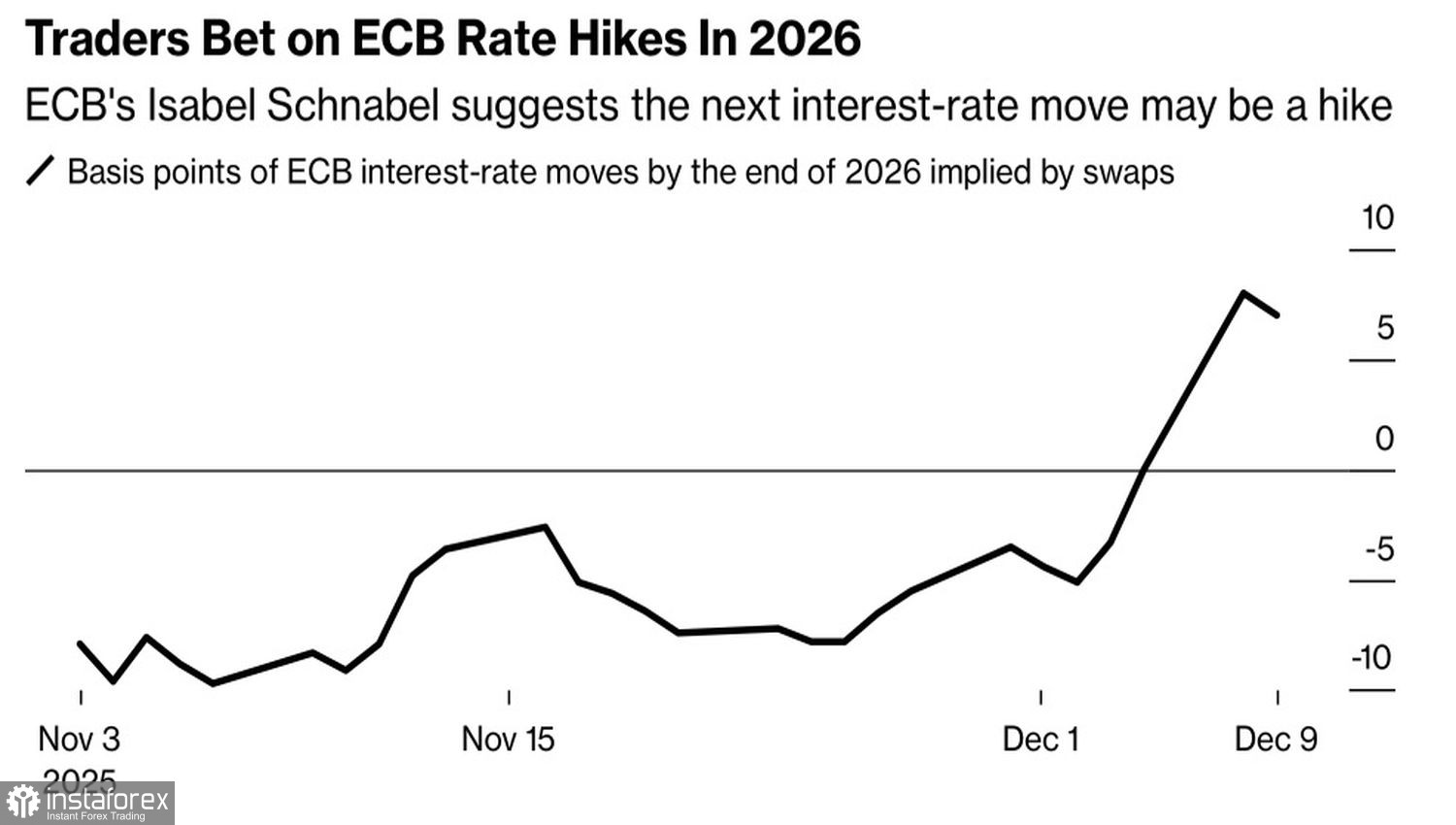
The improvement in the economic outlook for the currency bloc and tamed inflation allows members of the Governing Council to consider a prolonged hold on rates or even tightening monetary policy. Following hints from Isabel Schnabel, the money market has priced in 13 basis points of monetary expansion by the ECB in 2026. This implies a probability of over 50% of raising the deposit rate from 2.00% to 2.25% by the end of next year.
Conversely, the Fed is planning to lower its rates. Derivatives indicate nearly a 90% chance that this will occur in December, with expectations of one or two cuts in 2026. The path of the Fed diverges from that of the ECB, and not only with it. Japan continues to normalize its monetary policy, while New Zealand and Australia have made it clear they will not continue their cycles. Canada is next. It is no surprise that global bond yields are rising rapidly, reaching their highest levels since 2009.
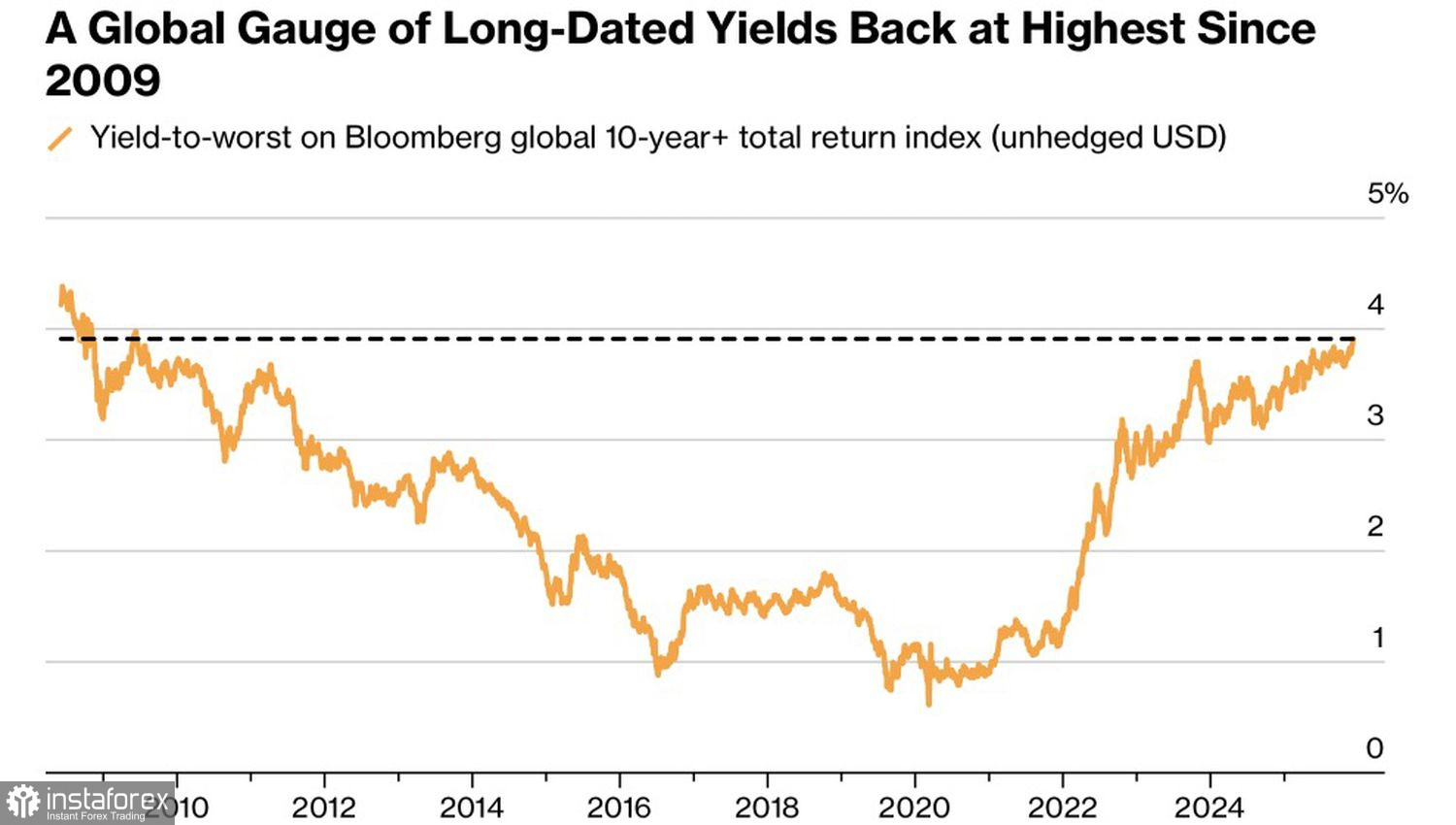
The U.S. is acting as a black sheep, even though the Fed is considered the leader of the central bank flock. At its December meeting, the Fed will lower rates, and an increase in the number of "doves" on the FOMC will lead to continued monetary expansion. As a result, the U.S. dollar will continue to weaken against major world currencies, though it may show some short-term strength.
Bank of America expects a "hawkish" cut from the Fed. This occurred in September and October, after which EUR/USD fell. However, the influence of such central bank approaches is gradually fading. Therefore, the reaction of the main currency pair may be completely different this time.
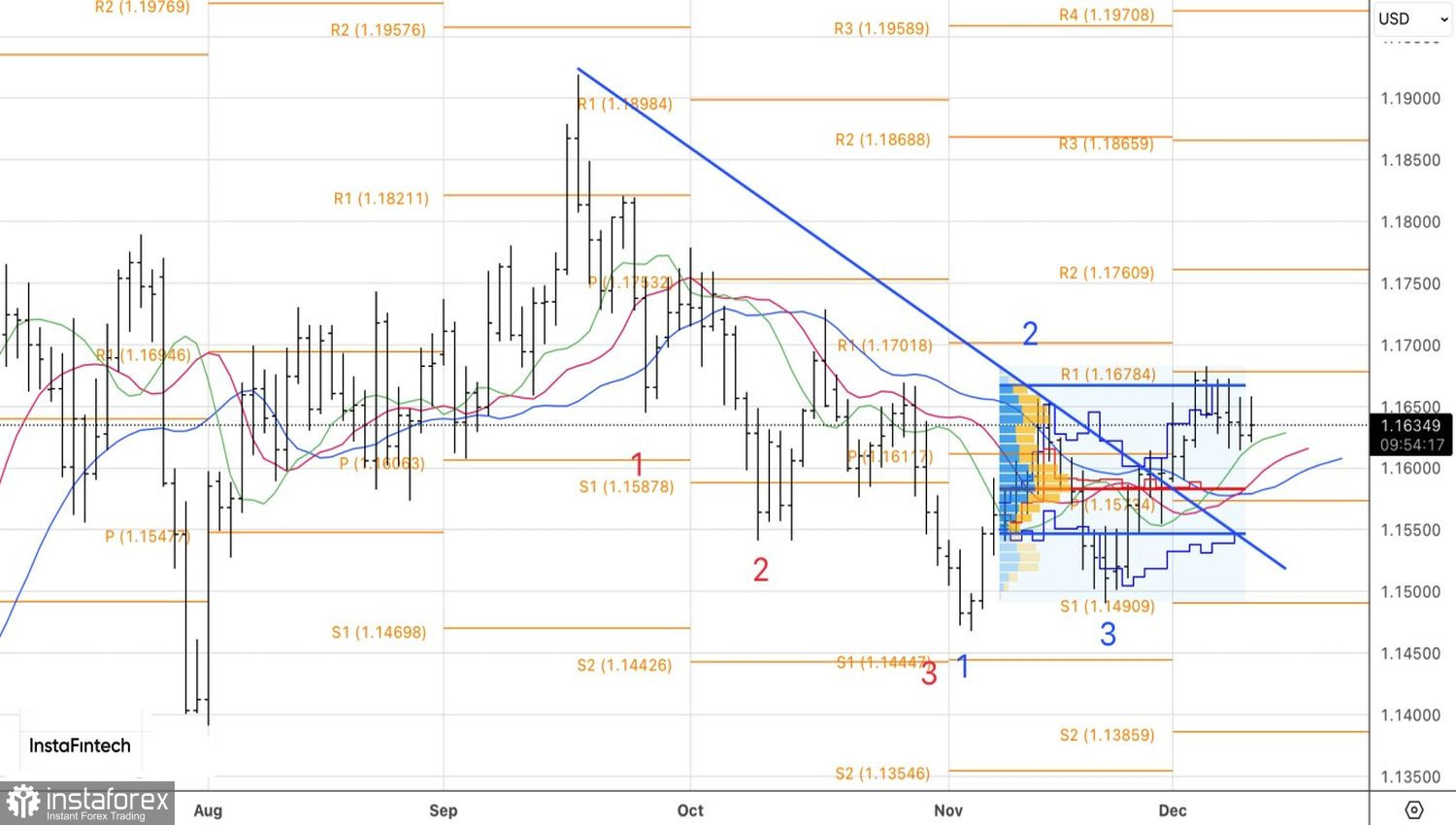
Technically, a short-term consolidation has formed on the daily chart of EUR/USD in the range of 1.1615-1.1660, within the Spike and Shelf pattern. A breakout above its upper boundary near 1.1660 will signal long positions. A breakout below near 1.1615 will signal shorts, with subsequent reversals and entries into longs at fair value at 1.1585 or from the pivot level at 1.1550.


