
यह भी देखें


 04.06.2026 02:21 PM
Dallas Fed President Lori Logan issued one of the most hawkish signals among FOMC members in recent weeks. She said yesterday that a rate increase may be required at the end of this year to return inflation to the 2 percent target.
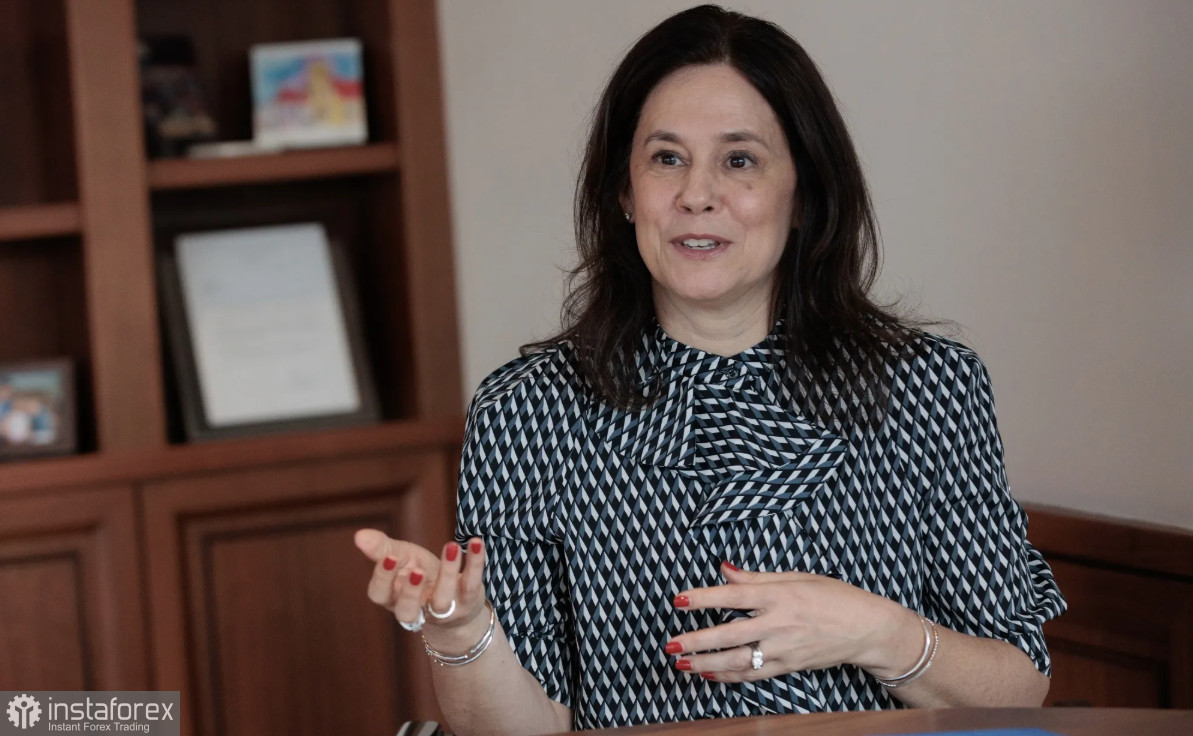
"I am increasingly concerned that higher interest rates could be necessary later this year to fully restore price stability," she said at an event in El Paso.
Her logic is simple and consistent. The labor market is balanced, investment in artificial intelligence is accelerating, and financial conditions are accommodative—in other words, current policy is at best neutral and perhaps stimulative. With inflation having exceeded the target for more than five years and now accelerating again, that combination is unacceptable.
Recall that the Fed's preferred inflation gauge, the PCE index, rose 3.8 percent year-on-year in April, nearly double the target, while the private sector added 122,000 jobs in May 2026—the strongest monthly gain since January 2025 and above the 117,000 forecast. The figure rose from a revised April reading of 105,000 and confirmed that the labor market retains momentum heading into the summer hiring season.
It is important to note that Logan is a voting FOMC member this year, and she already dissented at the April meeting over language that hinted that cuts might be the next step. Her warning that inflation could remain anchored above target is not mere rhetoric but a signal that she is prepared to vote for tightening. The principal indicator she watches is the Dallas Fed's trimmed mean measure, a metric that the new chair, Kevin Warsh, has spoken highly of.
Notably, New York Fed President John Williams took a materially different view on the same day: he said monetary policy is in roughly the right place and that he saw no clear need to raise or cut rates. That divergence within the committee is exactly what makes upcoming Fed meetings unpredictable.
Logan is clearly in the hawkish camp, while Williams favors a pause. Chair Warsh has not yet publicly defined his stance, and markets will watch his first signals closely. Hawkish rhetoric is generally positive for the dollar.
Buyers of EUR/USD should consider taking 1.1630. That will allow a test of 1.1660. From there a move to 1.1690 is possible, although advancing beyond that level without support from major participants will be difficult. The farther target is 1.1730. On the downside, only buying interest around 1.1605 is likely to prompt significant action from large buyers. If that support is absent, it will be prudent to wait for a new low at 1.1585 or to consider long entries from 1.1535.
As for GBP/USD, buyers should clear the nearest resistance at 1.3440 to target 1.3475. Breaking above that level may prove difficult, with a further target at 1.3510. If the pair falls, bears will seek control at 1.3410. A decisive break below 1.3410 would likely inflict serious damage on long positions and could push GBP/USD toward 1.3370, with downside extending to 1.3340.

