
Lihat juga


 08.09.2026 05:12 PM
Just yesterday, rising interest rates were killing gold prices. Today, it has more than doubled in value in defiance of textbook market logic. Let's look at who has become the new master of the yellow metal and why the US dollar will have to give ground for the bull trend to keep running.
Gold no longer follows the old macroeconomics playbook. What was considered an immutable axiom a few years ago is collapsing before our eyes. The metal's relationship with key market drivers is changing radically, and for the recent gold bull market not to fizzle out, the US dollar will likely have to weaken further. But what exactly broke century-old market mechanisms?
The end of the "seesaw" era Investing used to be simpler: gold and real interest rates (and the dollar) behaved like a seesaw. When rates fell, the metal rose. A vivid example: when rates were at zero in late 2019 and fell into negative territory in 2020, gold jumped nearly 45%.
Then the world changed. The turning point came in 2022 with the freezing of Russia's foreign-currency reserves by G7 countries amid the Russia–Ukraine conflict.
That unprecedented step not only shocked global markets — it severed gold's fundamental link to real interest rates. It became obvious that if your reserves can be wiped out by a single political decision, traditional financial instruments no longer guarantee safety.
New market "whales" Replacing the traditional investors who followed Fed policy are new players — namely central banks of emerging markets seeking sovereign independence.
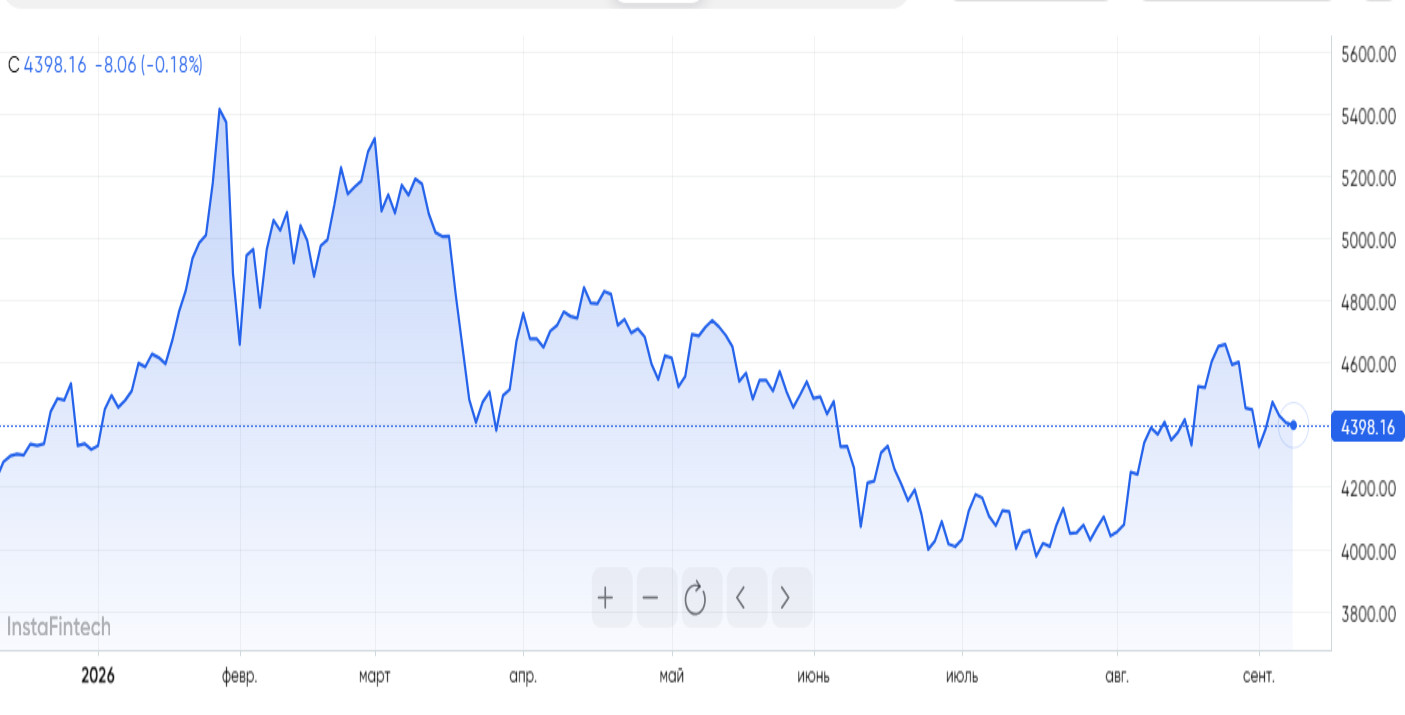
Just this week, China reported its largest monthly increase in gold reserves in three years (for August). That unprecedented demand has helped gold more than double in price since early 2022.
And that's despite real yields on 10?year US Treasuries having risen by more than 300 basis points. By the old textbook rules, gold should have collapsed. Instead, we are witnessing a true paradigm shift in the market.
The dollar in the crosshairs One old rule still holds: the inverse correlation between gold and the US dollar remains as tight as ever. This brings new triggers that can play into the metal's hands.
The giant Japan Government Pension Investment Fund (GPIF) is expected to begin a large-scale asset reallocation, and capital flows into the yen would only reinforce this dynamic. All of this pushes major global players toward portfolio diversification and away from reliance on the greenback. Gold naturally becomes the alternative.
In short, the precious-metals market has mutated. It is now driven less by dry central bank reports and more by geopolitical fears and sovereign fund strategies. Gold has found strong fundamental support — but for the bull market to continue, the dollar will have to give some ground.


