
See also


 12.05.2026 08:32 PM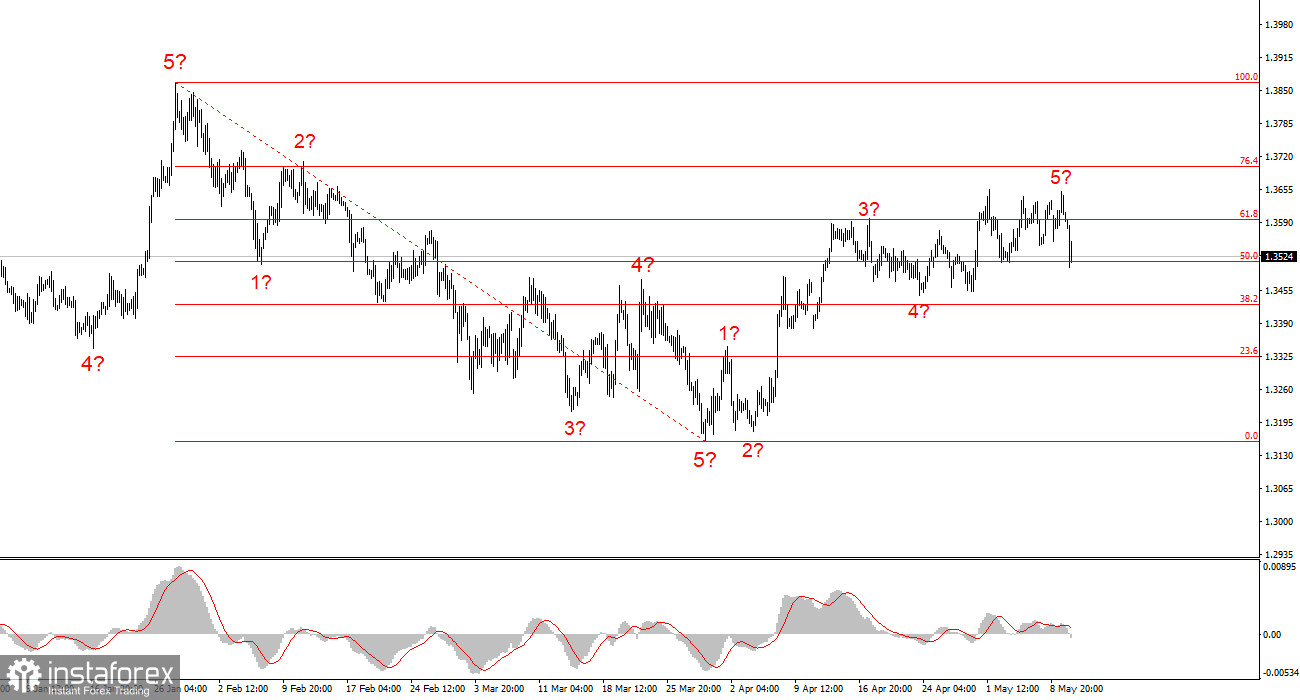
For GBP/USD, the wave structure continues to indicate the development of an upward trend segment (lower chart), while in the short term the market continues building a structure that was initially interpreted as corrective, but is now viewed as impulsive. Consequently, both major currency pairs are currently within a bullish wave formation.
The rise of the euro and the pound was supported by the ceasefire in the Middle East, which has lasted for about a month (with rare exceptions) and still has every chance of becoming the basis for a full-fledged peace agreement. However, recently the rhetoric of Iranian and US leaders has become more aggressive and uncompromising, which could erase any optimism regarding a peace deal.
The latest bullish wave structure has taken on a five-wave form, and wave 5 may complete its development in the near future. If that is indeed the case, then a corrective structure of at least three waves should follow. Much will depend on developments in the Middle East. If no new escalation occurs and Tehran and Washington continue working toward a final ceasefire, the upward movement of the pair may continue after the correction.
The GBP/USD pair declined by 75 basis points on Tuesday, but all of this decline occurred before the release of the US inflation report. Consumer inflation for April came in at 3.8%, rising by 0.5% year-over-year compared to March. Core inflation accelerated to 2.8%, also exceeding market expectations.
Therefore, inflation is surpassing forecasts, which theoretically could force the Federal Reserve to tighten monetary policy in 2026. At present, the market has almost completely ruled out a rate cut this year, though it also remains skeptical about rate hikes. Nevertheless, it must be acknowledged that hawkish expectations in financial markets have started to grow.
According to the CME FedWatch tool, the probability of a 25-basis-point rate hike by year-end has now risen to 27.5%. Just yesterday, it was below 10%. Inflation is rising, and along with it, hawkish market expectations are increasing as well.
Most likely, the European Central Bank and the Bank of England will also tighten policy, potentially beginning as early as next month. Therefore, the US dollar stands to gain little from rising inflation and the possibility of a US rate hike, since the ECB and Bank of England are unlikely to sit idle while their efforts to stabilize inflation over recent years are undermined.
Based on this, I do not believe in a prolonged rise of the US dollar without a renewed war in the Middle East, and I continue to view geopolitical developments as the primary factor driving movements in the currency market.
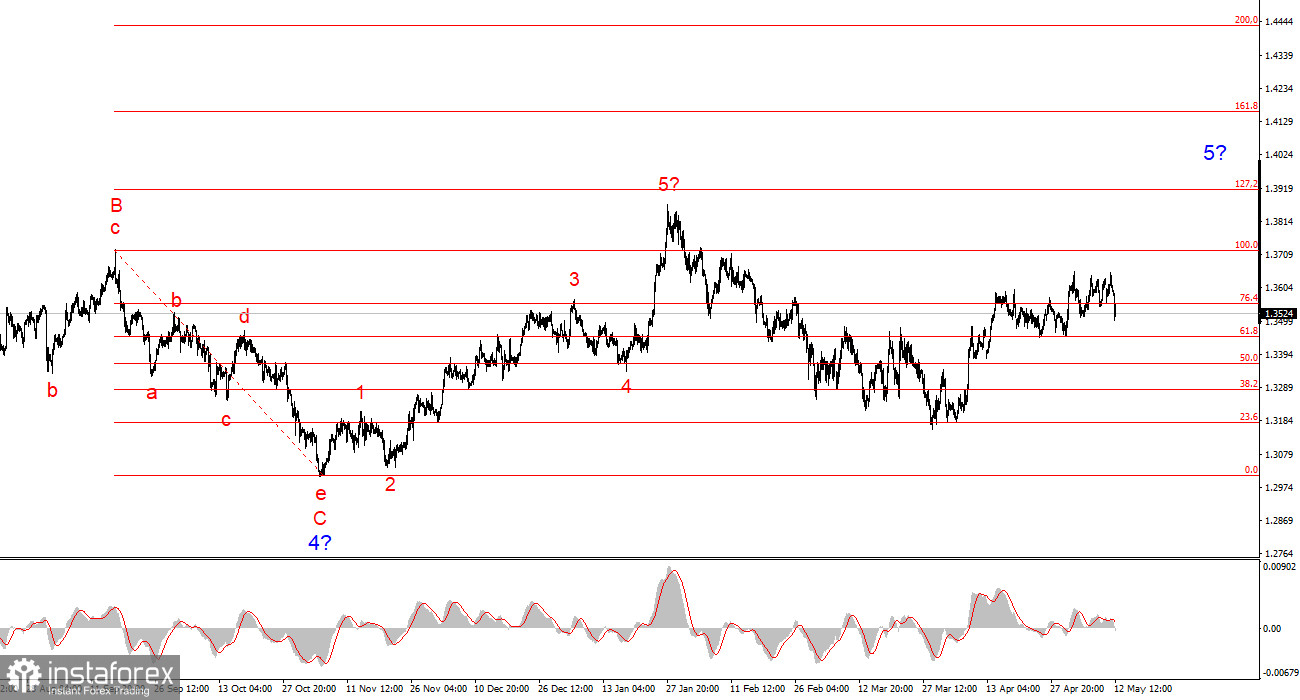
The wave pattern of GBP/USD has gradually become clearer, as I previously expected. We can now see a distinct five-wave upward structure on the charts, which may soon be completed. If that is indeed the case, then a corrective wave sequence should begin after wave 5 is completed.
Wave 5 may end near the 1.3699 level, which corresponds to the 76.4% Fibonacci retracement level. If geopolitical developments continue moving toward a long-term peace agreement, the upward trend segment may become more extended. Therefore, the combination of wave structure and geopolitics will determine the fate of the British pound in the coming weeks.
The higher-timeframe wave count looks nearly perfect, even though wave 4 moved beyond the peak of wave 1. However, it is worth remembering that ideal wave structures exist only in textbooks. In practice, market structures are far more complex. Wave 4 has a classic three-wave form, so after its completion, a new impulsive trend segment began to develop.


