
Vea también


 08.06.2026 12:45 AM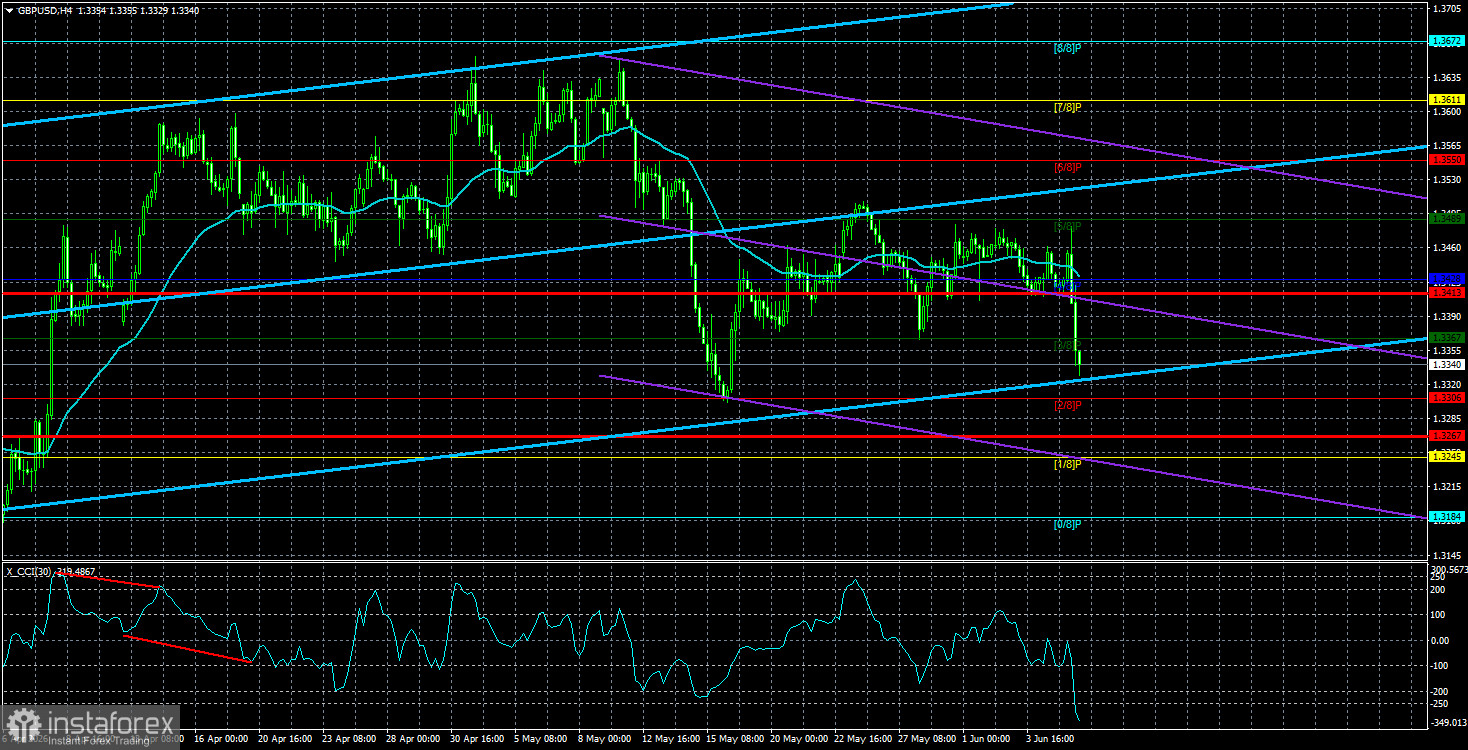
The GBP/USD currency pair traded last week in a manner similar to the EUR/USD pair. Thus, we can draw the same conclusions. Throughout the week, the market ignored fundamentals, macroeconomics, and even geopolitics, only reacting on Friday to the truly resonant U.S. labor market report. Therefore, the further rise of the U.S. dollar against the British pound is also in question, in our opinion.
However, it is time to shift our focus to the new week. We see no sense in reviewing all macroeconomic reports and other events since the market ignores 90% of them. Therefore, we will focus on the two most important events. The first is the European Central Bank meeting. One might immediately wonder: what does the ECB have to do with the British pound? Firstly, if the euro reacts to the ECB meeting, it may pull the sterling along with it. Secondly, we need to understand whether there will be any market reaction to a possible tightening of monetary policy. It can be said that the market pays no attention to this factor at the moment, as in recent weeks the EUR/USD pair has been either flat or experiencing dollar growth. Thus, if this event is ignored, we will understand that the market still sees only geopolitics. And even that is only influenced by individual, significant, confirmed reports and news.
The second important event of the week is the U.S. inflation report for May. According to expert forecasts, the consumer price index may rise from 3.8% to 4.0-4.2%. In any case, this will be the third consecutive acceleration of inflation, which the Federal Reserve cannot ignore. Recent remarks from neutral members of the FOMC (rather than those aligned with Trump) indicate that the Fed's position is favorable for waiting and watching. However, if they wait too long, they may see double-digit inflation. We understand that such statements may sound like fantasy now, but inflation in the US could double in just three months. The conflict in the Middle East is not only unresolved; it is not even moving towards de-escalation and peace.
If Iran contributes to the blockade of the Bab-el-Mandeb Strait, it will trigger a new surge in energy prices. Then the inflation rate of 4.2% will look like a mere detail. The main thing to understand now is that the conflict in the Middle East is ongoing, meaning inflation could continue to rise. If the Fed does take this factor into account, it will soon begin considering options to tighten monetary policy. This aspect could support the U.S. currency.
In general, the fate of the dollar in the coming weeks will depend on unpredictable events. We do not know at what inflation level the Fed will start considering raising the key rate. We do not know when the conflict between Iran and the US will end or when the Strait of Hormuz will be reopened. Therefore, reactions must be based on the situation.
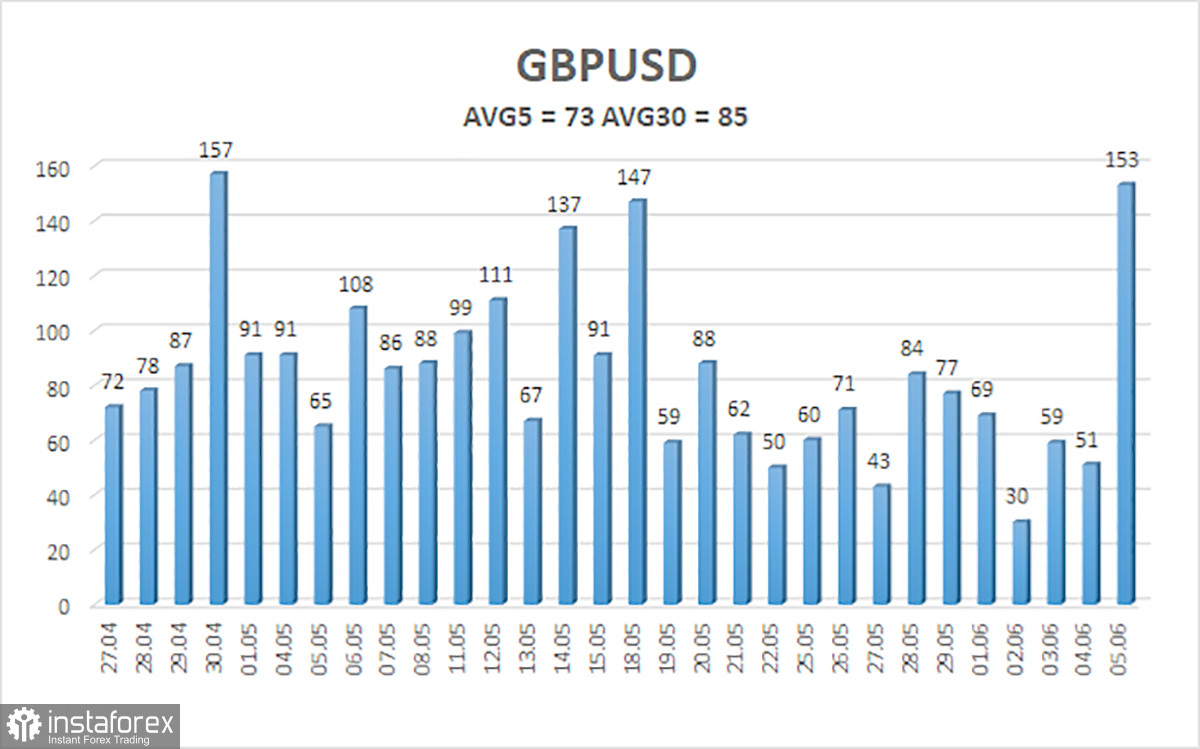
The average volatility of the GBP/USD pair over the last 5 trading days as of June 7 is 73 pips. For the pound/dollar pair, this value is considered "average." On Monday, June 8, we expect the pair to move within a range bounded by 1.3267 and 1.3413. The upper linear regression channel has turned upward, indicating a recovery of the upward trend. The CCI indicator has entered the overbought area, warning of a possible end to the downward trend.
S1 – 1.3306
S2 – 1.3245
S3 – 1.3184
R1 – 1.3367
R2 – 1.3428
R3 – 1.3489
The GBP/USD currency pair has resumed its downward movement. Trump's policies will continue to exert pressure on the U.S. economy; therefore, we do not expect long-term growth for the U.S. currency. However, 2026 is turning out to be super positive for the dollar due to geopolitical factors. Thus, long positions with targets at 1.3489 and 1.3550 can be considered when the price is above the moving average. If the price is below the moving average line, short positions can be taken with targets of 1.3306 and 1.3267. The market situation often changes, and it continues to primarily track geopolitical news, which is not uniform.


