
Vea también


 16.02.2026 12:31 AM
The British pound has also formed a five-wave upward structure, but unlike the euro, this structure is impulsive. Therefore, unless there is an inappropriate and unexpected complication of this structure, we should expect the formation of a three-wave correction. If desired, these three waves can already be seen on the chart of the instrument's decline from January 27 to February 6. However, I believe that this structure can take on a more convincing form. Since I do not have confidence that this will be a fully-fledged corrective structure rather than a single wave, I suggest considering new purchases of the instrument in the area between the 34 and 36 figures.
The news backdrop for the British pound has not given it much hope for quite some time. Most of the economic data coming out of Britain has been mediocre. However, I remind you that the primary reason for the strengthening of the British currency over the past year is not due to the growth of the British currency itself, but rather the decline of the dollar. Thus, the movement of the GBP/USD instrument will depend more significantly on the dollar and the American news backdrop.
Nonetheless, there will also be important events in the UK next week. On Tuesday, important reports on unemployment and wages will be released. On Wednesday—inflation. On Friday, retail sales. In my opinion, the market should focus on January's inflation data. According to expert estimates, the consumer price index may slow down to 3% from December's 3.4%. Recall that the last meeting of the Bank of England ended with a minimal victory for the so-called "hawks." The MPC voted to maintain the interest rate by a one-vote margin. If inflation slows by 0.4% in January, this would indicate that at the next BoE meeting, with a 90% probability, a decision to lower the interest rate will be made.
This information could create significant pressure on the British pound, and in this case, the GBP/USD instrument may form a complete wave from the corrective structure. However, if inflation slows to 3.1% or higher, the British pound may receive market support.
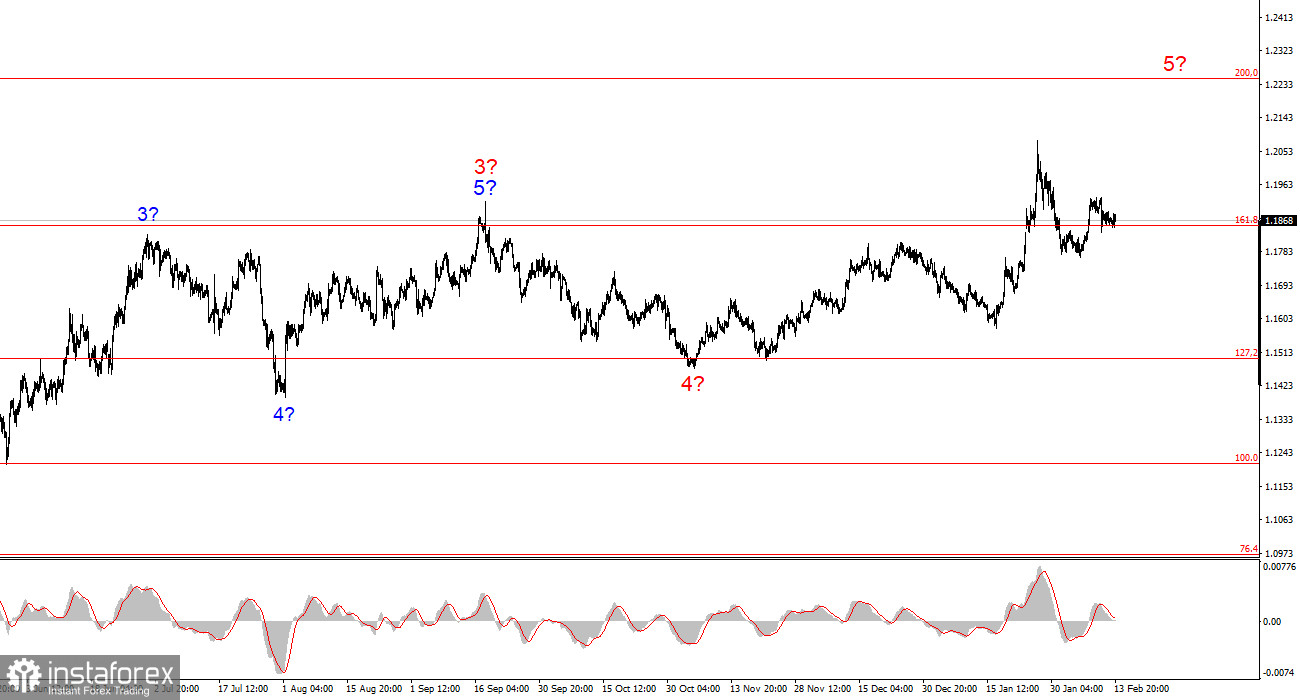
Based on the analysis of EUR/USD, I conclude that the instrument continues to build an upward trend segment. Donald Trump's policies and the Federal Reserve's monetary policy remain significant factors in the long-term decline of the U.S. dollar. The targets for the current segment of the trend may extend to the 25th figure. At present, I believe the instrument remains within the framework of the global wave 5, so I expect an increase in quotes in the first half of 2026. However, in the near future, the instrument may build another downward wave within the correction. It is advisable to look for areas and levels for new longs, targeting around the marks of 1.2195 and 1.2367, which correspond to 161.8% and 200.0% Fibonacci.
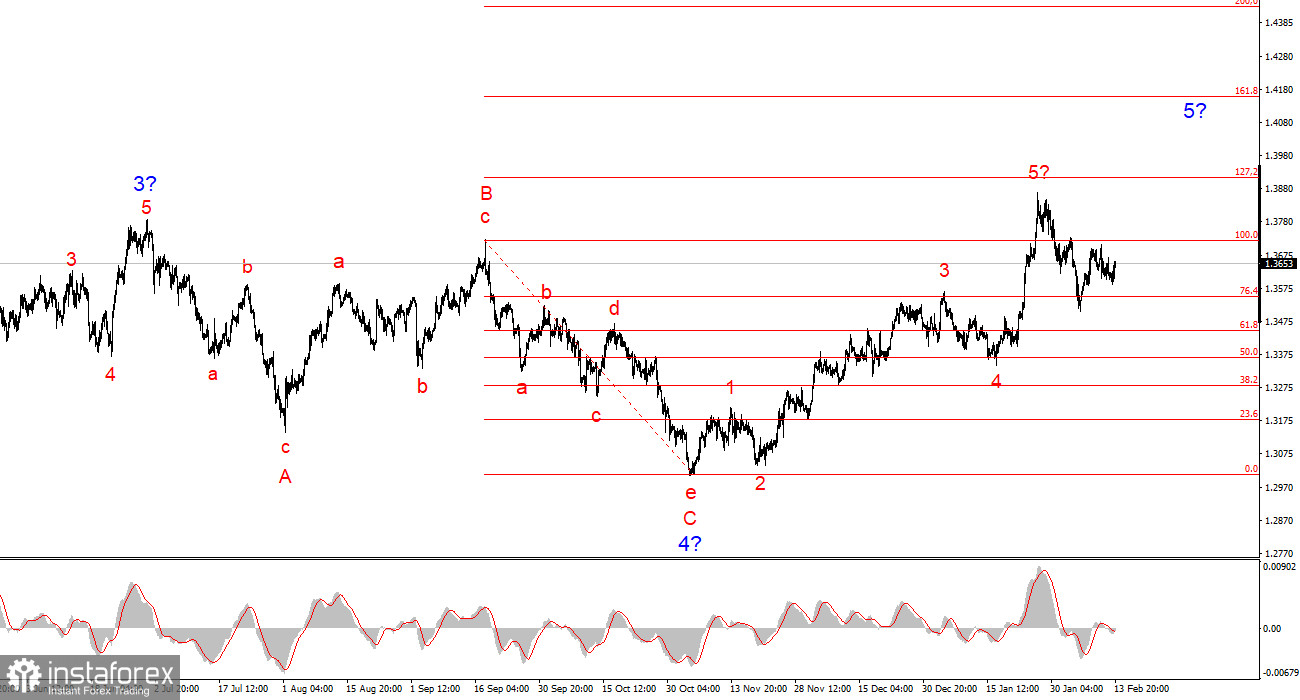
The wave picture of the GBP/USD instrument is clear. The five-wave upward structure has completed its formation, but the global wave 5 may take on a more extended form. We may soon observe the formation of a corrective wave set, after which the upward trend will resume. Therefore, in the coming weeks, I advise looking for opportunities for new longs. In my opinion, under Trump, the British pound has a good chance of rising to 1.45-1.50. Trump himself welcomes the decline of the dollar, and the Fed has the opportunity to lower rates again at the next meeting.


