
Veja também


 16.02.2026 12:31 AM
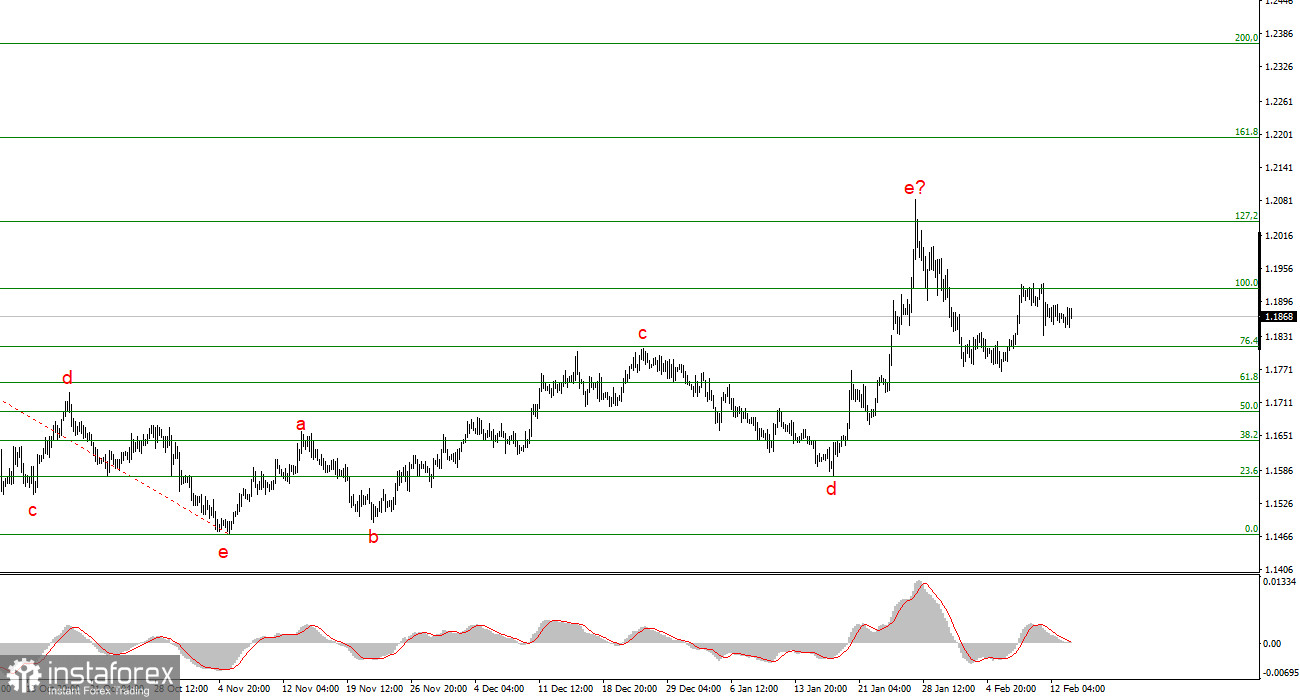
The review of the European currency should begin with wave analysis. We observed a five-wave upward structure a-b-c-d-e, which unfortunately did not take on an impulsive form. However, even in this case, it requires the construction of a corrective wave or a set of waves. The new corrective structure can be of any length since it is a corrective structure. Everything will depend on market sentiment, no matter how trivial that may sound. For example, last week, I did not see much desire among traders to sell the dollar, despite the many reasons to do so. What will happen next week?
In my opinion, the news backdrop is currently not playing the most crucial role for market participants. As I mentioned last week, at least three reports fell under the "important" category. On Wednesday, we saw a decline in the instrument amid the strengthening dollar, but the aftertaste from this movement remains ambiguous. The Non-Farm Payrolls report for January showed a relatively high figure; however, the total for 2025 was revised down to approximately 200,000 for the entire year. How should we interpret the January figure of 130,000 jobs if only about 200,000 jobs were created in 2025? Can it be considered positive?
Returning to the euro and the Eurozone, next week will start with the industrial production report for December. Current forecasts indicate another decrease in volumes by about 1.5%. On Tuesday, Germany will release the Consumer Price Index for January, but the market is already aware of the preliminary assessment, so it is unlikely to be impressed. The ZEW Economic Sentiment indices will also be released on Tuesday, and an increase is expected compared to the previous month. However, this data is not particularly significant for the market and the euro.
Overall, the most important reports will come out on Friday: activity indices for the services and manufacturing sectors of Germany and the Eurozone. Recall that the activity indices indirectly indicate the acceleration or deceleration of the economy. For the European economy, it is crucial to at least maintain current (low) growth rates. The main concerns continue to surround the manufacturing sector, while the services sector remains consistently above 50. In my opinion, the European reports will not provide strong support for the euro.
Based on the analysis of EUR/USD, I conclude that the instrument continues to build an upward section of the trend. Donald Trump's policies and the Federal Reserve's monetary policy remain significant factors in the long-term decline of the U.S. dollar. The targets for the current segment of the trend may extend to the 25th figure. At present, I believe the instrument remains within the framework of the global wave 5, so I expect an increase in quotes in the first half of 2026. However, in the short term, the instrument may build another downward wave within a correction. I believe it is currently advisable to search for areas and levels for new longs, targeting around the 1.2195 and 1.2367 levels, which correspond to the 161.8% and 200.0% Fibonacci.
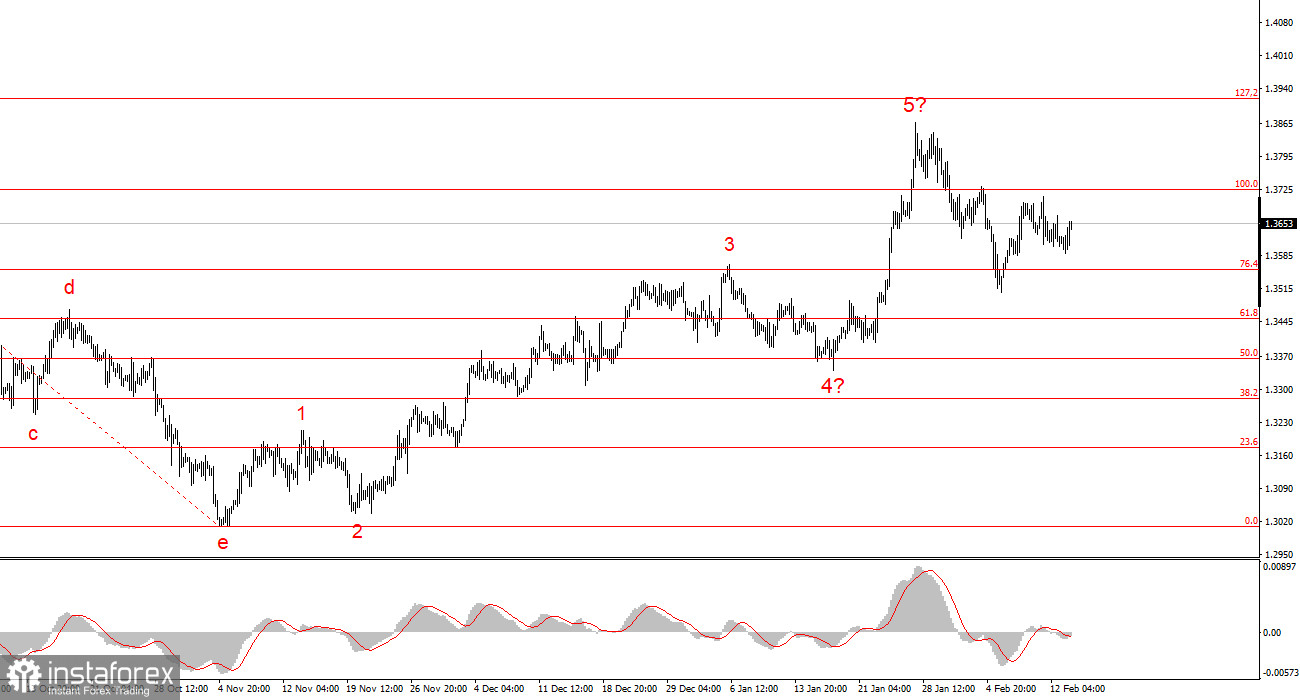
The wave picture of the GBP/USD instrument is fairly clear. The five-wave upward structure has completed its formation, but the global wave 5 could take on a much more extended appearance. I believe that in the near future, we may observe the formation of a corrective wave set, after which the upward trend will resume. Therefore, in the coming weeks, I recommend looking for opportunities for new purchases. In my opinion, under Trump, the British pound has a good chance of rising to 1.45-1.50. Trump himself welcomes the dollar's decline, and the Fed has the opportunity to cut rates again at the next meeting.


