
یہ بھی دیکھیں


 10.07.2026 04:58 AM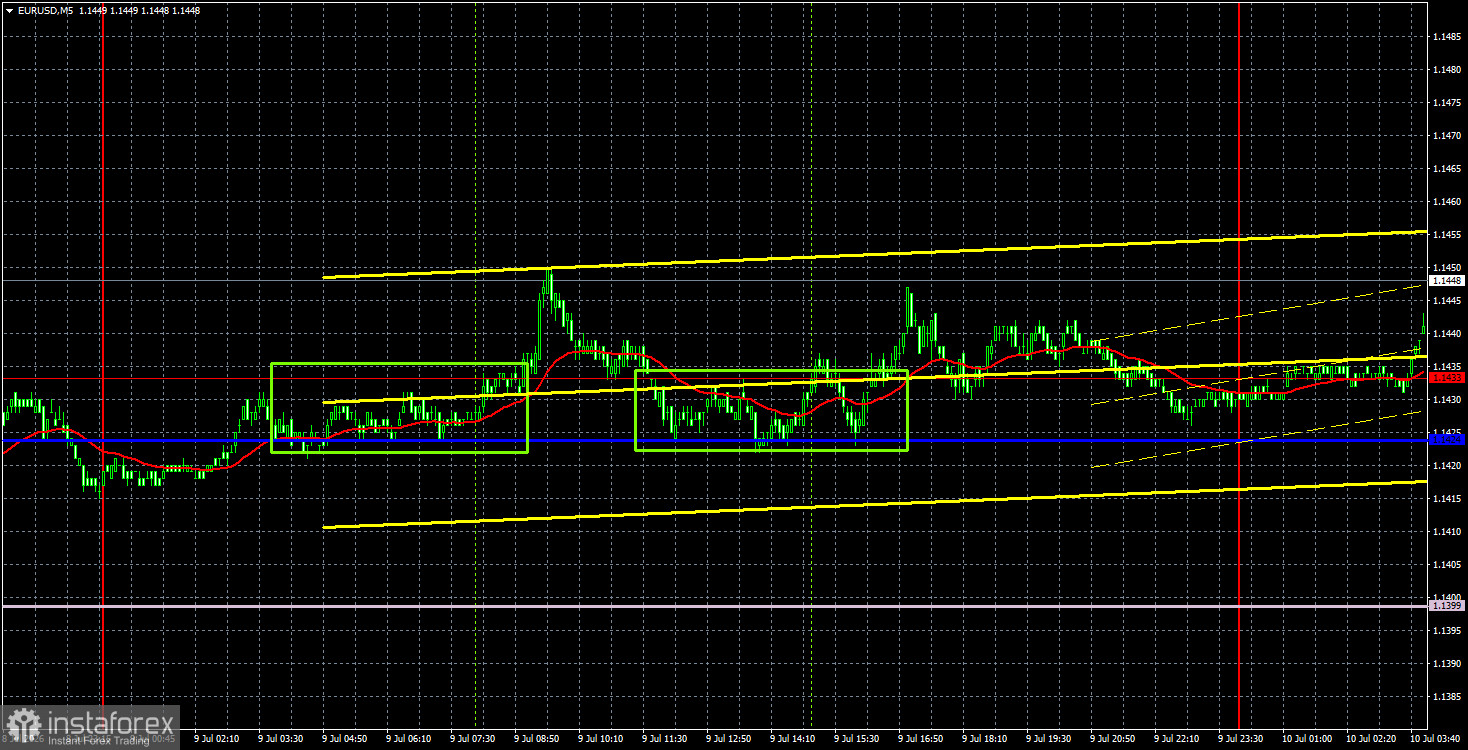
The EUR/USD currency pair continued to trade with minimal volatility and no clear direction on Thursday. Nevertheless, with difficulty and struggle, the euro maintains its upward trend and northern movement. This week has seen very few important events, which explains the pair's low volatility. However, the British currency also exhibits a notable rise on the same fundamental and macroeconomic grounds. We believe the euro should be moving similarly. On Thursday, there were no significant global events, and geopolitical news was absent. But let's recall that the US dollar rose for two consecutive months, without always having justification. The last rise of the American currency was, in fact, inexplicable. We tend to believe that, for some time, the market traded downward due to inertia. On the daily and weekly timeframes, a flat is maintained, so after a decline to its lower boundary, we expect movement toward the upper boundary.
From a technical standpoint, the upward trend persists, but the euro is still growing extremely weakly. The trend line has been broken (now reconfigured), but the Senkou Span B line has provided support for the euro and maintained the trend. We do not see clear reasons for a new rise in the US dollar, but that does not mean the market does not have the right to buy the American currency.
In the 5-minute timeframe on Thursday, two trading signals were formed, but they proved of very little use. The price bounced twice from the area of 1.1424-1.1433, but overall volatility did not exceed 40 pips, so in the correct direction the price moved no more than 20 pips both times.
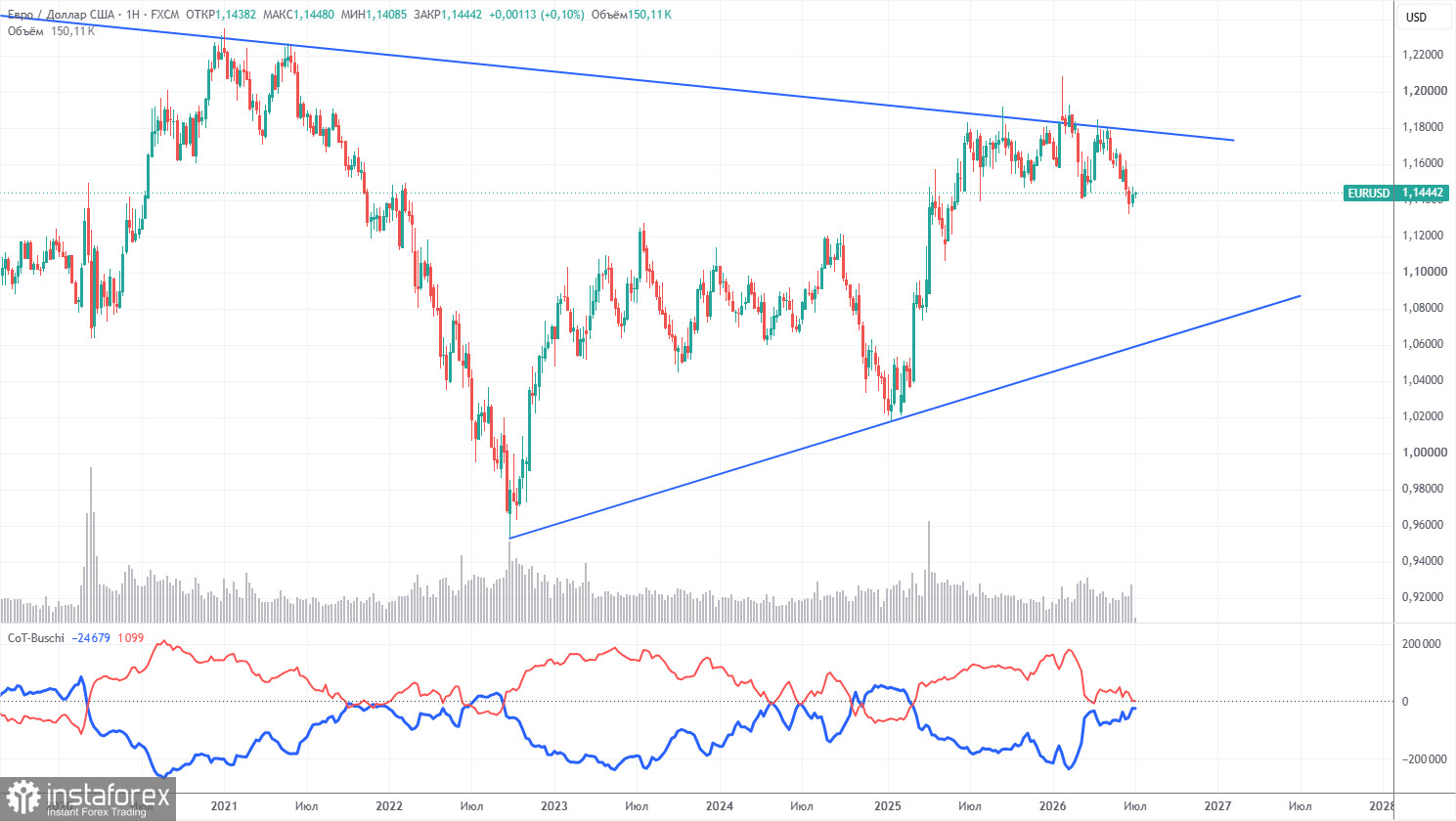
The latest COT report is dated June 30. The weekly timeframe illustration clearly shows that the net position of non-commercial traders remains "bullish" but has significantly decreased due to geopolitical events. Traders have been getting rid of the euro in favor of the US dollar in recent months. Trump's policies have not changed, but the dollar has acted as a "reserve currency" for some time. However, this process may have already concluded.
We still do not see any fundamental factors for strengthening the euro, while there are sufficient factors for the decline of the American dollar. The war in the Middle East temporarily made the dollar super attractive, but when this factor's "shelf life" expires, everything will revert to normal. And that may have already expired. In the long term, the euro could fall to the level of $1.08 (the trend line), but the upward trend will still remain relevant. Over recent months of dollar growth, the pair has not come too close to this line.
The positioning of the red and blue lines of the indicator indicates parity between bulls and bears. Over the last reporting week, the number of longs in the "Non-commercial" group decreased by 11,700, while the number of shorts increased by 17,400. Consequently, the net position decreased by 29,100 contracts over the week.
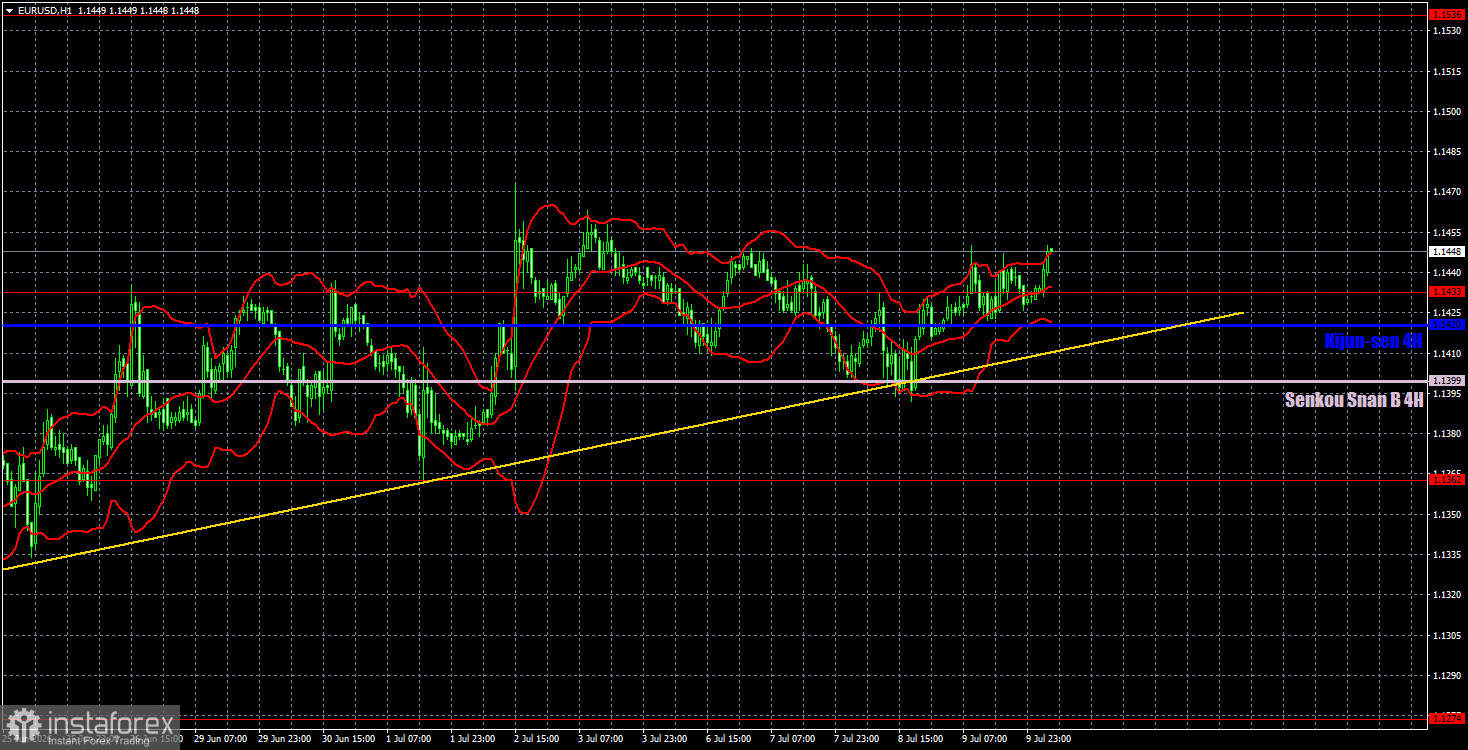
On the hourly timeframe, a corrective upward trend continues within a two-month downward trend. The situation in the Middle East remains tense, but we do not believe that the latest shelling by Iran and the US, or uncertainty in negotiations and deal prospects, is a sufficiently weighty reason for a further strengthening of the dollar. The market continues to ignore many factors that favor the euro, yet we believe in the euro's growth.
For July 10, we highlight the following trading levels: 1.1234, 1.1274, 1.1362, 1.1433, 1.1536-1.1542, 1.1585, 1.1657-1.1666, 1.1750-1.1760, 1.1786, 1.1830-1.1837, as well as the Senkou Span B line (1.1399) and the Kijun-sen line (1.1420). The Ichimoku indicator lines may shift during the day, which should be taken into account when determining trading signals. Don't forget to set a Stop Loss order to break even if the price moves in the right direction by 15 pips. This will protect against potential losses if the signal proves false.
On Friday, no significant macroeconomic or fundamental events are scheduled. All we can note is the consumer price index in Germany in its second estimate for June, which is unlikely to interest anyone. Thus, this week has had nothing significant beyond the new escalation in the Middle East and the ISM Services PMI in the US.
Today, traders may consider short positions with targets of 1.1399 and 1.1362 if the price consolidates below the trend line. Long positions can be maintained with targets of 1.1536-1.1542 after two bounces from the area of 1.1420-1.1433. Volatility remains weak.


