
یہ بھی دیکھیں


 20.02.2026 11:31 AM
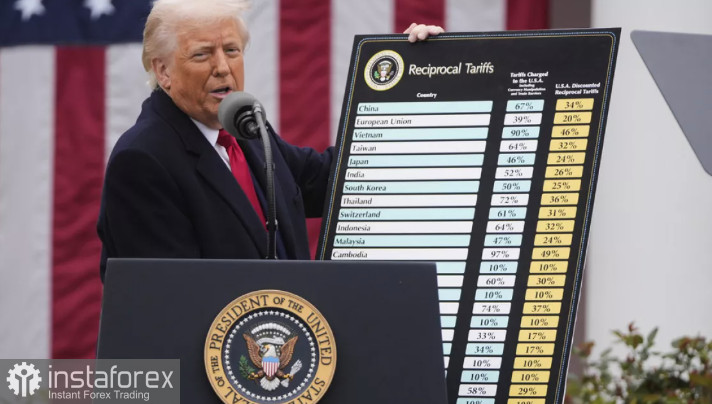
According to the latest data, Donald Trump's global trade war has so far failed to produce the desired reduction in America's massive trade deficit.
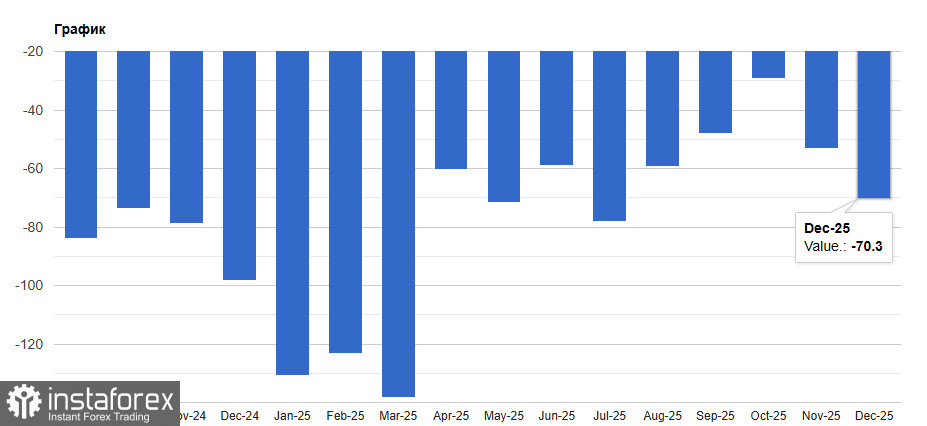
The Commerce Department reported that the US goods and services trade deficit widened from the prior month to $70.3 billion. The figure represents a material increase and reflects the predominance of imports over exports under current economic conditions. The trend of a widening deficit is a concern for economists because it may signal structural problems in trade policy and in the competitiveness of US goods on global markets despite the tariffs enacted by the Trump administration.
As a result, the deficit for the full year reached $901.5 billion, remaining among the largest on record since the data series began in 1960. That record figure underlines the long-term challenges facing the US economy in international trade. A prolonged excess of imports over exports can have a range of negative consequences, including higher public indebtedness, potential weakening of the national currency, which was observed over the past year, and a decline in manufacturing employment.
"But after all the tariff headlines and swings in the data, the trade deficit barely budged in 2025, decreasing only $2.1 billion, or 0.2 percent, on an annual basis," Nationwide financial market economist Oren Klachkin said. "With the peak tariff drag now likely behind us, we expect trade to settle into a more predictable rhythm."
Trade data in 2025 were notably volatile month to month as American importers reacted to repeated tariff statements from President Trump. Imports of gold and pharmaceutical products were especially unstable as companies rushed to avoid higher tariffs.
December's deficit, which exceeded all economists' estimates, reflected a 3.6% rise in the value of imports, including higher prices for computer components and automobiles. Exports of goods and services fell 1.7%, largely driven by a drop in gold shipments abroad.
After the report's release, several economists suggested that trade may exert a smaller or even negative contribution to the fourth quarter GDP—the advance estimate for which is due today.
One of the most unpredictable factors for trade remains whether the Supreme Court will uphold Mr. Trump's authority to impose large-scale tariffs under a state of emergency or will overturn the measure. A decision could be issued as soon as Friday, though the court never signals the content of its rulings in advance.
By country, the goods-trade deficit with China contracted sharply to roughly $202 billion, the lowest level in more than 20 years, reflecting higher tariffs imposed by the Trump administration on Chinese imports. Trade flows have been rerouted through other countries. However, with deficits widening to record levels with partners such as Mexico and Vietnam.
A technical outlook for EUR/USD suggests that buyers should consider reclaiming 1.1770. That would open the way to test 1.1790. From there, a move to 1.1825 is possible, although advancing beyond that without support from major players would be difficult. The extended target is 1.1850. On a decline, meaningful buying interest is likely near 1.1745. If buyers do not appear there, it would be prudent to wait for a new low at 1.1720 or to open long positions from 1.1690.
As for GBP/USD, buyers of the pound sterling should capture the nearest resistance at 1.3460. Only that will allow them to target 1.3490, above which a breakout would be challenging. The extended target is around 1.3515. If the pair falls, bears will try to seize control at 1.3430. If they succeed, a break of that range would deal a serious blow to bullish positions and could push GBP/USD down to 1.3405 with scope to extend to 1.3380.


