
यह भी देखें


 30.03.2026 12:33 PM
Amid the escalation of tensions around Iran and the risks to shipments through the Strait of Hormuz, expectations for energy, rates, and demand for new technologies are changing simultaneously.
A sharp jump in oil prices is pushing consumers to seek alternatives to gasoline and diesel — from electric vehicles in South Korea and Europe to explosive interest in EVs in the US.
At the same time, investors are shifting attention to financial safe-haven mechanisms: Bitcoin is recovering above $67,000 after a nervous week, while gold is weakening, giving way to the dollar and to tightening Fed expectations.
Finally, on the technology front, Nvidia is preparing for a potentially large-scale debut in laptop processors, which adds a new impulse — not about oil, but about the next wave of AI compute and competition in the chip market.
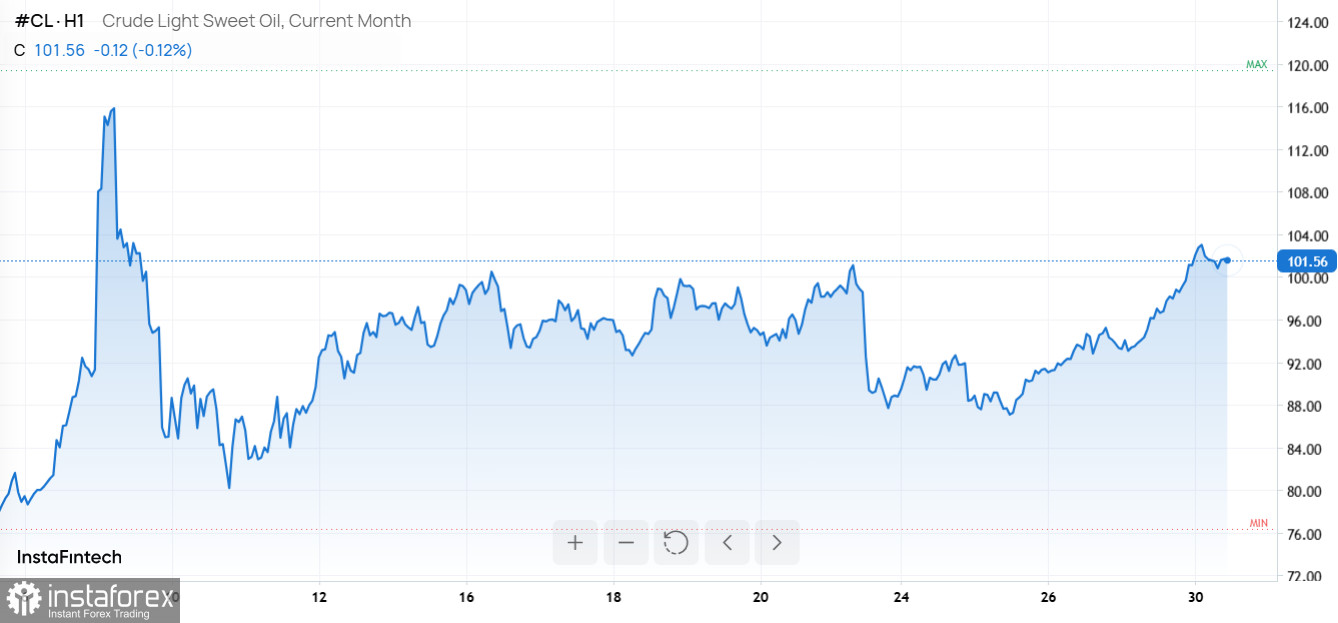
Prices top $116 due to Iran conflict, triggering record demand for electric vehicles.

The escalation around Iran, and the effective disruption of shipments through the Strait of Hormuz, have materially shifted the balance in the global fuel market. When Brent crude rose above $116 per barrel this week, consumers began to look more actively for alternatives to gasoline and diesel.
Against this backdrop, sales and interest in electric vehicles are growing faster than before, and analysts are increasingly talking about a likely acceleration of the long-term decline in demand for internal combustion engines.
South Korea: sharp surge in electric vehicle registrations
In South Korea, the dynamics have been especially notable. New electric vehicle registrations reached a record monthly level — 35,693 units in February, up 172% year on year. For the first time, monthly registrations exceeded 30,000. At the same time, registrations of petrol and diesel vehicles declined markedly.
Europe: EV share of new sales rose to 18.8%
According to the European Automobile Manufacturers Association (ACEA), battery electric vehicles accounted for 18.8% of all new car registrations in the EU in January and February. A year earlier, this figure was 15.2%.
A total of 312,369 electric vehicles were registered, up 22.3% year-on-year, despite a small contraction in the overall car market. Against this backdrop, BYD's sales in the EU over the period rose more than threefold.
US: interest in electric vehicles surges sharply
In the US, according to CarEdge data, search traffic for electric vehicle queries rose 20% in the week after the outbreak of the conflict with Iran. At the same time, queries for popular models, including the Tesla Model Y and Chevrolet Equinox EV, nearly doubled.
Growth is also visible in the secondary market: Reuters reports that French retailer Aramisauto (controlled by Stellantis) said the share of electric vehicles in its sales almost doubled since mid-February.
Why consumer behavior changes
The conflict, which began on February 28, disrupted roughly 20% of global oil flowing through the Strait of Hormuz. This increased price volatility and directly affected fuel costs.
Average gasoline prices in the EU rose 12% from late February to mid-March. In the UK, petrol rose by 17 pence per liter over two weeks and diesel by more than 34 pence. Against this backdrop, Autotrader registered a 28% increase in searches for electric vehicles since the start of the war.
Regional measures and market impact in Asia
Amid rising prices, governments in Southeast Asia are ramping up EV support policies. Laos cut taxes on electric vehicles by 30% while increasing taxes on internal combustion engine cars. The Philippines is accelerating the electrification of public transport.
In Australia, Google searches for "electric vehicles" rose 278% compared with the day before the US air strikes began. In China, including at BYD, dealers report a spike in orders across the region: a dealership in Manila said two weeks of orders equaled a typical month's volume.
Key takeaways
The energy shock, driven by higher oil prices and supply risks through the Strait of Hormuz, is already changing consumer behavior: electric vehicles are becoming more attractive amid expensive and unstable fuel.
Record registration figures in South Korea (35,693 units, +172%), an increase in EV share in the EU to 18.8%, and accelerating demand in the US confirm the trend. If energy market volatility persists, the EV market may continue to outpace the internal combustion engine segment.
How traders may benefit from situation
Traders may consider strategies oriented to rising demand and shifts in consumer preferences:
– monitor share price dynamics of EV manufacturers and suppliers, as well as companies involved in charging infrastructure and battery technologies;
– factor in the market's increased sensitivity to energy news (geopolitics, Brent prices, supply risks through straits) and plan entries on the release of key headlines;
– apply scenario analysis: rallies/corrections after publication of EV sales and registration data can create short-term trading opportunities.
All trading instruments mentioned in the article are available on InstaTrade. To avoid missing market moves, open a trading account on the platform and, for maximum convenience, download the company's mobile app.
Bitcoin returns above $67,000: market digests nervous week and seeks footing
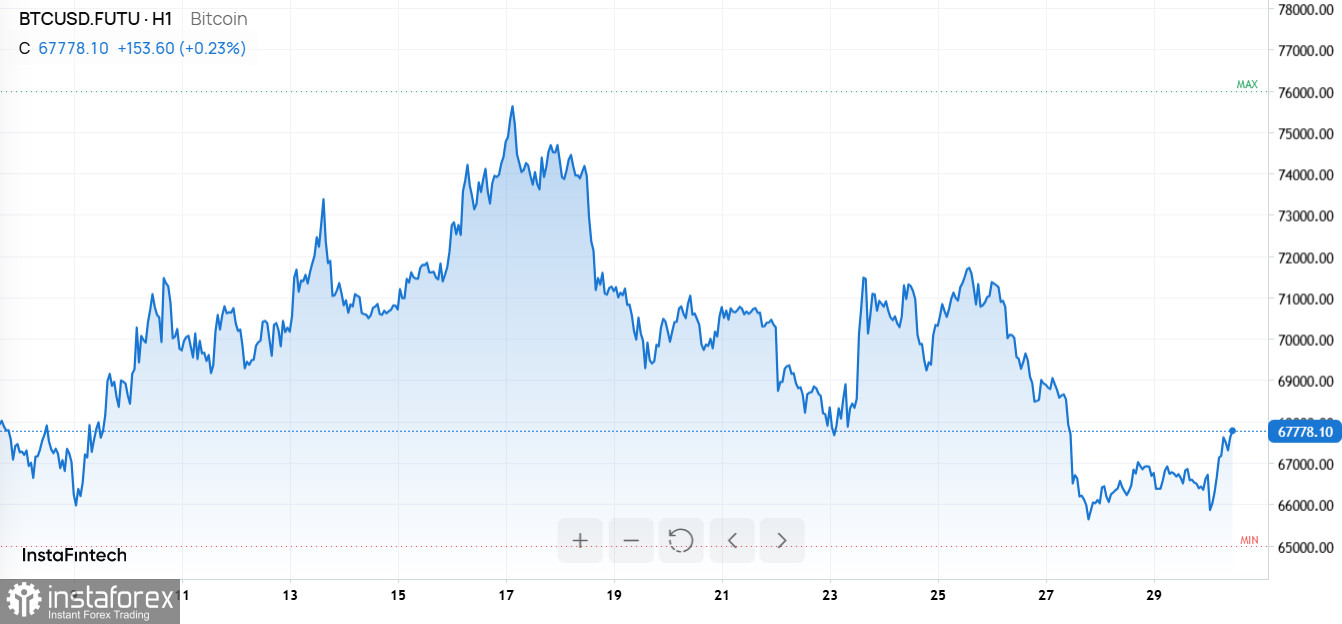
On Sunday morning, Bitcoin once again settled above $67,000, showing unexpected resilience after one of the most turbulent weeks of 2026.
The sharp shift in sentiment followed the year's largest quarterly options expiry, a fifth consecutive losing week for the S&P 500, and rising geopolitical uncertainty related to the Iran conflict. At the same time, the crypto fear and greed index remains in the "Extreme Fear" zone.
Sell-off captured all asset classes
The week ended March 27 proved painful for almost every market segment. The S&P 500 fell 1.7% and closed at 6,368.85—the fifth week of declines in a row, the longest losing streak in almost four years, the Associated Pressreports .
The Dow Jones Industrial Average tumbled 793 points, and the Nasdaq Composite lost 2.1%. As a result, both indices are now more than 10% below their January highs.
Iran factor and energy prices
A key source of the turbulence was the ongoing conflict with Iran and its impact on energy prices. President Trump extended his self-imposed deadline for strikes on Iran's energy infrastructure to April 6, provided Iran reopens the Strait of Hormuz to oil tankers. Despite this, hostilities continued, and no sign of retreat by Iran was observed.
Fed holds rates, but market disagrees with forecasts
Against the backdrop of geopolitics, the Federal Reserve held policy rates at 3.50%–3.75% at its March 18 meeting. The dot plot forecasts only one 25-basis-point cut for the remainder of 2026. Michael Feroli, chief economist at J.P. Morgan, however, allows for a tougher scenario: he forecasts no cuts this year and a possible rate hike in 2027.
Key takeaways
- The market situation is two-fold. On one hand, geopolitical risks sustain an "emergency" mode of expectations. On the other hand, recovery moves in risk assets, including bitcoin, show that investors are ready to return to buying when short-term triggers (in particular, after a large options expiry) work in favor of demand.
- Traders can take advantage of this heterogeneity, because such periods often provide opportunities to enter rebound trades and to trade off levels during heightened volatility.
How to profit
To use current conditions, market participants should:
1) Monitor bitcoin's reaction above $67,000: a confirmed hold could be a buy signal, while false breakouts often create setups for trades from resistance/confirmation.
2) Factor in the impact of news on Iran and the Strait of Hormuz: any change in rhetoric or deadlines can quickly shift risk appetite, reflecting on the crypto market as well.
3) Watch the dynamics of the S&P 500, Dow and Nasdaq: the general downtrend (S&P 500 -1.7%, Nasdaq -2.1%, Dow -793 points) increases the importance of intraday confirmations for risk orders.
Nvidia prepares its first "mass" breakthrough in laptop processors
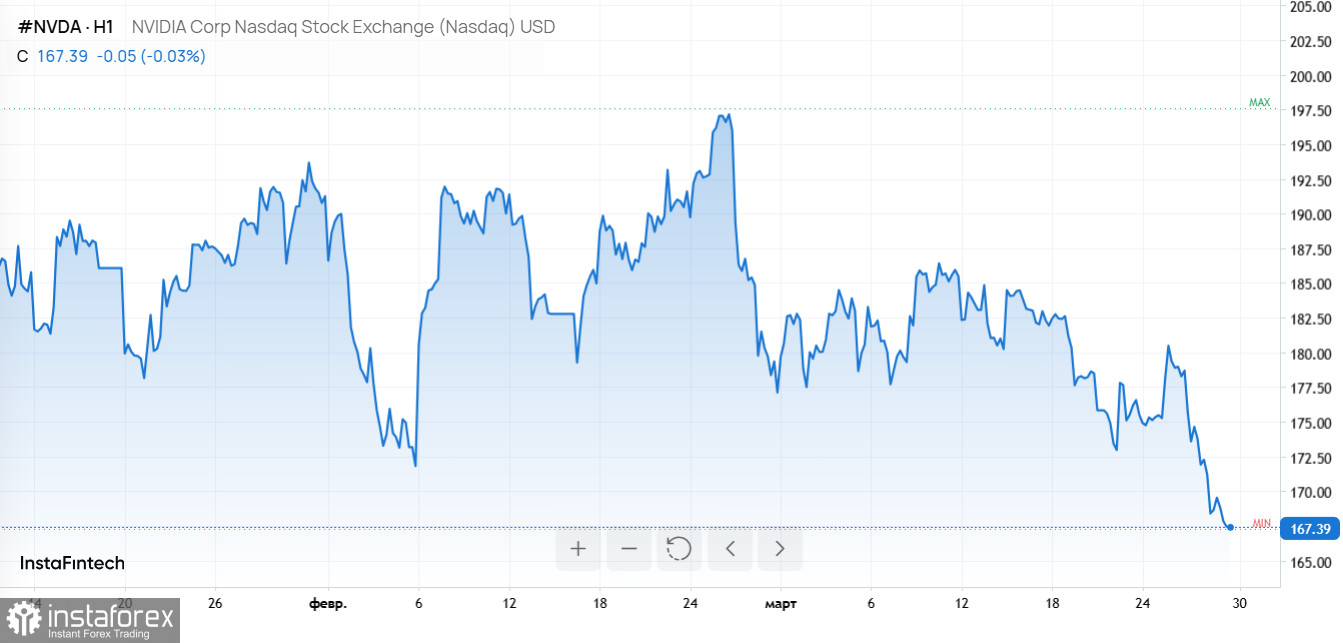
Nvidia, one of the largest players in graphics computing, is preparing for a notable entry into the consumer laptop processor market. According to information linked to the June 2026 Computex exhibition in Taipei, CEO Jensen Huang will unveil N1 and N1X system-on-chip products based on the Arm architecture.This could be Nvidia's first direct step into mobile computing and intensify competition with Intel, AMD and Qualcomm in a market with annual shipments of about 150 million devices.
Preparing for the event, according to the Taiwanese business outlet CTEE, Nvidia has reserved the Taipei International Convention Center from June 1 to 4. Such timing is typically used for large presentations and business meetings ahead of the exhibition proper, which will run from June 2 to 5. Additionally, media rumors suggest that Jensen Huang may deliver a keynote at the Taipei Music Center on the eve of the event.
Nvidia is not yet listed among Computex's official speakers. Qualcomm CEO Cristiano Amon, Marvell CEO Matt Murphy and Intel CEO Patrick Gelsinger are already on the speaker list. However, earlier reports indicated that Huang plans to attend "with a number of announcements," which indirectly confirms the company's preparation for a separate major information event.
What is known about N1 and N1X chips
The N1 and N1X system-on-chips were developed in partnership with MediaTek and, reportedly, are built around the GB10 superchip. The latter is already used in Nvidia's mini-supercomputer, the DGX Spark.
The flagship N1X, according to sources, is being manufactured on TSMC's advanced 3-nanometer process. The device is expected to include a 20-core Arm processor and integrated graphics based on the Blackwell architecture. The number of CUDA cores is reported to be 6144, which corresponds to the level of a discrete Nvidia RTX 5070 graphics card.
Meanwhile, the standard N1 version is likely to target energy-efficient mainstream laptops. The main emphasis, it is believed, will be on AI compute performance while maintaining a balance with power consumption.
Key takeaways
- Nvidia's entry into the laptop processor segment with Arm-based N1 and N1X looks like a potentially important strategic pivot toward the consumer market.
- Reservation of key venues ahead of Computex 2026 and expectations of "many announcements" around Jensen Huang's appearance underscore the seriousness of Nvidia's intentions.
- Competition with Intel, AMD and Qualcomm intensifies not only because of the market's scale (about 150 million devices per year), but also because the chips are aimed at AI workloads.
- Traders are usually interested in market reactions to expectations of major tech news: increased volatility around announcement dates, repricing of companies, and reassessment of industry risks and potential.
How traders can profit
Use a scenario approach around announced dates:
- trade from key levels and react to news impulses ahead of Computex 2026 and on the day of presentations;
- assess the likelihood of a continuation move after the first wave of attention to the Nvidia–Arm-laptop theme;
- reduce position size and strictly control risk with stop-losses when uncertainty is high.
Gold weakens amid USD dynamic and Fed expectations: what happens to market
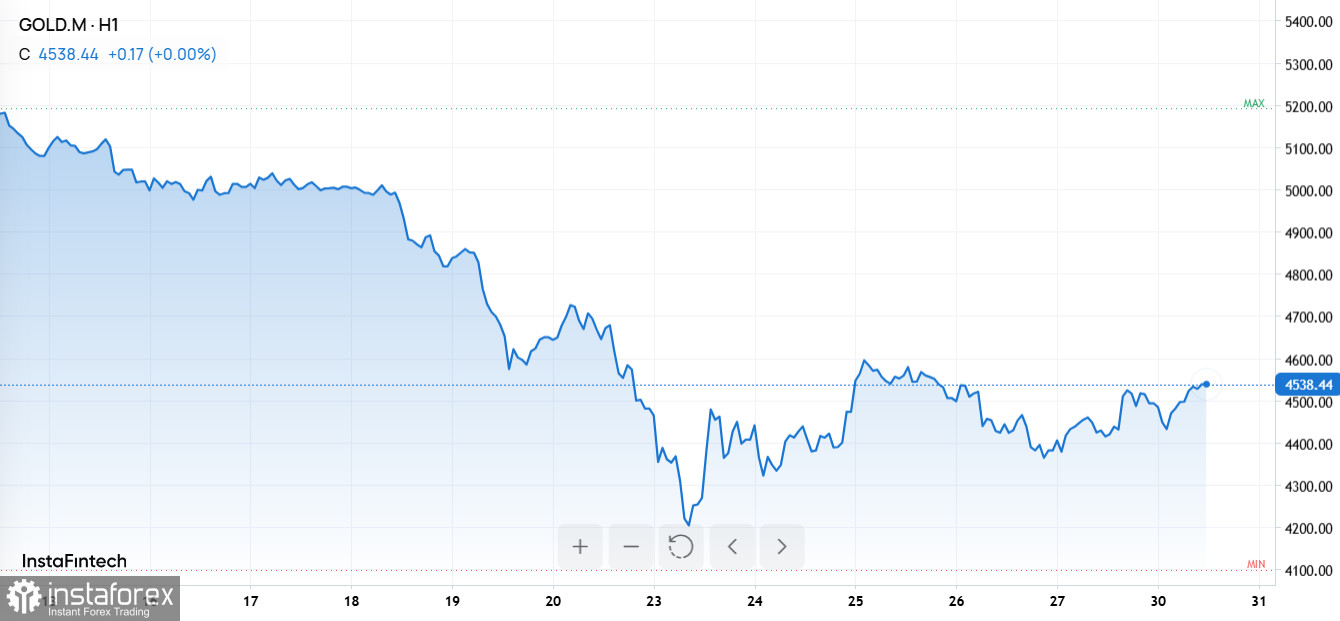
Gold has lost significant ground since the start of the US and Israel air campaign against Iran on February 28. Since the escalation, the metal's price has fallen by about 17%: over the weekend it traded around $4,490 per ounce. For many investors, this was unexpected, because in a large geopolitical crisis the demand for safe-haven assets usually rises, however, in practice the market preferred the dollar.
The key reason for gold's decline was the paradox that puzzled market participants: the strengthening of the US dollar and growing expectations of tighter monetary policy by the Federal Reserve proved stronger than the "classic" demand for gold as a hedge. As a result, the metal's price fell to its lowest levels of 2026.
War hits gold through oil and inflationary risks
The most destructive effect on the gold market is linked not so much to the conflict itself, as to its secondary consequences. Thus, oil prices have risen by more than 50% since the start of hostilities. On Friday, Brent closed above $112 per barrel, after the Houthis' entry into the war opened a potential second point of disruption in the Bab-el-Mandeb Strait.
The energy shock has re-activated inflationary fears. This has forced traders to revise the likely Fed trajectory, and it is precisely the expectations of a more hawkish policy that have added further pressure on gold.
Rate expectations shifts sharply
According to CME Group data, markets are now effectively pricing in zero rate cuts for 2026. At the same time, the probability of the first cut has moved to December 2027.
Additionally, federal funds futures show a greater than 50% chance that the Fed will raise rates at least once before year-end; for the first time since early 2023, tightening expectations are above average. At the March meeting, the Fed kept the policy rate at 3.5%–3.75%.
The dollar has become the main safe-haven asset during this conflict. This hurts gold, since over the past year gold was the primary defensive asset.
Key takeaways
- The situation around gold shows that, in a crisis, the "safe-haven" status of assets can change. At present, the dollar is receiving support, and Fed rate expectations are exerting strong downward pressure on the metal.
- Parallel oil gains and rising inflationary risks further strengthen the case for tighter policy.
Traders can already use this market re-shaping: sharp shifts in rate expectations often create persistent price impulses both in gold and in instruments sensitive to the dollar and to rates.
How traders may profit
A potential strategy for market participants is to closely monitor the US dollar and Fed rate expectations (via news and futures indicators), and to track gold's reaction to inflation impulses related to oil.
In practice, this may mean looking for entry points amid heightened volatility, trading from key levels, and testing scenarios of "rate pressure/dollar strength" versus "flight-to-safety signals."
The trading instruments mentioned in the article are available on InstaTrade. For greater convenience, users are advised to open a trading account on the platform and download the InstaTrade mobile app.

