
यह भी देखें


 09.02.2026 10:29 AM
Following a three-day sell-off, the S&P 500 posted its strongest one-day rally since March. Have fears about AI's negative impact on software makers subsided? Or did investors cheer stronger consumer sentiment data from the University of Michigan, which jumped to a six-month high? There are multiple reasons for the rally, but bears are not about to wave the white flag.
S&P 500 Dynamics
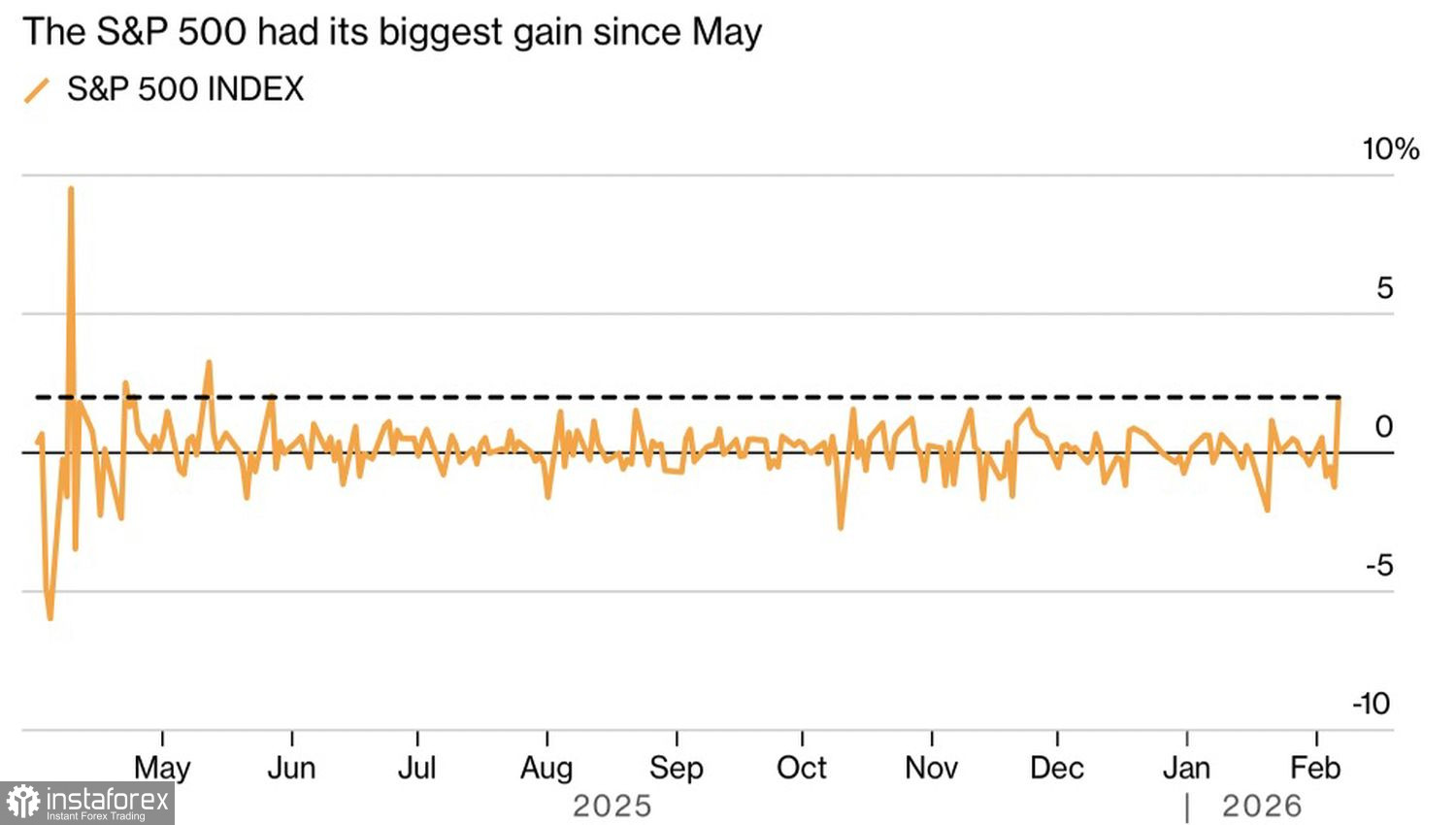
February's sell-off in the S&P 500 looked irrational. AI is supposed to help companies, yet fears arose that it would harm them. Yes, AI has shown remarkable capacity to generate code, which in theory could disrupt software vendors' business processes. However, it is unlikely that these companies will abandon their businesses overnight. This is a long-term structural issue, so the market's reaction appeared overly emotional.
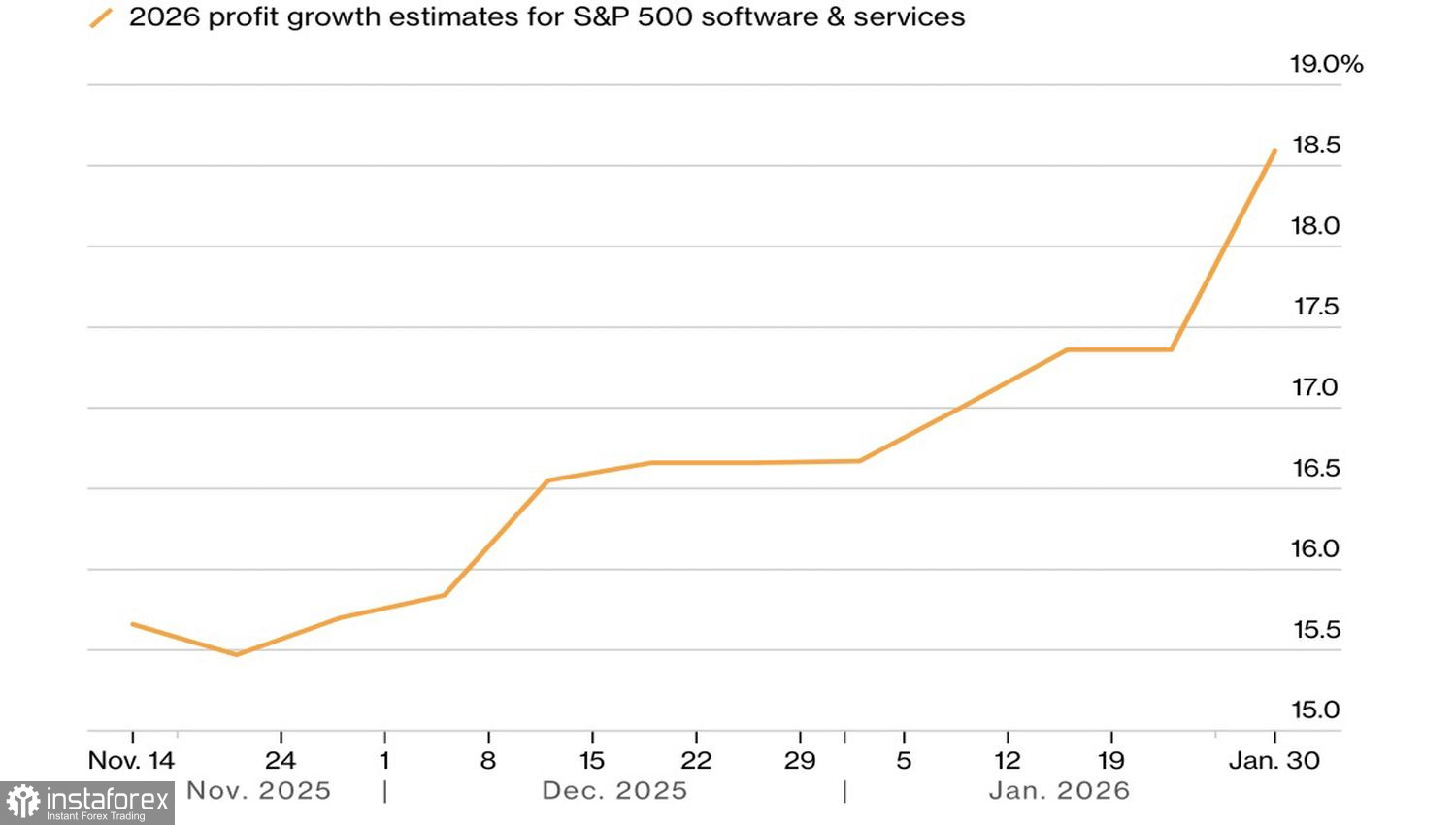
From a fundamental perspective, both the US economy and corporate earnings remain strong, including for software producers. Wall Street expects their profits to rise by about 19% in 2026, a reasonable number to support further share gains.
Dynamics of Software Makers' Profits
After such a dramatic rebound in the S&P 500, reminiscent of the dip-buying seen in 2025, bears are left to lean on invented scare stories. Goldman Sachs believes that the broad market sell-off is not over, arguing that trend-following funds will short the market because trend-preservation conditions were violated earlier. The bank estimates the potential downside at $33bn and warns that if the support level of 6,707 is breached, the sell-off could reach $80 billion.
In my view, such calls are an attempt to put a brave face on a poor hand. After three days of losses, few expected such a vigorous S&P 500 rebound without a clear fundamental driver. The second week of February will be busy: employment, unemployment, and US retail sales releases will draw traders' attention.
But how will the broad index react to signs of economic weakness? Will worrying signals be a reason to sell, or will the market revert to the old reflex — "bad US economic news is good for the S&P 500" — as investors price in earlier Fed cuts and buy equities?
I expect the rotation process to continue. The Dow Jones looks healthier than the S&P 500 and Nasdaq Composite, though to today's traders it feels like a relic of the past. Until 2026, some argued the Dow was about as useful as paper share certificates or a ticker tape.
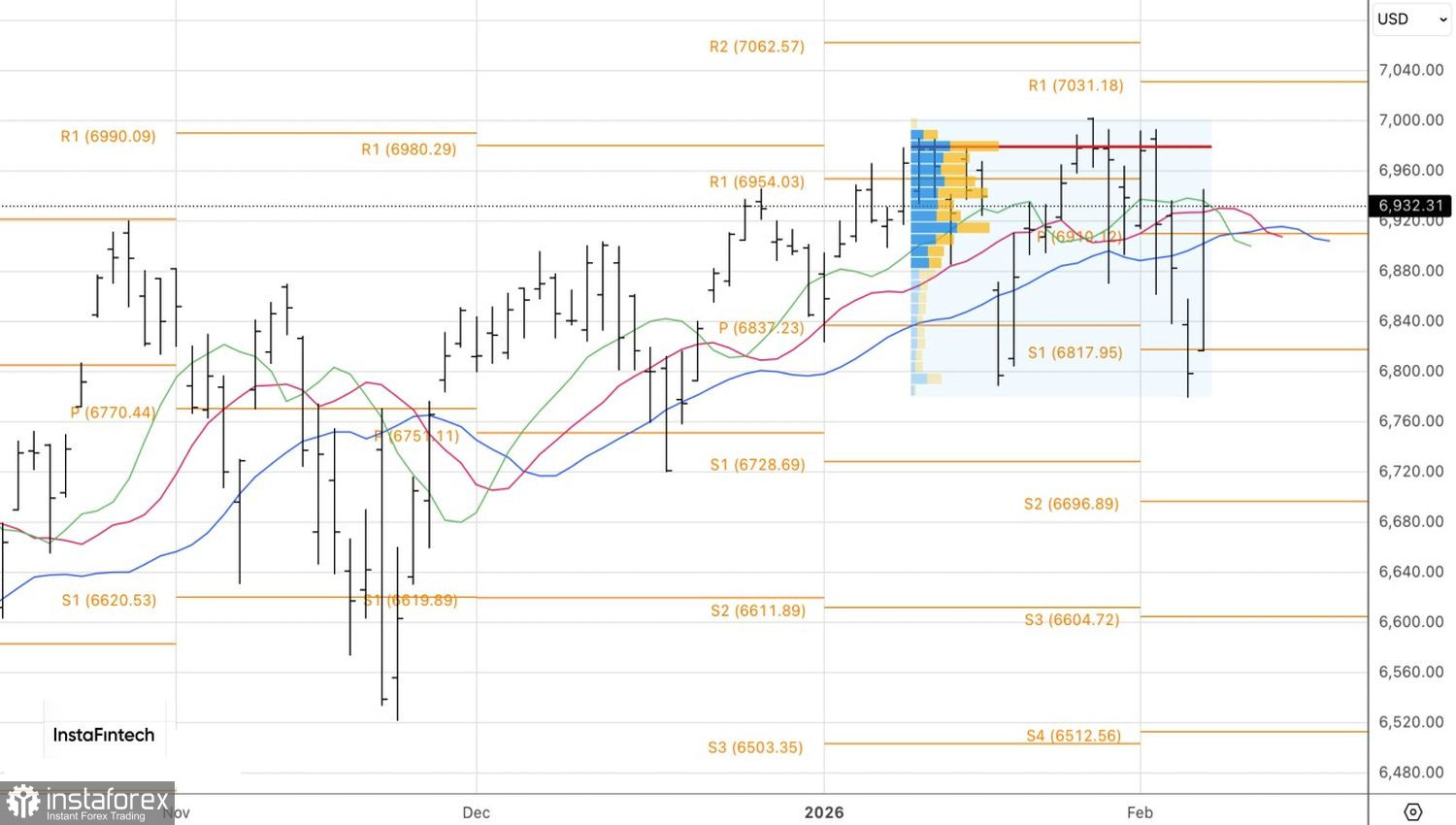
Technically, the S&P 500 broke above the dynamic resistance levels formed by a convergence of moving averages on the daily chart. This signals a return of bullish control and opens the door to buying above 6,910.

