
Lihat juga


 11.08.2026 03:27 PM
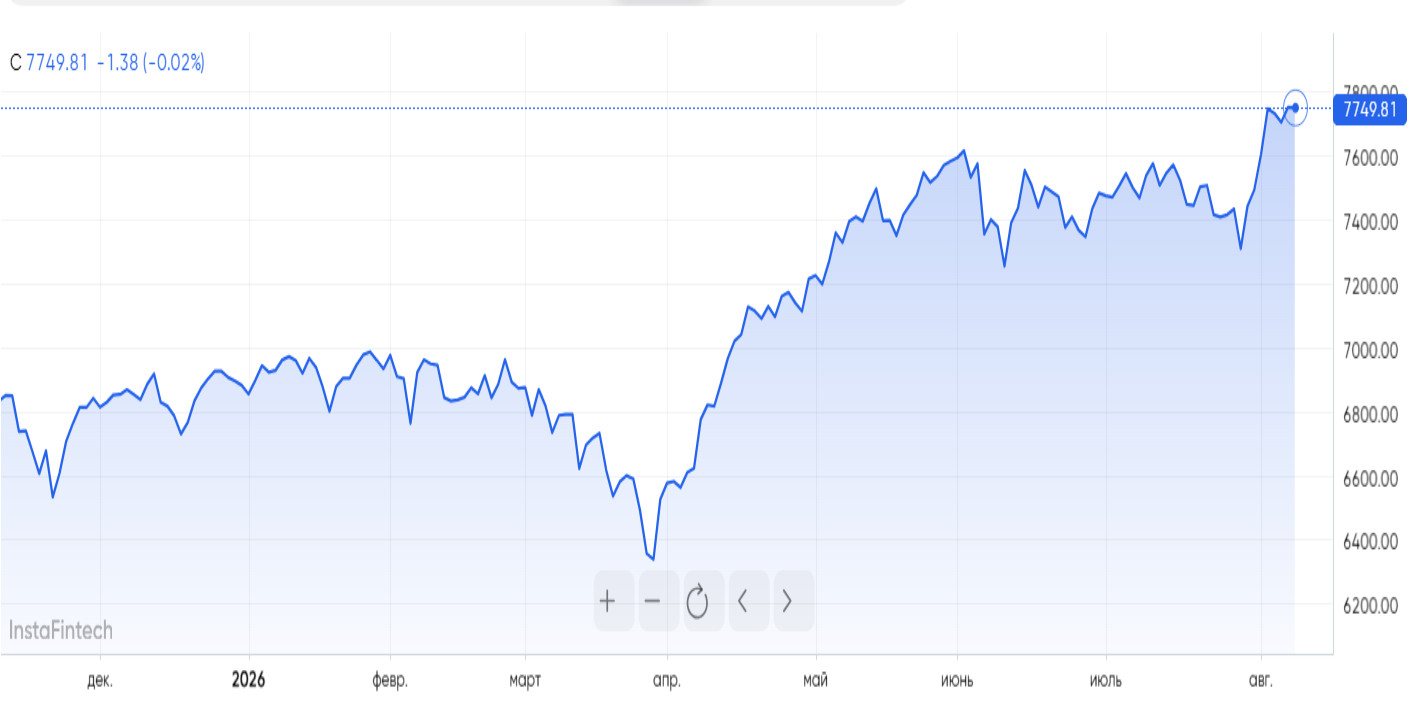
The S&P 500 closed at a record high on Friday. Traders concluded that the unexpected contraction in July payrolls would reduce the chances of Fed rate hikes in the near future.
Indices moved as follows: the S&P 500 gained 0.62% to close at 7,757.64. The Nasdaq Composite rose by 1.3% to 26,690.62. The Dow Jones climbed by 151.83 points, or 0.28%, to 54,036.93.
All three indices finished positive for a second consecutive week, marking their best performance since April. Over five trading sessions, the S&P 500 added 3.6% and broke above 7,700 for the first time this week. The Nasdaq jumped by 5.2%, driven in part by a recovery in chipmaker stocks. The Dow gained approximately 3%.
Nonfarm payrolls fell by 23,000 in July. This was a complete surprise to Dow Jones economists, who had expected an increase of 83,000. The unemployment rate fell to 4.1% against expectations of 4.2%, while labor force participation dropped to a more-than-five-year low.
Fed funds futures now reflect expectations that the benchmark rate will remain in the range of 3.50%–3.75% at the September meeting, according to CME FedWatch. Just days earlier, markets had priced in a 55% probability of a quarter-point hike; now the outlook has shifted sharply.
The rally, led this week by the tech sector and pushing stocks to records, will soon be tested by new inflation data. July CPI is expected with annual growth of 3.4%. Core CPI (excluding food and energy) is forecast at 2.5% year-over-year, according to a Reuters survey. Producer price data will follow the next day, while Friday brings retail sales figures, offering a picture of consumer spending.
JPMorgan strategists noted in a client memo that inflation has begun to show signs of peaking in recent data, surprising to the downside in June. Core measures are also softening, with core PCE in recent sequential readings tracking below 3% annually. They continue to see a significant difference from 2022 and do not expect strong inflationary pressure.
The corporate calendar is quieter this week following the heavy reporting period. Still, reports from Applied Materials, Cisco, CoreWeave, Super Micro, and JD.com are expected and could move AI and tech stocks.
The S&P 500 is up more than 13% year-to-date. Corporate profits have beaten elevated expectations for a second consecutive quarter, fueling investor optimism.
According to Mislav Matejka of JPMorgan, the second-quarter earnings season has been encouraging. The proportion of companies surpassing forecasts is markedly higher than usual. Both in the US and Europe, year-over-year earnings per share growth exceeds 20%.
What analysts are saying:
Evercore ISI: the AI bull market is heating up amid earnings volatility, declining free cash flow at major tech companies, oil price swings, a change in Fed leadership, and fears over the midterm elections, all ahead of the "traditionally turbulent" month of September.
Volatility is rising, but that does not mean the bull market is near a peak. On the contrary, the probability of their bullish scenario with the S&P 500 at 9,000 has increased. The elements that could trigger genuine FOMO are still ahead. As in 1999, further gains will be accompanied by greater turbulence. As earnings season winds down, macro factors will once again take center stage.
JPMorgan: experts remain positive on equities. They expect indices to hit new record highs in the second half of the year, with further upside possible.
Morgan Stanley: earnings per share growth and forecast revisions continue. The market is increasingly rewarding earnings quality, sustainable free cash flow, and the efficiency gains from AI. Preference is given to quality companies implementing AI, major financial players, and consumer goods manufacturers.
Goldman Sachs: the bank expects corporate demand for equities to outpace supply in 2026. S&P 500 buybacks rose by 11% year-over-year in the second quarter. New buyback authorizations year-to-date are near record levels, almost $1 trillion.
Experts estimate that $1.4 trillion in buybacks this year will offset approximately $700 billion in primary offerings and potential supply from expiring lock-up periods following IPOs.


