
See also


 07.08.2026 08:02 AM
The calm before the storm is deceptive. US equity markets are learning this firsthand: after hitting a record high on Tuesday, the S&P 500 declined for a second straight day, losing 0.2%, while the tech-heavy Nasdaq 100 gave back 0.4%, retreating from recent highs.
The culprit is not just fatigue after a rapid rally. Oil spiked amid escalating tensions in the Middle East, fueling inflation concerns ahead of Friday's jobs report. Iran and Oman are reportedly close to an agreement on resuming shipping through the Strait of Hormuz, but the details are troubling. Tehran, according to local media, intends to bar US and Israeli vessels from transiting and demand compensation from "hostile" nations before allowing them passage. Meanwhile, Iran's Fars news agency reported naval strikes on targets near the entrance to the strait. De-escalation on paper and escalation in practice—markets don't know what to believe and prefer to price in the worst-case scenario.
Adding fuel to the fire, the Federal Reserve is stoking concerns. Governor Lisa Cook, not typically viewed as a hawk, signaled readiness to raise interest rates if inflation fails to slow. According to Macquarie Group, this could indicate that even Fed Chairman Kevin Warsh, initially seen as favoring policy easing, may be forced to tighten, possibly as early as October. The futures market is increasingly pricing in such a scenario.
Initial jobless claims trend
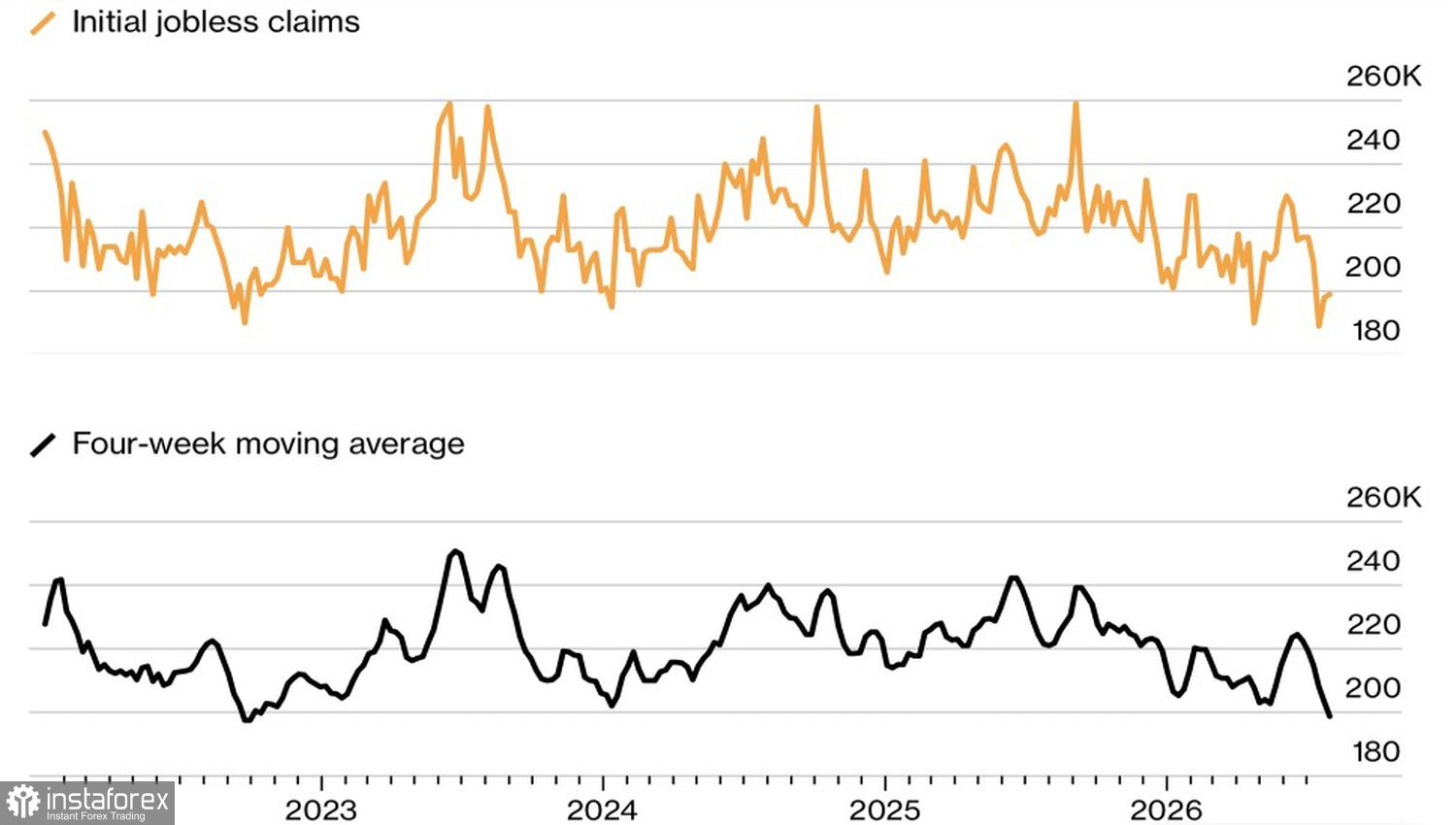
Macro data has offered few clues so far. Jobless claims have held below 200,000 for a third straight week, underscoring labor market resilience, while second-quarter productivity accelerated notably more than expected. Economists surveyed by Bloomberg expect Friday's report to show payroll growth of 80,000, following June's lackluster 57,000, a number that strategists believe must be "not too hot, not too cold" to satisfy both bulls and bears in the S&P 500.
In fact, this Friday will determine the broader index's near-term trajectory. Too strong jobs prints would revive talk of another rate hike and Fed tightening, while too weak prints would reignite recession fears and dampen global risk appetite. Coming after weeks of rapid gains, the S&P 500 simply cannot afford to disappoint investors: any stumble risks triggering profit-taking across the board.
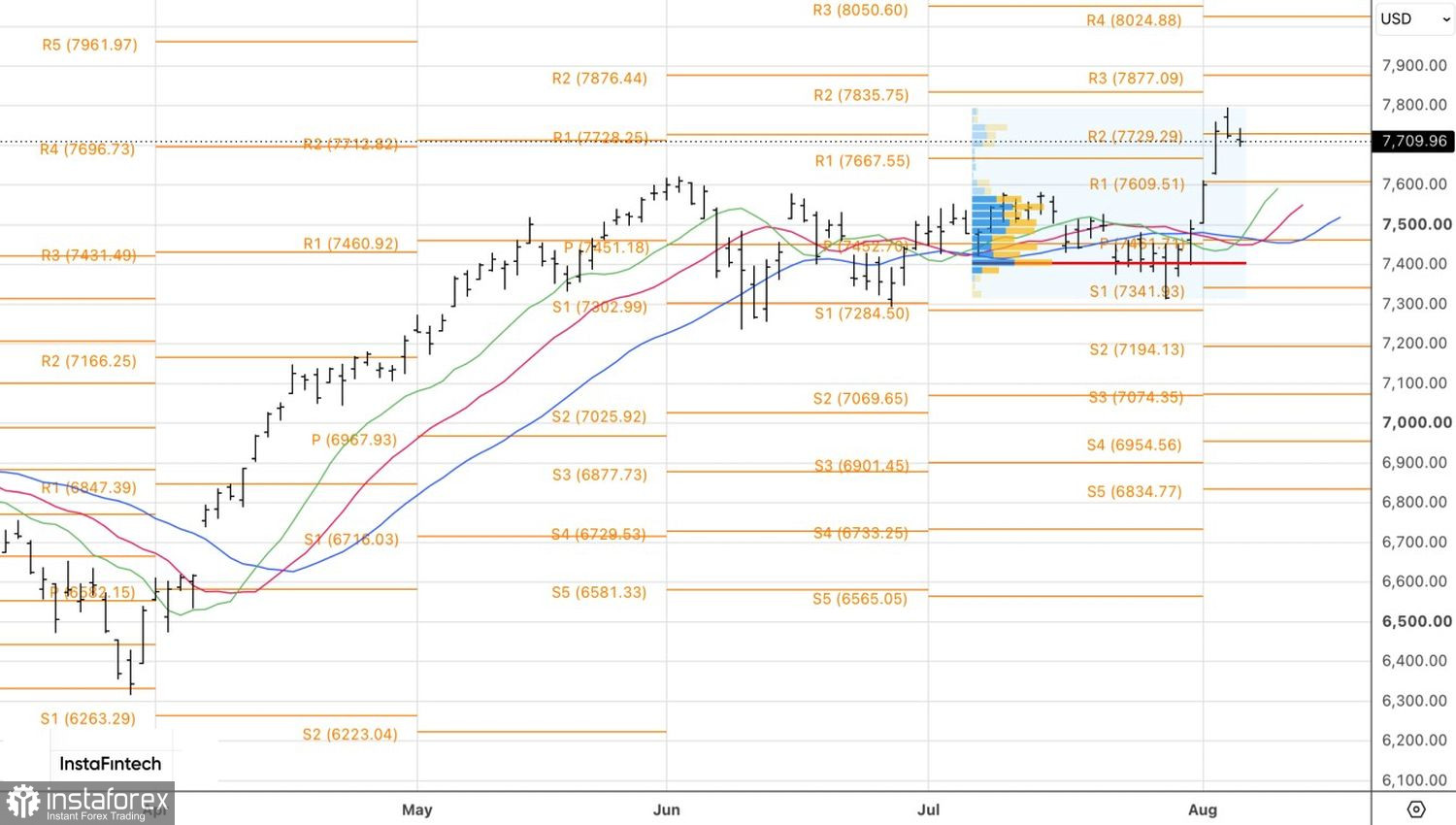
Will the broad equity index hold its breath until the crucial July jobs report, or will the storm break early?
Technically, the daily chart shows that the S&P 500 index is pulling back from record highs. The pivot level at 7,730 has become a red line. A return above it would allow bulls to add to long positions. Failure to do so would be a reason to sell.


