
See also


 19.06.2026 08:00 AM
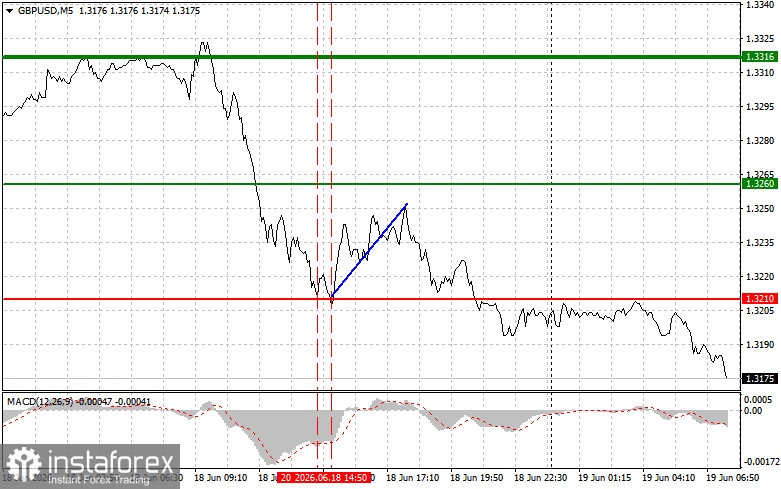
The price test at 1.3210 coincided with a moment when the MACD indicator had moved significantly downward from the zero mark, indicating limited downward potential for the pair. The second test at 1.3210 triggered Scenario #2 to buy the pound, resulting in a 40-pip rise in the pair.
The British pound continued its decline against the U.S. dollar, reflecting yesterday's decision by the Bank of England to maintain the key interest rate at the previous level of 3.75%. This decision, which was expected by the financial community, was another brick in the weakening of the national currency. The central bank, commenting on its position, noted that the recent drop in global oil prices is viewed as an encouraging signal on the path to stabilizing inflation, indicating no need to raise rates further.
Today promises new tests for the British pound against the U.S. dollar, as the first half of the trading session will be marked by the release of several UK macroeconomic data points. Traders will especially pay attention to the retail sales data. This indicator is a key marker of consumer activity and the overall state of the British economy. A decline in retail sales may indicate a slowdown in consumer demand, which could negatively affect the country's economic growth prospects. Weak figures in this segment are likely to trigger a sell-off of the pound, as market participants adjust their expectations regarding the resilience of the British economy.
In addition to the retail sales data, figures on the net volume of government sector borrowings will also be published. An unexpectedly high level of government borrowing could raise concerns about the fiscal sustainability of the UK, which may also exert additional pressure on the pound.
As for the intraday strategy, I will primarily rely on the implementation of scenarios #1 and #2.
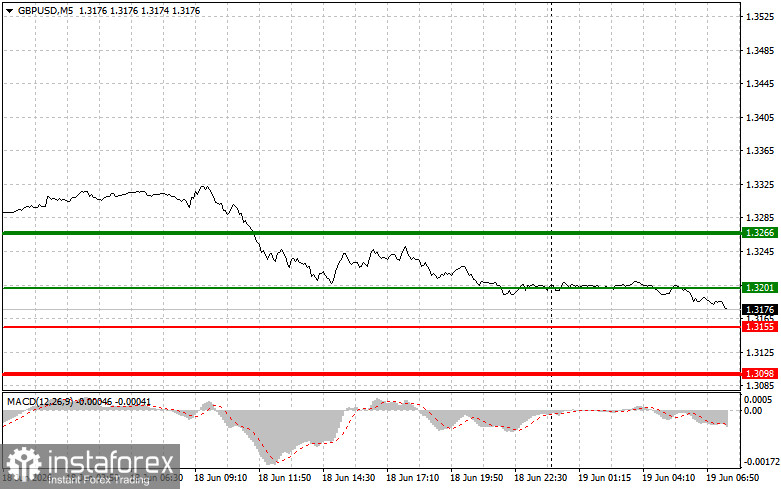
Thin green line – entry price for buying the trading instrument;
Thick green line – presumed price level for placing Take Profit or manually securing profits, as further growth above this level is unlikely;
Thin red line – entry price for selling the trading instrument;
Thick red line – presumed price level for placing Take Profit or manually securing profits, as further decline below this level is unlikely;
MACD Indicator. When entering the market, it is important to consider the overbought and oversold zones.
Important: Beginner traders in the Forex market must be very cautious when making entry decisions. Before major fundamental reports are released, it is best to stay out of the market to avoid being caught in sharp fluctuations. If you decide to trade during news releases, always set stop orders to minimize losses. Without setting stop orders, you can quickly lose your entire deposit, especially if you are not using money management and are trading large volumes.
And remember, for successful trading, you need a clear trading plan similar to the one presented above. Making spontaneous trading decisions based on the current market situation is inherently a losing strategy for intraday traders.


