
See also


 27.05.2026 11:46 AM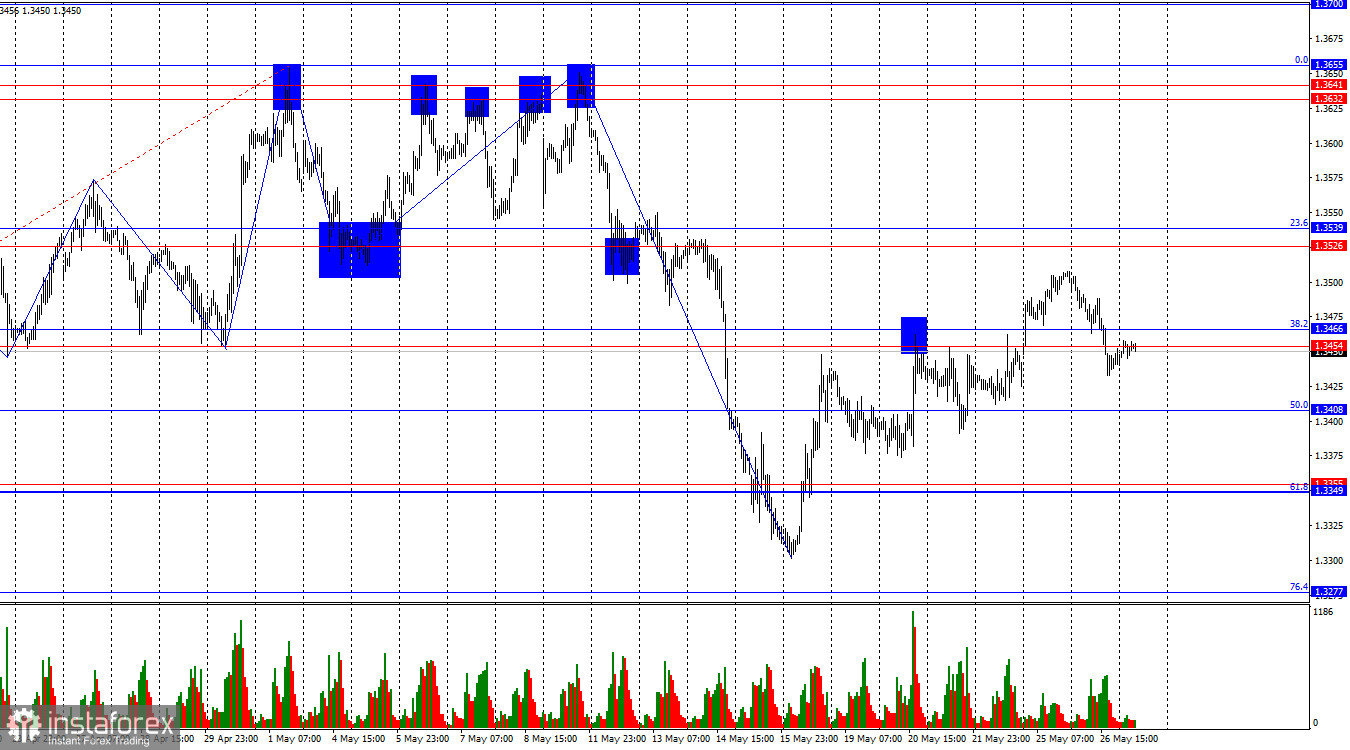
The wave structure remains bearish, as bulls still lack sufficient positive geopolitical developments for a full-scale advance. The latest completed downward wave broke below the previous low, while the new upward wave has not yet exceeded the previous peak. Recently, geopolitics has supported the bulls, as a memorandum of understanding between Iran and the United States may be signed in the near future, while the ceasefire remains in place.
The news background on Tuesday favored the bears. Around midday, reports emerged of another escalation in the Middle East conflict, which triggered a strengthening of the U.S. dollar. Traders once again lost confidence in the prospect of reaching an agreement and began expecting the negotiations to fail. It is difficult to say whether these expectations are justified, but it cannot be denied that tensions in the Middle East escalated again yesterday. Fortunately, the situation did not deteriorate too severely. The United States stated that it still intends to adhere to the ceasefire but demanded that Tehran stop "acting behind its back." Tehran described the incident near the Strait of Hormuz as a "blatant act of aggression," but no retaliatory response has followed so far. Thus, a renewed escalation of the conflict has so far been avoided. It would be preferable for the situation to remain this way. However, the ceasefire has already been violated, meaning the bears may resume pressure today. I advise traders to continue monitoring geopolitical developments throughout the day, as they are currently the key driver of market behavior.
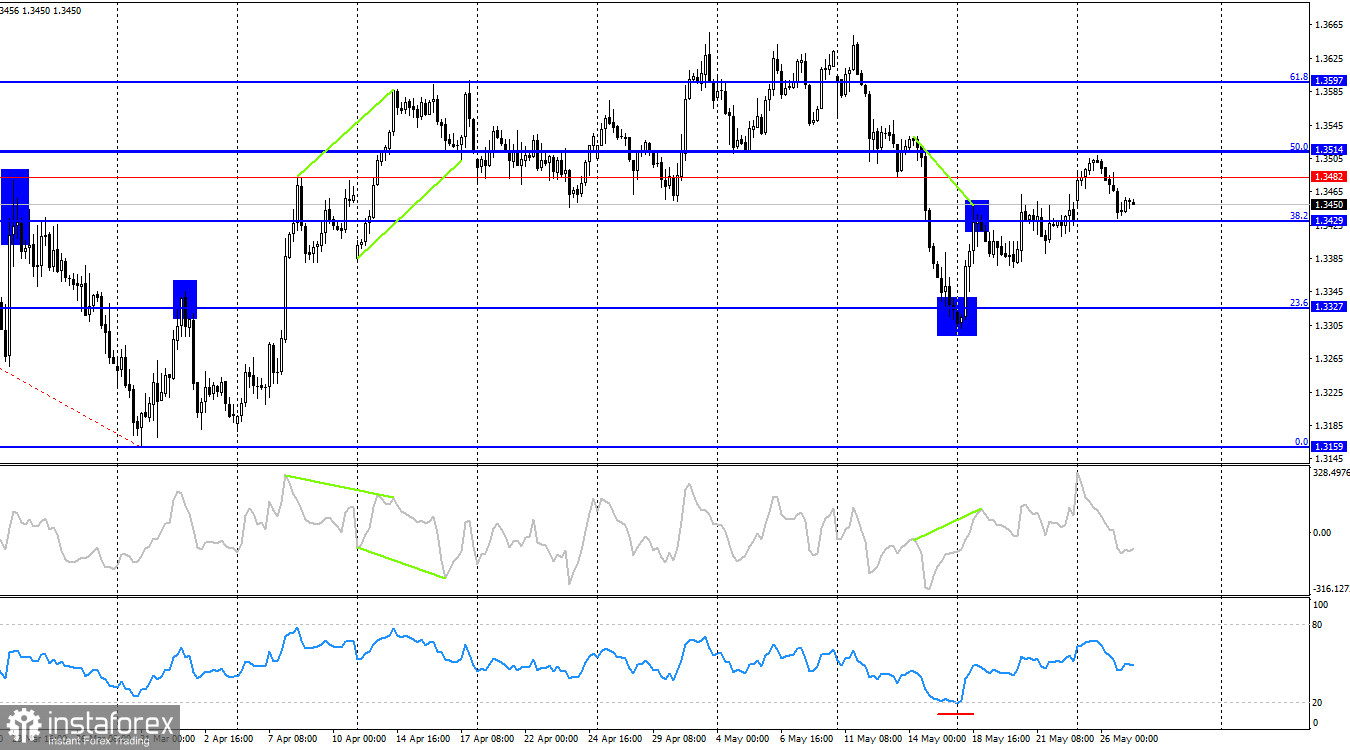
On the 4-hour chart, the GBP/USD pair advanced toward the 1.3482–1.3514 resistance level. A rebound from this zone allows traders to expect some weakening of the pound, but market movements this week will depend on geopolitics rather than chart analysis. Technical analysis can currently be used only as a supplementary tool. No emerging divergences are observed on any indicator today.
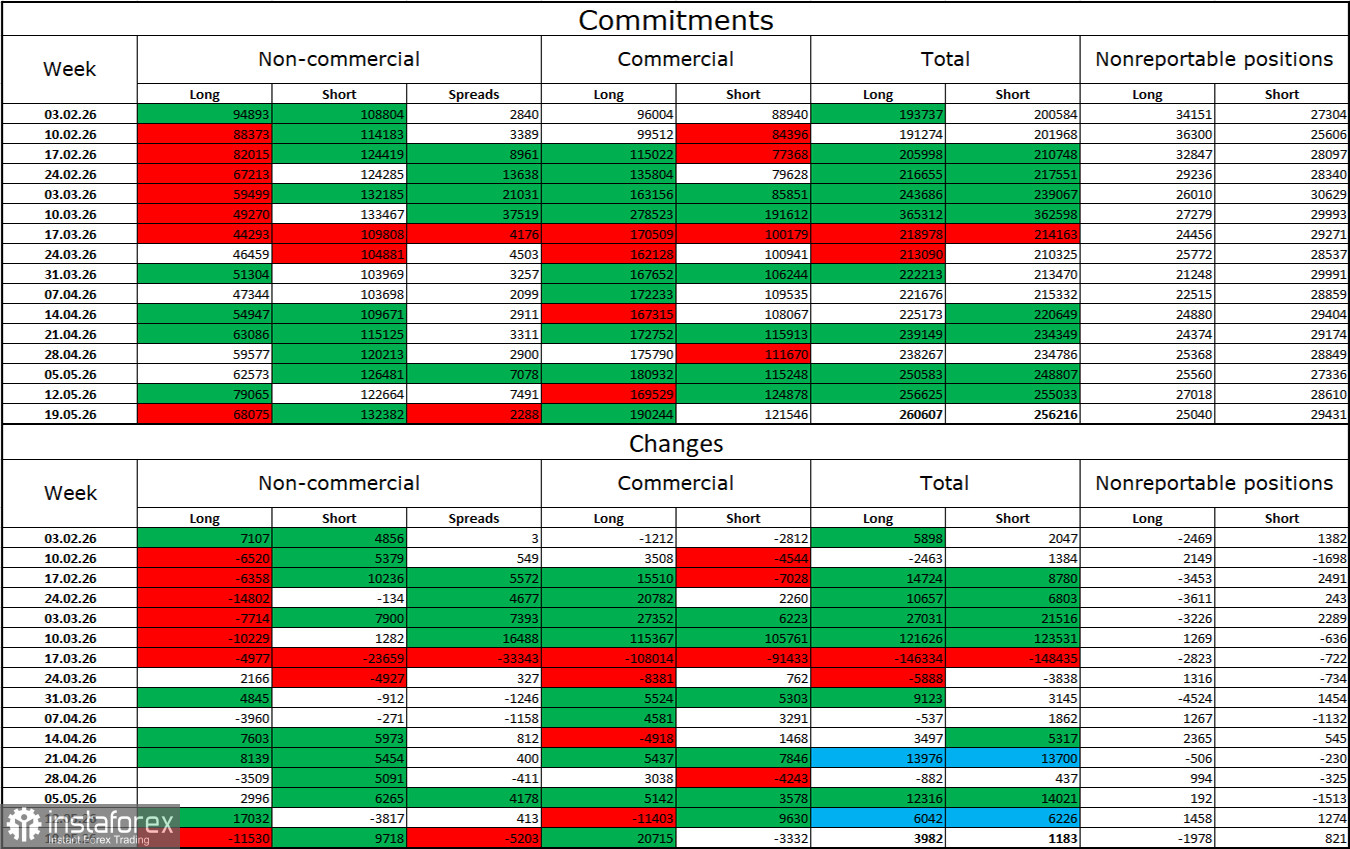
The sentiment among the "Non-commercial" category of traders became more bearish again during the latest reporting week. The number of Long positions held by speculators decreased by 11,530, while the number of Short positions increased by 9,718. The gap between Long and Short positions now effectively stands at 68,000 versus 132,000. Bears have dominated in recent months, which comes as no surprise given the geopolitical situation in the Middle East and the political crisis in the United Kingdom. The bears' advantage is now more than twofold.
I still do not believe in a long-term bearish trend for the pound, but in the near term everything will depend not on economic indicators, Trump's trade policy, or central bank monetary policy, but rather on the duration, scale, and consequences of the conflict in the Middle East. In recent weeks, the market has adjusted to expectations of a prolonged conflict, but recent news suggests that a ceasefire may still be achieved, although it is unlikely to be easy or quick.
The economic calendar for May 27 contains no significant events. Therefore, the impact of the economic backdrop on market sentiment on Wednesday will once again be absent.
Selling opportunities were possible after consolidation below the 1.3454–1.3466 level on the hourly chart, with targets at 1.3408 and 1.3349–1.3355. These positions may still be held today. Buying opportunities are possible after consolidation above the 1.3454–1.3466 level, with a target at 1.3526–1.3539.
Fibonacci levels are drawn from 1.3158–1.3655 on the hourly chart and from 1.3866–1.3158 on the 4-hour chart.


