
See also


 08.04.2026 12:29 PM
Today, Wednesday, the USD/CHF pair came under significant selling pressure, reaching the 100-day simple moving average (SMA), located below the psychological level of 1.7900, amid a broad weakening of the US dollar. Bears in this instrument are waiting for a sustained breakout and consolidation below this key technical level—the 100-day SMA—which would open the way for further decline.
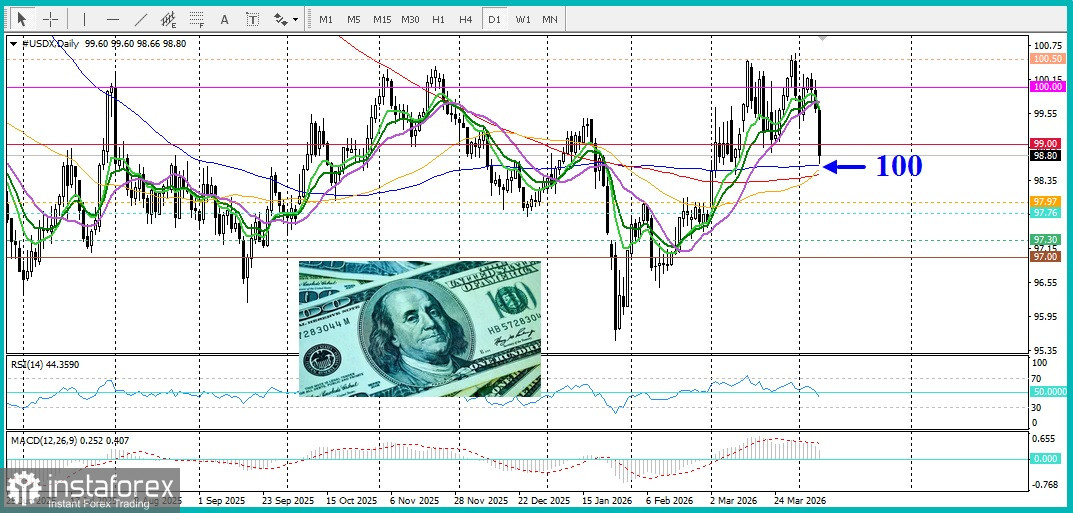
The US Dollar Index (DXY), which reflects the dollar's value against a basket of major global currencies, has also fallen to its 100-day SMA, marking a new monthly low.
The trigger was reports of a consensus between the United States and Iran regarding a ceasefire. US President Donald Trump announced on the social network Truth Social the suspension of planned military actions against Iran for a two-week period, on the condition of the full, immediate, and safe reopening of the Strait of Hormuz by Tehran.
In turn, Iran's Foreign Minister, Seyed Araghchi, confirmed in a statement that the US side had accepted a 10-point proposal, and that Tehran would cease defensive operations if attacks on the country stopped.
These developments are boosting investor confidence and fueling a new wave of demand for risk assets across global markets. This, in turn, is putting significant pressure on the US dollar and negatively affecting the USD/CHF pair. At the same time, the improvement in the geopolitical situation has triggered a notable decline in oil prices.
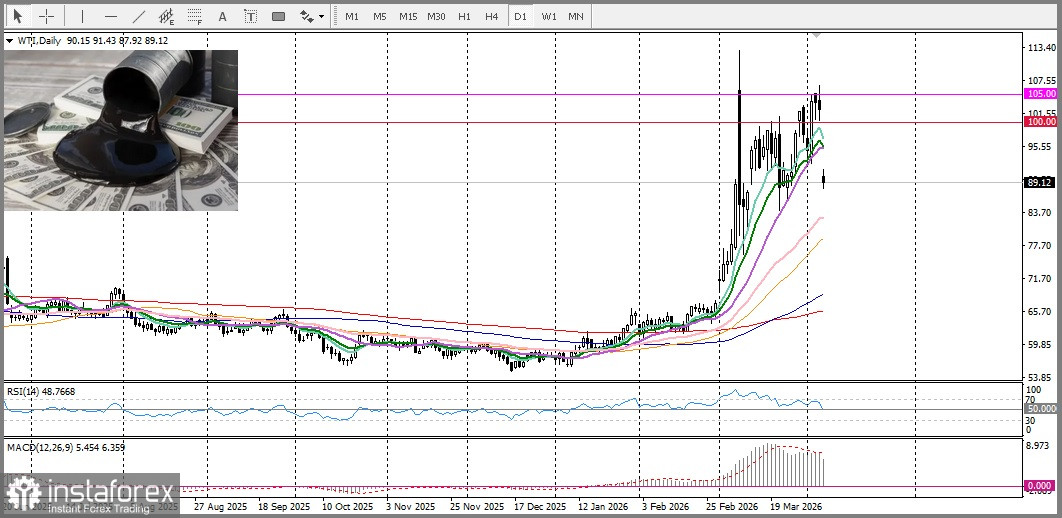
This, in turn, is easing market concerns about a potential inflation spike caused by the conflict escalation and is influencing expectations regarding further monetary tightening by the Federal Reserve. The observed decline in US Treasury yields confirms this trend.
However, reports of ongoing Iranian attacks in the Middle East and Israel are somewhat limiting further weakening of the US dollar and the USD/CHF pair overall.
From a technical perspective, a price drop below the 100-day SMA favors bears; if the pair consolidates below this level, the decline could accelerate. However, as oscillators have not yet moved into negative territory, bulls continue to fight to maintain their position.
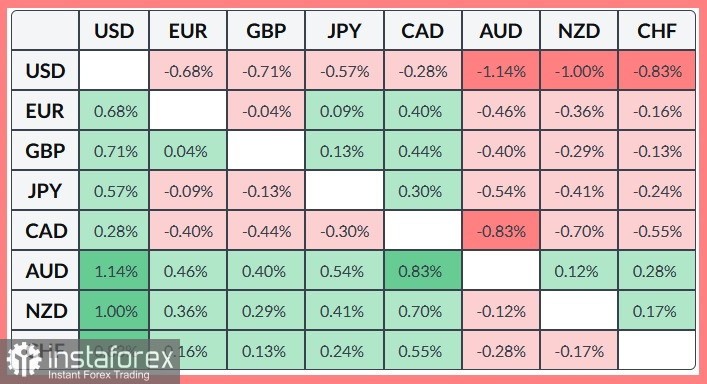
The table below shows the percentage change of the US dollar against major global currencies for the current trading day. The US dollar showed the strongest performance against the Canadian dollar.
You have already liked this post today
*The market analysis posted here is meant to increase your awareness, but not to give instructions to make a trade.


