
See also


 23.03.2026 12:48 AM
Economists also note that America has exhausted two of the reserves that allowed it to avoid recession in recent years. The first is massive fiscal stimulus. Simply put, this includes the Fed's QE program, Donald Trump's tax cuts, and everything that reduces household and business expenses at the legislative or monetary level. Consumers and producers have more resources at their disposal, which encourages them to spend and expand, thereby stimulating the economy. However, in the midterm elections at the end of this year, Democrats may win and cancel many of Trump's initiatives, particularly those that significantly complement or alter the "One Big Beautiful Bill."
The second reserve is investments in artificial intelligence. In recent years, American companies have invested billions of dollars in building data centers, and by 2026, four major AI-related companies may spend another $600 billion on advancing the industry. Economists point out that investments in AI have accounted for up to 90% of economic growth in recent years. In simple terms, as soon as the influx of investment in AI stops (and it will not last forever, like everything else on this earth), the economy will begin to slow down.
It is also worth noting the rise in unemployment in recent years and the marked decline in the pace of new job and vacancy creation. Simply put, the US labor market is facing serious problems due to Trump's immigration policy and the very AI that is displacing American workers from their positions. When people lose their jobs, households cut back on expenses, which also negatively impacts the economy.
With the onset of the "Iranian operation," the Trump administration is forced to spend billions on military actions. Of course, America benefits from high oil and gas prices, but at the same time, the war in Iran will not end when Trump says it will. The war will only end when Iran wants it to or can no longer continue fighting. Trump, who has lost support from all of Europe (the special cynicism is that just two months ago, Trump wished to annex Greenland), can declare complete victory over Iran every day (which he successfully does). However, will this stop Tehran from striking US or allied targets?
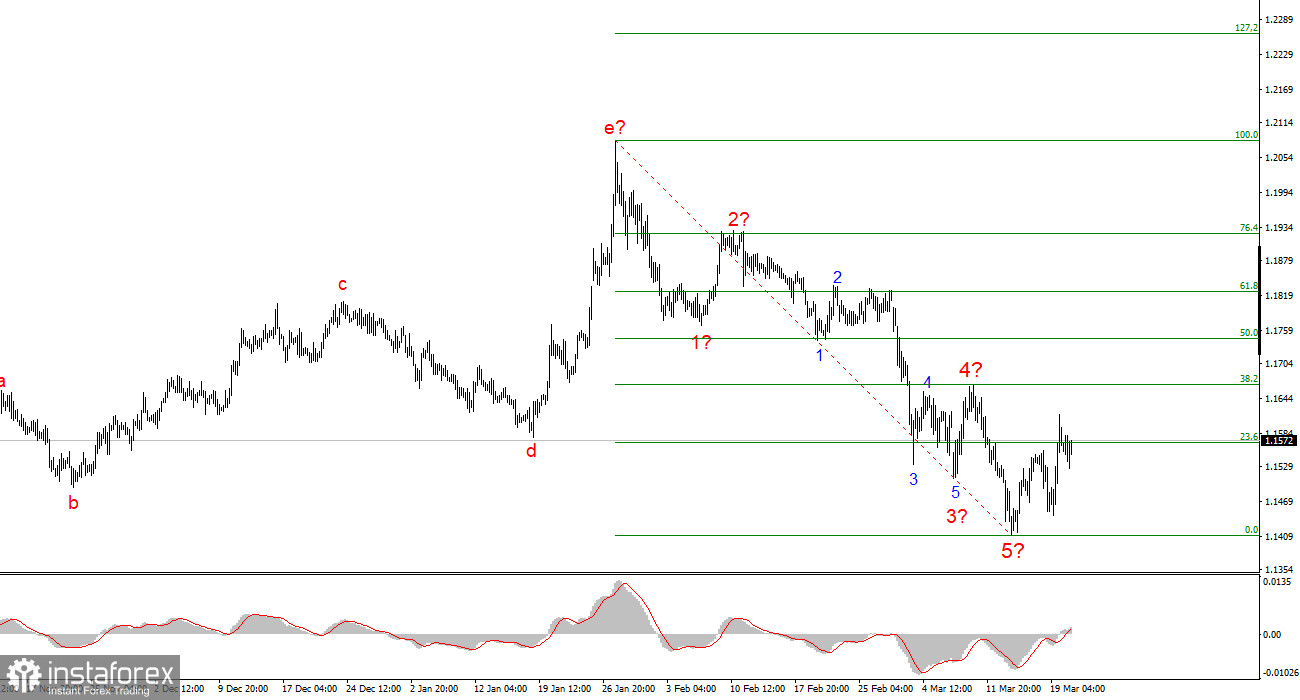
Based on the analysis of EUR/USD, I conclude that the instrument remains within an upward segment of the trend (bottom picture) but has started forming a short-term downward segment. Since the five-wave impulse structure is complete, in the next week or two, my readers can expect an increase in quotes with targets around the levels 1.1568 and 1.1666, which correspond to 23.6% and 38.2% of the Fibonacci. Further movements of the instrument fully depend on events in the Middle East.
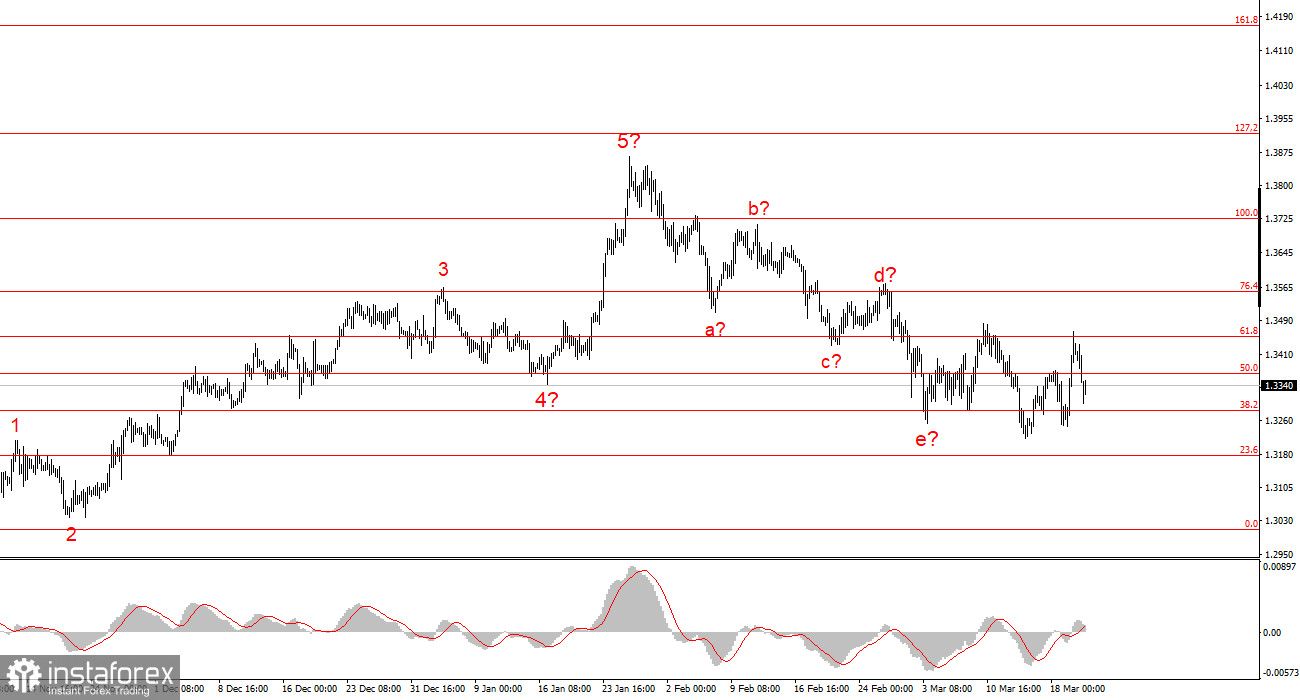
The wave picture for the GBP/USD instrument has become very complex and difficult to read. Now we see a seven-wave downward structure on the charts, which is undoubtedly not that. Most likely, there is elongation or complication within one of the waves. However, this does not make the wave layout clearer. If the wave picture has once been complicated to an unreadable form, it can be complicated several more times. Therefore, I believe it is best to rely on the wave layout of the EUR/USD instrument, which looks much clearer. Also, one should not forget about the geopolitical factor, which can send both instruments into a new decline at any moment. If that does not happen, the euro and the pound can expect an increase within the correction.


