
See also


 22.12.2025 09:33 AM
There is a lot of noise for little gain. The S&P 500 is fluctuating erratically. Bulls are counting on FOMO, or fear of missing out, and the traditional year-end Christmas rally. Meanwhile, bears are betting on a bubble in technology companies characterized by inflated fundamental valuations and their failure to generate profits commensurate with colossal investments. As a result, the broad stock index has come close to record highs, but that final step is often the toughest.
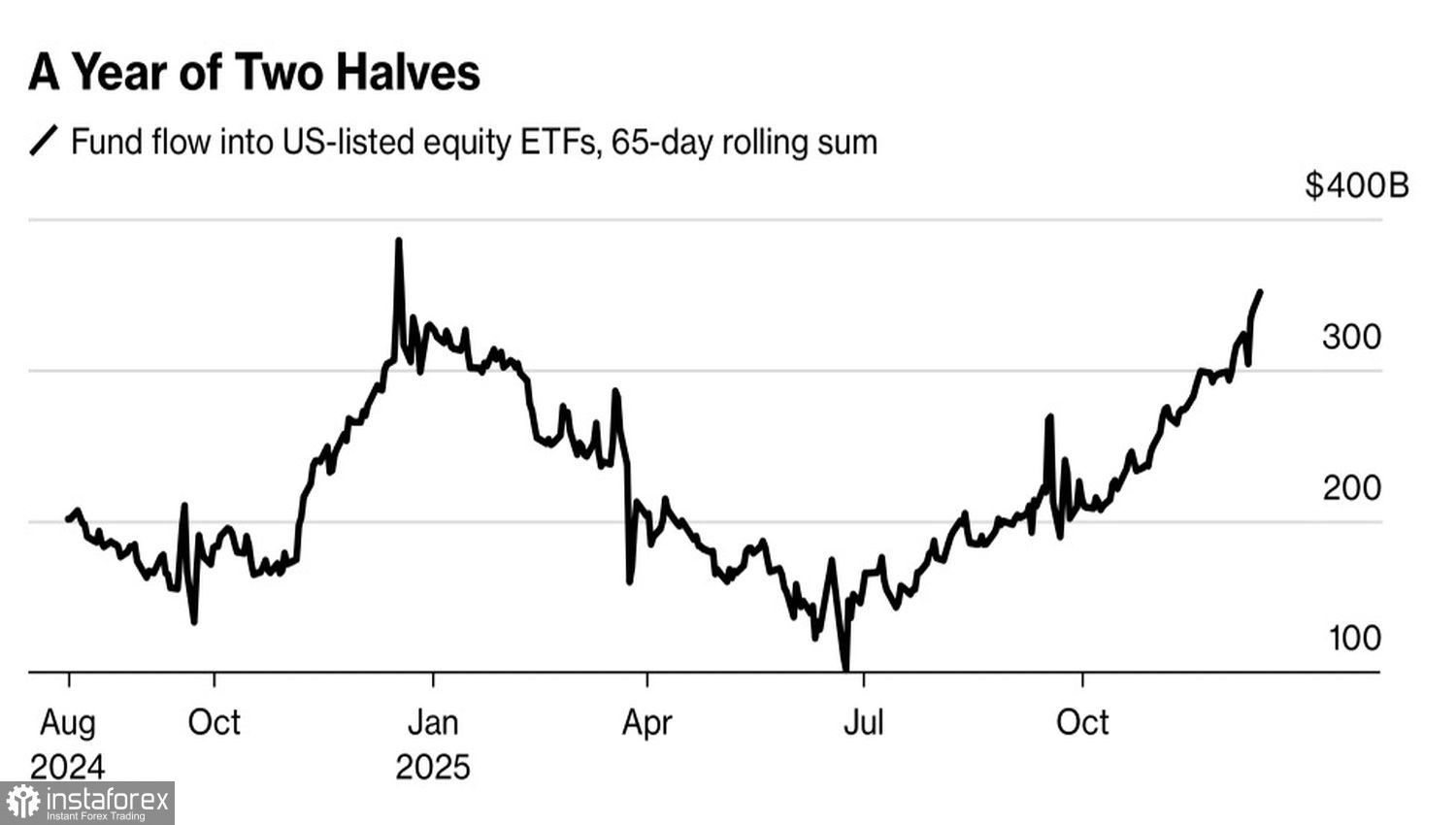
According to Goldman Sachs, the US stock market rally is expected to continue into 2026. Federal Reserve interest rate cuts and solid corporate earnings should prolong the economic cycle and support risk assets. However, the bank cautions that the upcoming year may not be as fruitful as the previous one. The easing of monetary policy will be uneven, and high fundamental valuations of S&P 500 companies may deter investors from pouring money into US equities. Nonetheless, capital continues to flow in abundance.
Dynamics of Capital Flows into US Stocks
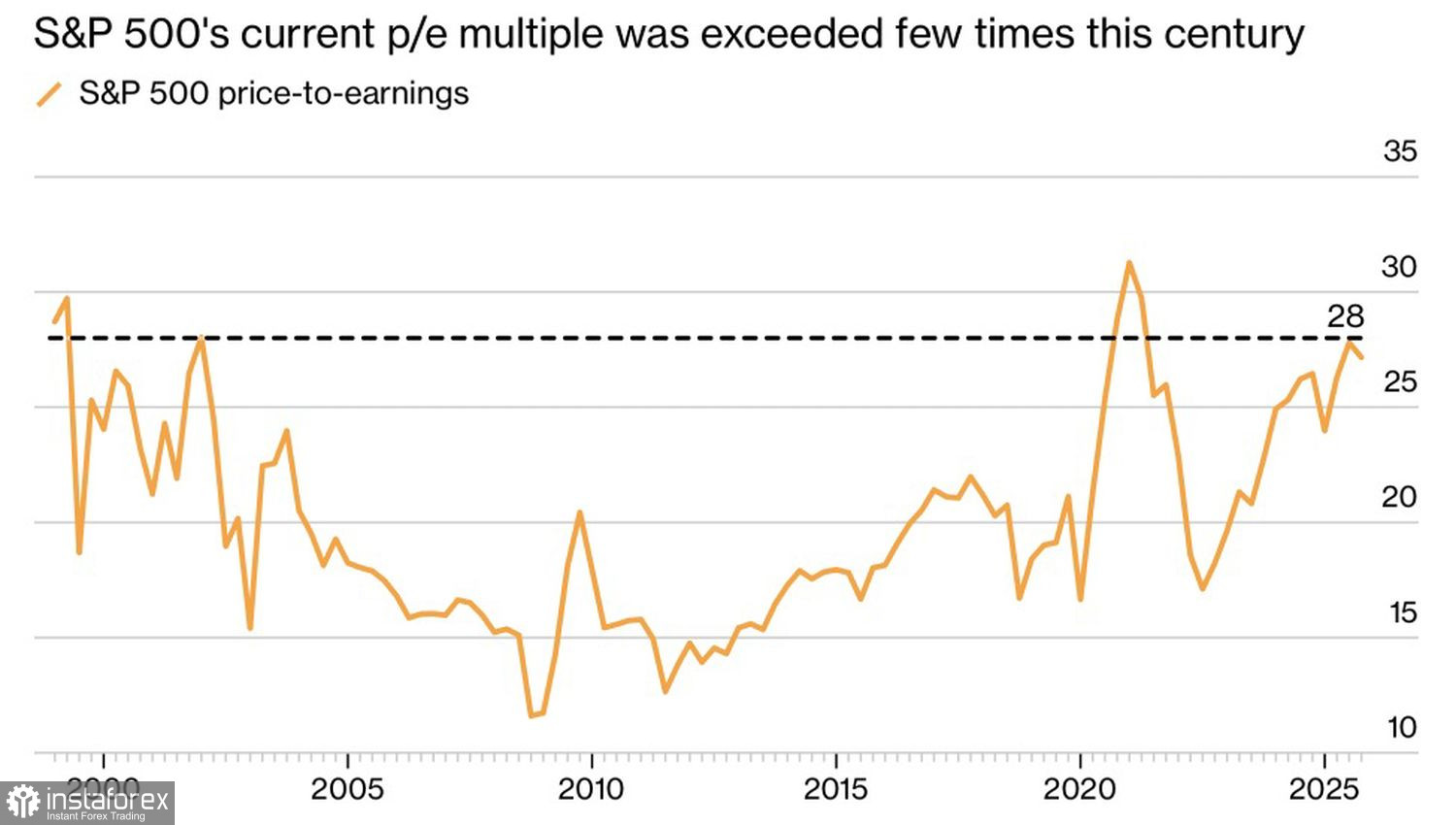
In 2025, approximately 45% of S&P 500's earnings were generated by the Magnificent Seven companies. However, rising competition and doubts about the efficacy of investments in artificial intelligence technology are leading to a rotation in stocks. Shares of NVIDIA and other giants are being replaced with bank, energy, and other sector stocks. This shift is further exacerbated by concerns over stretched price-to-forward earnings ratios, raising fears of a potential bubble. This scenario mirrors the dot-com crisis, indicating that a crash might well occur again.
History has a way of repeating itself—both for better and for worse. Typically, around the transition from one year to another, the S&P 500 tends to rise. This rally is commonly referred to as the Christmas rally or the Santa Claus rally. Although the broad index missed this pattern in 2024-2025, why not see the tradition manifest in December-January this time?
S&P 500 Price-to-Earnings Ratio Dynamics
There are substantial doubts. Investors are skeptical regarding the slowdown in US inflation in November, attributing it to the government shutdown. The futures market shows less than a 20% probability of a federal funds rate cut in January, with expectations shifting to March. Additionally, FOMC officials characterize the last three acts of monetary expansion as preventive measures and intend to remain on the sidelines at least until spring. This perspective is reflected by the presidents of the New York Fed, John Williams, and the Cleveland Fed, Beth Hammack.
Thus, if the upward trend in the S&P 500 continues into the fourth year of a bull market, the scale of this rally would be incomparable to prior periods.
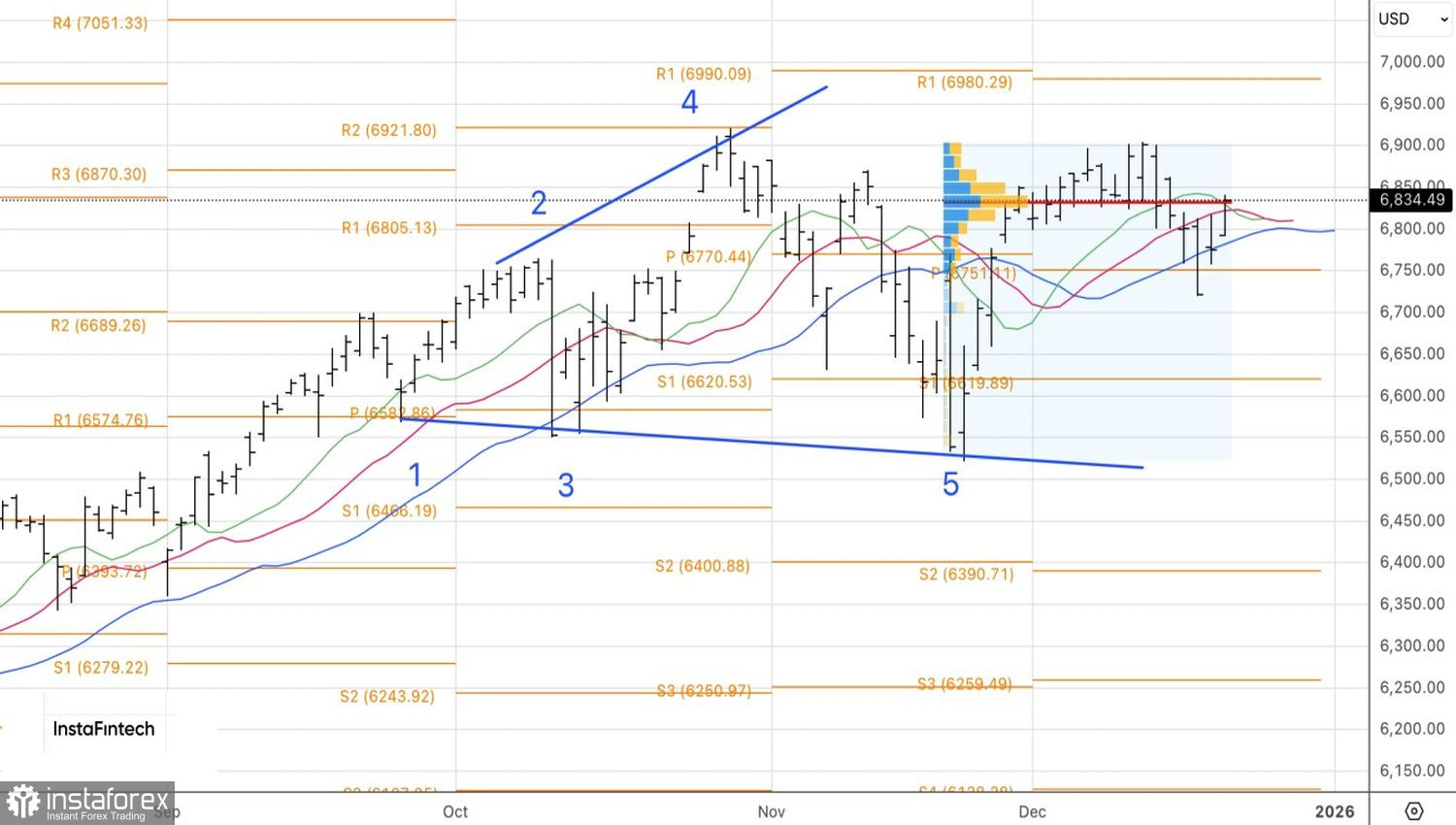
From a technical standpoint, the daily chart of the broad market index has formed a doji candle, with the price breaking above the moving averages. Long positions established above 6,750 in the S&P 500 should be held and gradually increased. Target levels are set at 6,980 and 7,100, where important pivot levels are located.


