
আরও দেখুন


 19.06.2026 01:09 PM
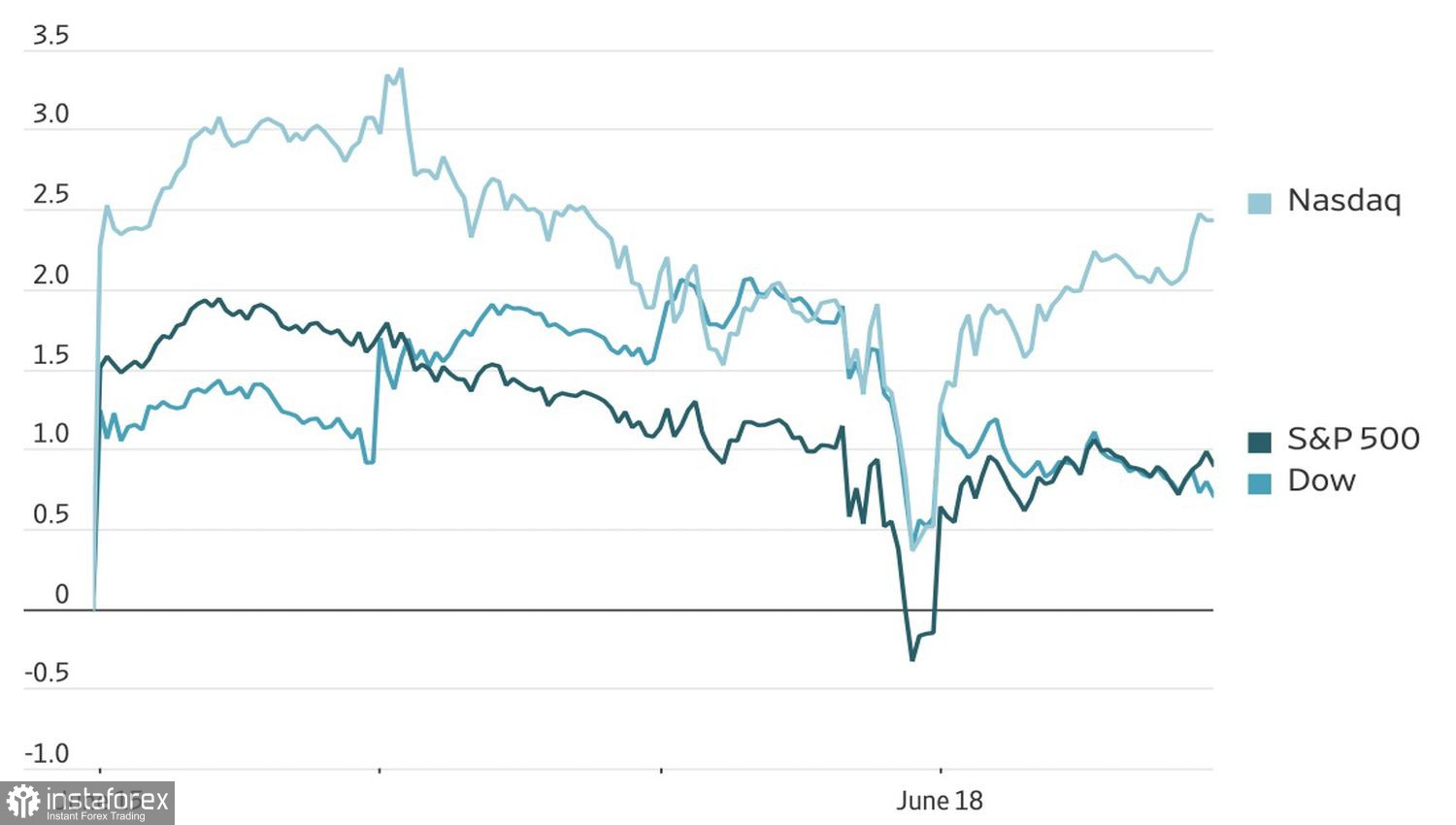
The market is slowly recovering after the Fed's hawkish surprise. The S&P 500 opened with a gap up on positive news about the end of the Middle East conflict. Falling oil prices are beneficial for the US economy, reducing costs for American companies. At the same time, inflation expectations are easing, and hopes are rising that the Federal Reserve may not be as aggressive as it initially seemed after Kevin Warsh's press conference.
US stock indices dynamics
According to US data, tankers carrying 12.5 million barrels of oil transited the Strait of Hormuz within a day. Pre?war transit levels will be restored gradually, which should put pressure on Brent and act as a tailwind for the US economy and stocks.
However, second?order effects could push up underlying inflation, forcing the Fed to maintain a hawkish stance and lifting US Treasury yields. In a Market Pulse survey of 101 respondents, 57% expect 30?year yields to rise above 5% by year?end. That level was breached during the Middle East conflict, the tariffs introduced by the White House in 2025, and the tightening cycle of 2023.
Fears about higher federal funds rates and Treasury yields are not the only worry for the S&P 500. JP Morgan warns that the risk of market mania is increasing, as the semiconductor stock boom is forcing investors to cut allocations to other sectors.
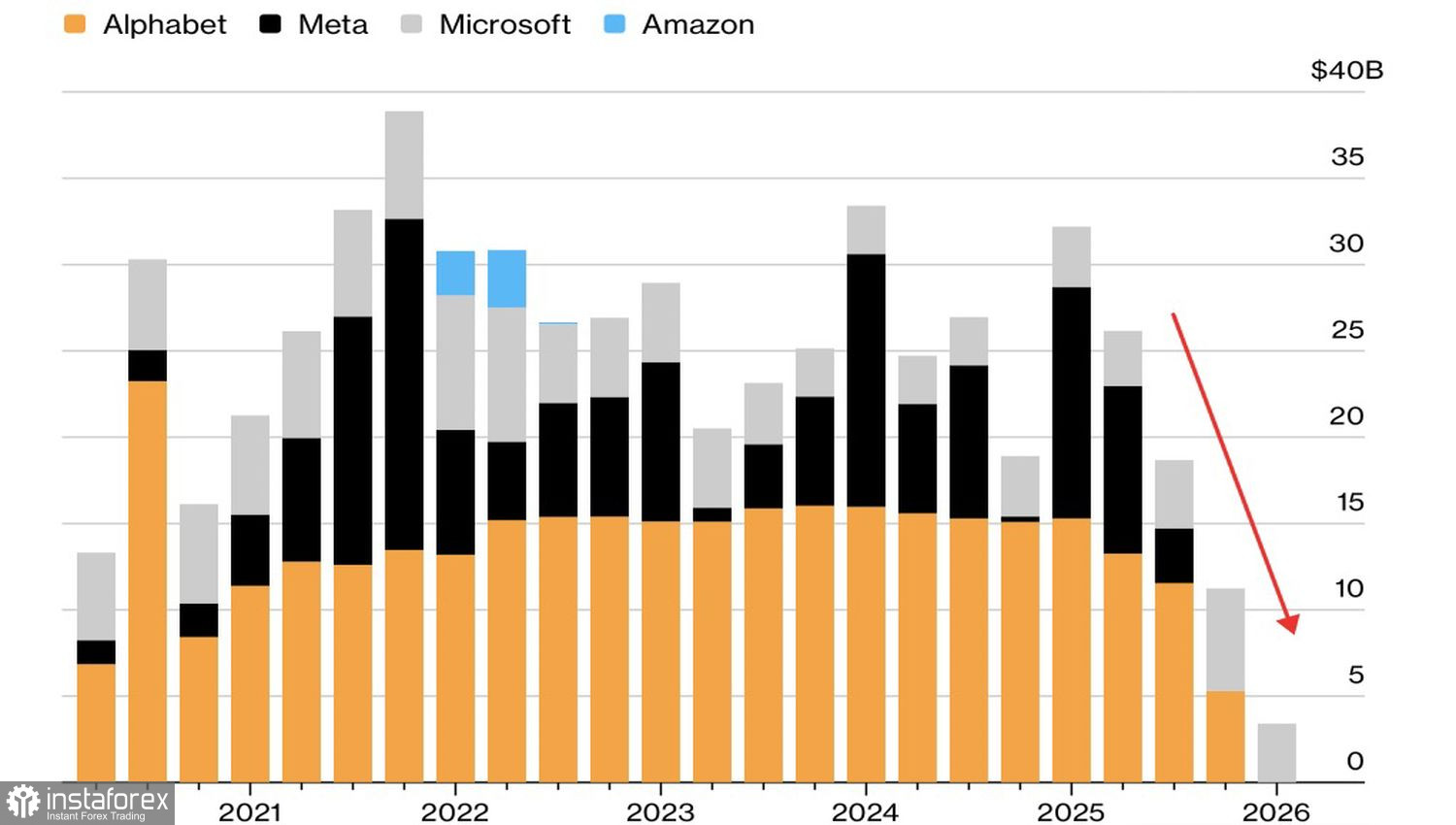
This is true across the IT sector. High spending on artificial intelligence is diverting cash from tech giants that previously used it for share buybacks. As a result, in Q1 only Microsoft carried out buybacks among the group — its $3.4 billion in repurchases was the smallest for the cohort in decades.
Buyback dynamics among tech giants
So, investors are far from confident the S&P 500 rally will continue. The probability of two or more federal funds rate hikes in 2026 rose from 17% to 53%. The derivatives market lifted the chance of Fed tightening in September from 27% to 71%. This shift in investor views boosts Treasury yields, raises companies' financing costs and slows earnings growth.
If falling oil is a tailwind for the S&P 500, rising interest rates in the US debt market are a headwind. That combination may lead to a short?term consolidation of the broad stock index.
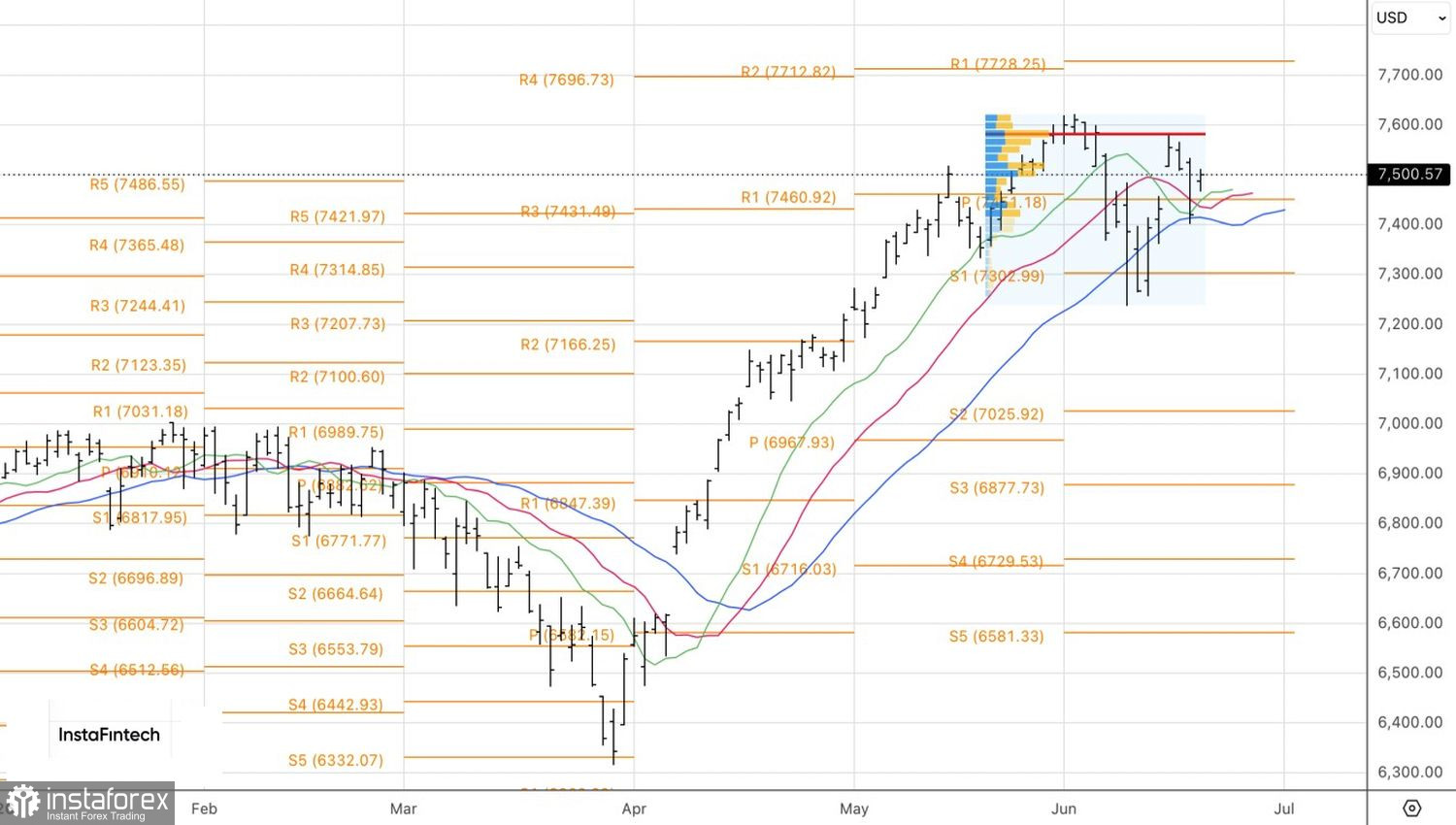
Technically, on the daily chart, the S&P 500 has reclaimed levels above the pivot 7,460, which is good news for the bulls. If the index can hold this level, it would be a reason to buy.
You have already liked this post today
*এখানে পোস্ট করা মার্কেট বিশ্লেষণ আপনার সচেতনতা বৃদ্ধির জন্য প্রদান করা হয়, ট্রেড করার নির্দেশনা প্রদানের জন্য প্রদান করা হয় না।


